|
|
|
 garycohenrunning.com
be healthy • get more fit • race faster
| |
|
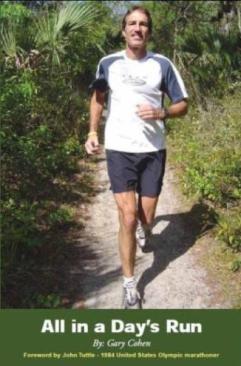 
"All in a Day’s Run" is for competitive runners,
fitness enthusiasts and anyone who needs a "spark" to get healthier by increasing exercise and eating more nutritionally.
Click here for more info or to order
This is what the running elite has to say about "All in a Day's Run":
"Gary's experiences and thoughts are very entertaining, all levels of
runners can relate to them."
Brian Sell — 2008 U.S. Olympic Marathoner
"Each of Gary's essays is a short read with great information on training,
racing and nutrition."
Dave McGillivray — Boston Marathon Race Director
|
 |
|
|
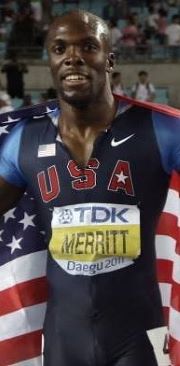
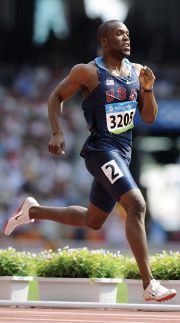
LaShawn Merritt is one of the greatest 400-meter champions and arguably the most outstanding relay team member in history. LaShawn is the 2008 Olympic Champion and the 2009 and 2013 World Champion Gold Medalist in the 400-meter distance. He also earned Silver Medals in the 400-meters at the 2007, 2011 and 2015 World Championships. He raced to Gold Medals in the 400-meters at the 2004 World Junior Championships, 2006 World Cup, and 2007 and 2009 World Athletics Final. LaShawn earned 19 Gold Medals in his 19 times as a member of Team USA relay squads. He scored Gold in 18 4x400-meter competitions including the Olympics (2008, 2016), World Championships (2005, 2007, 2009, 2011, 2013, 2015), World Indoor Championships (2006), World Cup (2006), World Junior Championships (2004), World Relays (2014, 2015, 2017), and the Penn Relays (2007, 2008, 2009, 2012). He also earned Gold as a member of the 2004 World Junior Championships 4x100-meter squad. During LaShawn’s international competitions from 2004 to 2019, per the World Athletics website, he scored 104 wins, 36 second places and 10 third places. His major wins included five times each at the Prefontaine Classic and in Zurich, four times each in Monaco and Doha, three times in Kingston, twice each at Shanghai, Stuttgart, New York, Lausanne and Edmonton, plus victories in Paris, Berlin, Stockholm, Rome, Sydney, and Beijing. He broke 44 seconds for 400 meters eight times. At East Carolina, LaShawn was 2005 Conference USA Gold Medalist Indoors in the 400-meters and 200-meters, before signing with Nike and turning professional, foregoing the remainder of his collegiate eligibility. At Woodrow Wilson High School in Portsmouth, Virginia, he was 2003 Virginia State Champion at 400 meters and State Silver Medalist at 100 meters and 200 meters. In 2004, LaShawn was Virginia State Champion at 100 meters, 200 meters and 400 meters. In 2002, at the National AAU U17 Olympic Games in Knoxville, Merritt was Silver Medalist at 200 meters and finished fourth at 100 meters. He earned five major Gold Medals in 2004 at the Landover Nike Indoor Championships 400 meters, U.S. High School Championships 200 meters and 400 meters, and the U.S. Junior Championships 200 meters and 400 meters. Personal best times are: 60 meters – 6.68; 100 meters – 10.56; 200 meters – 19.74; 300 meters – 31.23; 400 meters – 43.65; 500 meters – 1:01.39 and 400-meter relay – 2:55.39. His 400-meters yearly best times as a pro are: 2005 – 44.66; 2006 – 44.14; 2007 – 43.96; 2008 – 43.75; 2009 – 44.06; 2010 – did not compete; 2011 – 44.35; 2012 – 44.12; 2013 – 43.74; 2014 – 43.92; 2015 – 43.65; 2016 -43.85 ; 2017 – 44.78. LaShawn has stayed close to the sport as he conducts ‘Sprint to Success’ youth and high school track clinics, ‘LaShawn Speaks’ motivational talks, coaches at Granite Bay High School, and contributes to humanity through the LaShawn L. Merritt Foundation. He was very generous to spend over two hours on the telephone for this interview in July 2026.
|
|
| GCR: |
THE BIG PICTURE LaShawn, thank you so much for sitting down for this interview. First, when you started out running track and field as a teenager, could you have imagined on the world stage in individual events in the Olympics, World Championships, World Athletics Finals and World Cup, that you would have so much success – thirteen medals, eight gold, three silver, and two bronze – and what does that mean when you reflect on the consistent effort and preparation for fifteen years that led to these results?
|
| LM |
It is something I trained for my whole life. I wasn’t necessarily putting work into the sport, but there was my environment, my character, my parents, my choices and all of that contributed to my success. It is one thing to do the work, but I was a guy who was intentional, I was coachable, I was disciplined. If you had told me in tenth grade or eleventh grade that I would be on the world stage competing to be the best in the world, it would have been something that was out of reach for me. I didn’t even think out of my own city or my own league. Though I didn’t think on that level, I was a high performer. Hard work does pay off, and it paid off for me.
|
|
| GCR: |
I remember back when I ran at Miami Carol City High School and at Appalachian State University, we had great relay teams and we had guys we called relay beasts because, no matter what, they always pulled out the victory. When I look at what you did, in addition to individual events, you were the ultimate relay beast. In the aforementioned global championships plus the Penn Relays and World Relays, you were a member of nineteen USA relay teams, earning a perfect nineteen Gold Medals. How much fun was it sharing these team Gold Medals with guys you raced against to make the USA teams and winning some very close races for Gold?
|
| LM |
It was special. I never was a guy who ran to get a fast time. I ran with my competition. Then I moved forward to executing races. When I got to the point that I was sharing the baton and I was the leader on a relay team, it was exceptional. It was special when it was the USA versus the World. Any time there is that team effort, there is more accountability on each of us to do our part. Bringing the Gold Medal home in the four by 400-meter relay closed many Olympics and World Championships because, for a long time, it was the last event until Usain Bolt came into prominence and they closed some championship meets on the world stage with the four by 100-meter relay. When we competed against multiple countries with their fans rooting for them and we came out on top – I take great pride in that. We had our individual goals but there was also that collaborative effort with the team. There is no ‘I’ in team and we got it done as a whole.
|
|
| GCR: |
The changing of the guard in track and field events is an ongoing happening as new talent continuously arrives on the scene. When you were a senior in high school, at the 2004 Olympics Jeremy Wariner was ‘The Man’ and continued for several years in the 400 meters. Then you came along and challenged Jeremy, and you were ‘The Man’ for many years. A few years later, Kirani James and Wayde van Niekerk rose to prominence and you had a target on your back. What can you say about this as you were the challenger and then you were being challenged?
|
| LM |
When Nike signed me in 2005, I believe a lot of it was to break the code that adidas had with Michael Johnson, Jeremy Wariner and Coach Clyde Hart. I was there to crack that code and I took it seriously. There were many film sessions. I adjusted my training and race strategies to put together the perfect race. When I did, I became dominant for a while. This is a sport where we are only as good as our last race, so I never got too high or too low. I learned from each race whether I did well or someone else did better than me because it was all about execution. I love racing Jeremy and battled him for a while. It was similar to two co-workers aiming for the same job promotion. There was respect and we knew how much it would take to beat each other and to be the best. We weren’t fighting for third and fourth place or to make a final. We were battling for number one and number two in the world. That is a rare space where everything matters. Then Kirani James came along. He was a young talent and a different type of runner than Jeremy. Kirani had more stride length, and his speed was tricky because he didn’t look like he was running fast. I adjusted to racing him and loved our battles. I didn’t notice Wade van Niekerk at first and, when he had already been around for a while, he became dominant. I looked back at film from the previous few years and ‘Dang! That’s Wade!’ Once he started to dominate in 2015 and 2016, I had some small injuries like a toe injury. Wade was another different kind of runner. Jeremy, Kirani and Wade were three totally different types of runners, both mentally and physically. I loved sharing the track with them all around the world, coming in sometimes as the top dog and other times where some would say I was the underdog later on in my career. Those three guys pulled everything out of me and kept me training strong and focused throughout my years on the track.
|
|
| GCR: |
Some athletes have a short career and are known for a signature victory while others are models of consistency for many years. Since you had many great performances and did this for fifteen years, what were the overarching principles and the attention to detail that allowed you to be able to stay at the top of the world for so long with only the one injury in 2012 that truly disrupted your training and racing?
|
| LM |
I had a great support system, from my parents to my coaches to other people that were in my circle around me. They all supported LaShawn Merritt and the work I had to do to succeed as an athlete. They also respected LaShawn the person. I didn’t have to be superhuman all the time or be someone I wasn’t. I lived it daily and believed in what I was doing and they allowed me to do it. Every character played a great part. I was a guy who lived life with people who were great people. My sport is very much an individual sport where we have to understand the rest and recovery stage and how to be present in the preparation. I understood the execution because I had been in the spotlight when I played baseball as a pitcher. I played the trumpet in band and had solos. I was the guy who worked to do things right and that translated to falling in love with the process of sport. I was a high performer before I became a high achiever. I did the work and, when it was time to perform, I performed well. Then I went back to doing the work. I fell in love with the work, and that is what kept me so consistent.
|
|
| GCR: |
When you started competing in track and field in high school, what were the overarching and guiding principles utilized by coaches Roscoe Coles and Dwayne Miller that built on your characteristics to lead you toward reaching for your potential on the track versus on the pitching mound or in the school band?
|
| LM |
They always told me I had it. I also had a dad who told me I had it and a mom who showed me unconditional love that allowed me to be free and to be myself in life. Coach Coles and Coach Miller started working with me in high school and they put me in position to mentally look beyond where I was. They took the time to pour into me that details matter. Even when I turned pro, Coach Miller was the guy I went to before every race because he never let me get away from the basics and the small details because they truly mattered. Coach Coles was a professional athlete who went far in football. He was somebody who was there for me and had been to the heights of what he had chosen to do. Those two men played a big role in letting me know that I could do what I wanted to do and that it was possible. They also took the time to nurture me as a person and as well as an athlete.
|
|
| GCR: |
Later in your career, what did coaches Loren Seagrave and Brooks Johnson do to tweak your training and your approach to help you make improvements that helped you to be your best?
|
| LM |
I went down to IMG Academy and made the transition from Coach Miller to Coach Seagraves. I had access to everything I needed to be the best in the world, from nutrition to recovery. There was a Gatorade lab for sports performance. He was a guru in the area of sports movement of your body. Training with Coach Seagraves taught me a lot about the business side of the sport in addition to sprint mechanics. Coach Seagraves exposed me to being in one place and having everything there. His approach compared to Coach Miller focused more on absolute speed and it showed in some of my races as I felt very comfortable coming through the first two hundred meters. I was able to run close to forty-four seconds flat, in the low forty-fours, consistently. We had done the speed work. I had access to recovery methods, and it was all in one place. But Coach Seagraves wasn’t at the track a lot and that is a major factor in why I moved on to Coach Brooks Johnson. Coach Seagraves wasn’t at the track as much as Coach Miller had been and then Coach Brooks was there all the time. He showed up before anybody was on the track. Coach Brooks was special. He was an older guy. He would talk for twenty minutes before every workout. He would go over the science and the physics and the angles and why we were doing what he had planned before every practice. I didn’t run a whole lot faster with Coach Brooks, but he truly expanded my knowledge of the sport of track and field. Some of what he went over would be the same or similar to what he discussed on a previous day, but repetition is a form of emphasis. Coach Dwayne Miller nurtured me. I saw the business aspect with Coach Seagraves. Then Coach Brooks broke down the science and had me thinking and running at the same time. A lot of that knowledge is what I pass on to people I coach and speak to today. Coach Brooks was amazing and it was an honor to be coached by him.
|
|
| GCR: |
Since you are widely known for personal and athletic integrity, how disappointing and emotionally tough was it when you received a competition ban in 2010 for unintentionally consuming banned substances in an over-the-counter medicine?
|
| LM |
It was a tough time and then it wasn’t. My job was track and field, but it wasn’t like I had been doing it since I was a kid. It was hard because I talk about integrity and how I am seen in a certain light. But the human part of me understood that people make mistakes. I’m human, I kept great people around me, and I continued to train. When I went to arbitration, my main points were there was no intention of cheating, there was no advantage, and my blood levels weren’t elevated. I was number one in the world and was able to continue to train though I couldn’t compete. I was still in love with the training. Not being able to compete was hard, but I was still working. When I got back into the sport, my first meet was in Stockholm, Sweden. The meet director knew that the substance I had accidentally taken didn’t give me any advantage and he was the first one who welcomed me back to compete. I think I won that race. It was my only competition before the 2011 World Championships. It was a tune up and the Worlds were two weeks later. During that time when I couldn’t compete, there were days that I wanted to be alone. But when I was alone, I was still doing pushups and core exercises. I was hungry to get back and disappointed that I was twenty-one years old, it was off season, and I hadn’t read the label on what I took. I was young, but I was a professional and needed to stay focused on details. That had gotten away for me for a minute and when I got back in the sport, I was welcomed. I talked about how I made a mistake, I spent time out of the sport, but I weas glad to be back and to show the work and what I had been blessed with. When I started racing well again and picked up where I left off, the whole episode faded a bit. In my track record from high school to pro there was a consistency. It could be seen in my maturity and in my body. People within the sport respected that.
|
|
| GCR: |
I’ve written articles on what I call ‘The Mind of a Champion’ just as you have developed ‘The Merritt Mindset.’ Can you summarize what this includes and how it increases the probability that these youngsters you are mentoring can be their best in athletics and life?
|
| LM |
It’s beautiful. It is a set of core values that guided my success. In the sport of track and field, you have to believe in the preparation, be intentional with the preparation, and show up to execute. You need to see challenges, not as obstacles, but as lessons. In life, when you are intentional and you have a vision that you can execute, and you have gratitude, and you bring this type of character to all you do, you create these champion’s habits. This allows you to be a great person and to be a great athlete. I stress to them that this is about being your best and being your best isn’t always being the best in the world and that’s okay. It is about putting yourself into position to be your best self. It isn’t overly competitive and short-sighted. In this sport you have to understand patience and what really matters. That is the Merritt Mindset, that set of core values that allows people to be champions in life and in their own lane in the sport.
|
|
| GCR: |
I am a big fan of the sport of track and field and, as an athlete’s career winds down, there is always the question of ‘What comes next?’ Since you had your parents and coaches help you to be successful, how rewarding and exciting is it to build on your athletic success and renown to help others through the LaShawn L. Merritt Foundation and through speaking engagements since you have many years in front of you to do great things?
|
| LM |
I love the fact that I am more than an athlete but that the years I put into the sport can translate into life and excelling at whatever I do. There is a passion and a purpose for me now because I feel that simple choices and simple decisions get away from people, but when people are inspired it can change the trajectory of who they become in life. I love to catch young people early because I can help them when they are in places where what I have achieved and what I have accomplished in my world travels can help them. I am able to speak, and they are already in a mindset of listening and absorbing what I say. I tap into not only what mentors and role models poured into me, but to isolate what really matters. I utilize these thoughts as my seeds so people can move along. If I am able to pour into one person who then pours into another, then we change the way that humanity moves forward and I want to see more good people.
|
|
| GCR: |
You are on the move frequently as I know you were back at your high school two weekends ago and in Reno, Nevada this past weekend conducting ‘Merritt Mindset’ masterclasses. You also completed your first year as the track and field coach at Granite Bay High School this past spring. How cool is it to focus on one group of kids at Granite Bay that you can mentor and help to shape for a period of years versus just mentoring kids for one day at your camps?
|
| LM |
When I retired, I didn’t plan to be a coach. I had been at the track for many years, and I wanted to see what else I could do. Now I find myself coaching and inspiring. A lot of what I do is speaking to and inspiring kids. I do write training programs, but now I am able at Granite Bay to develop relationships with these kids outside of my three-hour masterclasses. I get to see how they watch everything I do and how they listen to everything I say. They want to get better and they are getting better. Since this past year was my first year coaching, I am focused on my upcoming second year and many of the athletes are excited about coming back. I bring passion to coaching and am excited about it. You can tell when I’m out there that I am invested and interested in the athletes. That keeps them both invested and interested. It fills a heart space for me right now. I don’t know if I will want to coach at the collegiate level in the future. Being able to work with these young people several times a week has helped me to be able to translate my thoughts in different ways when I conduct my camps.
|
|
| GCR: |
ATHLETICS AS A YOUTH AND IN HIGH SCHOOL You mentioned playing baseball as a youth. Were you active in multiple sports as a youth and in your early teens and what did you do as far as neighborhood athletic endeavors and organized sports?
|
| LM |
In the inner city we played ‘sideline pop’ which is tackle football in the street, but you could only tackle the other guys off the curb in the grass. I played a lot of baseball and football, but not as much basketball. I was always the fastest guy. I didn’t know about the sport of track and field when I was younger. It wasn’t popular in the inner city.
|
|
| GCR: |
I remember when I was playing organized baseball, football, or basketball, I was always the fastest guy when we had to run laps after practice. Since you were always one of the faster guys, how did you gravitate to track and field as your sport?
|
| LM |
In high school I started out running one hundred meters and two hundred meters. Then I started running four hundred meters around my junior year. I had more of the characteristics for that race. I was slow out of the blocks in the one hundred meters and couldn’t get that burst of speed. I had to catch people in the hundred. At two hundred meters, I was decent but at four hundred meters I was able to be patient. I could relax on the backstretch. I wasn’t afraid to run the whole lap. I wasn’t strong yet physically to run the last hundred meters, but I was able to run it when everybody else was tiring. I could take it a step at a time.
|
|
| GCR: |
Can you tell us about some highlights from your sophomore year racing and especially that summer in Knoxville at the National AAU U17 Olympic Games where you finished fourth in the 100 meters at 10.84 seconds and second at 200 meters in a quick 21.46 seconds? And were you surprised to finish that high nationally in these two events?
|
| LM |
That meet was during summer with my Portsmouth Virginia team called the ‘P-Town Patriots.’ I remember Knoxville because that was the first time I heard about J-walking. We crossed the street from the hotel going to the gas station and the police stopped us for J-walking. We didn’t even know what that was. I wanted to go to the University of Tennessee. That was the first time I travelled out of the state. There were guys on that team who were better runners than me, but I was just running instinctively. I didn’t know how to race at that point. It wasn’t until my later years in high school that I developed that talent. It was fun to run with the summer track club. It was more fun than anything else, but I was running well.
|
|
| GCR: |
You mentioned how you were running the one hundred and two hundred but were finding out you were more of a 400-meter runner. When we look at the results of the 2003 Virginia State Championships the next spring, you finished in second place in both the 100-meters and 200-meters behind Isaac Madison, by 10.78 t0 11.08 and by 21.79 to 21.94, respectively. Then in the 400-meters, you won in 48.04 seconds just ahead of Terrence Burton at 48.26 seconds. What do you remember about those races?
|
| LM |
We called Isaac Madison ‘Speedo.’ He was a football player and was explosive. Isaac just got out fast. My focus was to win but that didn’t happen. Isaac went to Bayside. I remember thinking that 400-meters was my race. We called Terrence Burton ‘T-Burt’ and he ended up going to Hampton College. He was a senior and I was a junior. I don’t know if I came from behind or not, but I knew I was faster than the 400-meter guys because I was running the two shorter sprints. I ended up developing a relationship with T-Burt.
|
|
| GCR: |
Your senior year at the 2004 Landover Nike Indoor Championships you won the 200 meters in 21.62 and the 400 meters in 47.88 seconds. Did you like running indoors, were you new to it, and how was it to earn two Gold Medals at that prestigious meet?
|
| LM |
I wore a special uniform that I got from the track club. That Nike meet was about being ferocious, having the will to win, and being competitive. I didn’t enjoy indoor racing that much because I am a taller runner and the turns were tight. I am naturally competitive though there wasn’t a lot of specific training to run indoors. I did have a race plan, and I am fairly sure that I got to the break first and we got it done. Ricardo Chambers of Jamaica was in the 400 meters. When I was in high school, we didn’t have a lot of funds to send me to national meets around the country. When I did show up for a meet, lots of athletes and coaches didn’t even know who I was. They knew my name because my name showed up on Dye Stat and in other places. But they didn’t know me in person. I went there to execute and that’s what I did.
|
|
| GCR: |
Your senior year at the 2003 Virginia State Championships, Isaac Madison had graduated but, even if he hadn’t, he would have been in trouble because you won the triple in all three sprints at 10.47 in the 100 meters, 21.13 at 200 meters and 47.69 at 400 meters with no one close to you in all three races. Did your coaches have you ready, were you in a groove, and was it all just coming together?
|
| LM |
By that time, I was involved in running on the track all year around. Between my junior and senior years, I was invited to an Olympic development camp out in San Diego. There were around the top twenty-five sprinters in the country. Everyone there was in the top ten nationally in either the 55 meters indoors, 100 meters, 200 meters, 400 meters or the hurdles. When I was there for those two weeks I learned a lot. There were film sessions. When I showed up, nobody knew who I was because before that I had raced to the level of my competition and hadn’t run many meets outside of Virginia. At the Olympic development camp there were guys who were the tops in the country, and I left as the MVP of that camp. From my junior year to my senior year, my times dropped so much because I took all that I learned with me into my senior year. At State I was so dominant that, to tell you the truth, I didn’t have any feelings of if I could win three races. Coach trained me for the three races, and my attitude was we will knock this race out and the next race and the next race.
|
|
| GCR: |
As good as you raced at State in May, you crushed it in June at the U.S. High School Championships in Raleigh, North Carolina, winning the 200 meters in 20.80 seconds and the 400 meters in 45.38 seconds and you doubled down at the U.S. Junior Championships at College Station, Texas winning both races in 200m 20.72 seconds and 46.80 seconds. You really brought your times down. Did everything point perfectly to your stepping it up another notch and did everyone now know who you were?
|
| LM |
This was after I graduated so I moved from coaching by Roscoe Coles to Dwayne Miller. We went to nationals in Texas so that I could make the U.S. Junior team which would compete in Grosseto, Italy at World Juniors. Those meets in Raleigh and Texas when I was trained by Dwayne focused on my being able to execute. We trained hard. He was a fan of the sport though I wasn’t at that time. He was an athlete who lacked the physical ability to be great, but he maxed out everything that he had in himself. He studied and took the sport seriously when he competed in track and football and he instilled that hunger and drive in me. We stayed the course. In those summer meets I was competing against individuals who had won big meets. I showed up because I was prepared well. I executed because I was never afraid of the moment.
|
|
| GCR: |
You mentioned the goal of qualifying for the 2004 World Junior Championships in Grosseto, Italy. Now you were at Worlds, you wore the USA Jersey, and you won the 400 meters in 45.25 seconds ahead of Nagmeldin Ali Abubakr of Sudan and Obakeng Ngwigwa, who both clocked 45.97, anchored the 4x100-meter relay to Gold Medal and World Junior Record of 38.66 ahead of Jamaica 39.27, and ran the second leg on the Gold Medal winning 4x400-meter relay in 3:01.09 that won by over three seconds. Was this almost like a dream when you think of where you were a couple years earlier to be bringing home three Gold Medals?
|
| LM |
When I started running, I knew I was starting on a higher level than most athletes began because I was already fast. I was coachable, I was disciplined, and I was hungry for knowledge. I was a high performer. I fell in love with the work. I never complained about the work it took. I knew the work would pay off though I didn’t know how far I would go. When it was time to show up in Grosseto, I knew I had something in me because I has just won the under-17 juniors against the best in the U.S. We have the strongest team, and it is the hardest team to make. I knew I was good at the world level. No one was running faster than me, so I went to the meet with confidence. The coaches and administrators for that team poured into us that we were the greatest team in the world. We went there with the USA on our chest believing that. And believing is achieving. I was able to achieve because of believing. I took it a race at a time. I never got too hyped up. I was there to have fun, do my job, and get back to my people in the U.S. I had had the opportunity to go to either the Olympic Trials or World Juniors and I chose World Juniors because I wanted to take the proper steps it took to be confident mentally in the sport and to not get ahead of myself.
|
|
| GCR: |
TRANSITIONAL YEARS - COLLEGE AND EARLY PRO CAREER 2005 – 2007 How was the recruiting process and what were keys to deciding to go to East Carolina? Was it the proximity to home, the coach, or a combination of factors?
|
| LM |
Coach Bill Carson was a big reason. I was World Junior champion so I could have gone to any college. My grades were also where they needed to be. Because of my brother passing away and the family going through all we did when he was murdered when I was in eighth grade, I didn’t want to go to college too far away from home. East Carolina was only three hours away from where I lived. There were a couple of other top high school runners who were also planning to go there. We expected to have a good freshman class and a good relay team. They didn’t attend and I was the only one from that group who did. I knew a couple of guys there already and Coach Carson took pride in the four by 400-meter relay. That was one of his big focuses. I knew what to do as it wasn’t where I could go, but where I could grow. And I felt like I could grow with Coach Carson and at East Carolina. So. That’s where I went.
|
|
| GCR: |
After winning the 200 meters and 400 meters at the 2005 Conference USA Indoor Championships and appearing on the cover of the March 2005 issue of Track and Field News, you turned pro, foregoing your collegiate eligibility. What were the decision points, the pros and cons of staying an amateur and was the timing just right to turn pro?
|
| LM |
As you said, I ran and won events at Conference USA. I ran a meet at Florida against Kerron Clement and won in the 400 meters. It was a battle, but I won that. Then I ran a meet at Arkansas where they had a new track. I was invited to run against all professionals. I was up top in lane six and thought, ‘Hey, you’re in front. Stay in front.’ I showed up there thinking, ‘Don’t forget the details. Don’t panic.’ I was racing guys that I had seen competing on TV. I was still in college, and this was their job. But I wasn’t too nervous. I may have had a few butterflies, but I understood the moment. I had nothing to lose because I was a college freshman and these guys were pros. And I won. After that, representatives from Nike called me and said, ‘Listen, you beat these guys we pay to run. We would like to pay you to give up your college eligibility and go pro. But we will continue to pay for your college no matter where you go.’ They felt that I was in the top three in the world already and they wanted to sign me. I continued to get my school paid for and I continued to train so, for me, it was a win-win situation.
|
|
| GCR: |
Highlights of the 2005 season included placing fourth at the U.S. Championships in the 400 meters, only three-hundredths of a second behind Andrew Rock in third place and earning a Gold Medal at the World Championships for running a leg on the 4x400-meter relay in the heats. How exciting was it to be part of Team USA and how was your adjustment to being a pro athlete?
|
| LM |
I enjoyed being on the team. Since I was in fourth place at the USA Championships, I was supposed to be in the finals at Worlds. However, they put an older athlete, Derrick Brew, in there because he was more experienced. But I didn’t mind. I was there and I got good experience. They knew I was coming and I was the young dog in the fight. It was amazing to be there with guys who were seasoned in the sport. I had started running the 400 meters only a couple of years beforehand and I was learning the event. I didn’t make a big fuss when I didn’t run in the finals as I was hoping that I would have a long runway in the sport. That was a time that let me know that I could hang with the big boys. I also realized this was what I now did for my job, so I had to take it seriously. I was no longer running against high school and college athletes. Even though I was eighteen years old, I was running against grown men.
|
|
| GCR: |
In 2006, it was a year of building for you as you were on the World Indoor Championships Gold Medal 4x400-meter relay, won big races including the Kingston Jamaica Invitational, Prefontaine Classic, and Monaco Herculis, earned the Bronze Medal at the World Athletics Final and raced to Gold Medals at the World Cup in Athens at 400 meters and in the 4x400-meter relay. What were you doing in training and preparation that was setting the stage for the next three years of global championships?
|
| LM |
That was a year without a major championship. There weren’t Olympic Games or the World Championships, so this was a season where we got into races, ran them differently, and focused on me maturing as a runner. Jeremy Wariner was number one in the world in my event. His coach was Clyde Hart. His agent was Michael Johnson who was the World Record Holder. This was the history of the sport. I took my time that year. I wasn’t afraid of getting into big races. I watched my competitors and watched myself and worked to go forward. Coach Dwayne was at many of my races. He would record the race and, afterward, we would watch the films so I could be kinetically aware of what was going on. It was fresh because the race had just happened. It was a building year because the next year was a World Championship year and, in our sport, medals matter.
|
|
| GCR: |
If 2006 was a building year, then 2007 was a cement year. You stepped it up a notch in 2007, winning in Kingston, Paris, Rome, and Monaco before breaking 44 seconds at the World Championships in 43.96 to earn the Silver Medal behind Jeremy Wariner. Was this when you arrived both mentally and physically and knew you were ready to take on all comers in the 2008 Olympic year?
|
| LM |
Yes, once I ran under 44 seconds in Osaka, I felt different. Jeremy was still half a second in front of me, but I knew I was faster than him in the shorter sprints and I was stronger than him. It was then that I felt that I was going to win the Olympics the next year. I felt that Jeremy was running the race so perfectly and it was something I wasn’t doing yet. It wasn’t from a speed attribute as much as from a strength aspect. So, from 2007 to 2008, that was one of the hardest years I trained but also was one of the most fun years. I ran on beaches and did a lot of sand workouts. I did two-a-day training sessions. We did lots of film sessions. We did everything we could to put the best race together.
|
|
| GCR: |
OLYMPICS AND WORLD CHAMPIONSHIPS In the run up to the 2008 Olympics, I was following Jeremy and your racing and it was a clash of titans. You won in Berlin in 44.03 and at the Prefontaine Classic in 44.65 before winning at the Olympic Trials. Jeremy Wariner won the Golden Gala and he won in Paris. Then you blazed a quick 20.26 for 200 meters in Greece. Coming into the Olympics, what was your strategy as you knew there were six other guys on the track, but you knew that it was mainly Jeremy and you racing for Gold?
|
| LM |
Some people are excited to be at the Olympics, some are trying to make the finals, and some are aiming for that top spot. I knew both of us were coming to win. We competed against each other throughout the season. He had won. I had won. I remember the first time I beat him it gave me a boost. Then when I won the Olympic Trials, I had more confidence. Going into the Olympic Games I knew it was going to be execution each round and staying healthy. You’ve got to get through the rounds as the pendulum is swinging high and you have to pay attention to every single detail. It is so intense that the slightest mistake can cost you. So, I executed the rounds. I studied the entry lists and knew who I was racing, who was behind me, and who was in front of me in each round. I knew how much energy I had to give and, when I reached the final, it was putting together what I did in the preliminary heat and the semifinal into the finals. I needed to run with more effort while still being relaxed. I needed to have that will to win.
|
|
| GCR: |
In the 2008 Olympic 400-meter final, was it surprising – not that you ran 43.75 seconds to win, but that as you barreled down the homestretch and lengthened your lead, you were almost a full second ahead of Jeremy Wariner, who ran 44.74 seconds?
|
| LM |
It was the largest margin of victory in 400 meters in Olympic history. I was surprised. I knew that I was ready for whatever I needed to do when I came off of that last curve. To be honest, I knew exactly what had happened to my body before at that point and what was going to happen. I knew what had happened to other competitors’ bodies that I was racing against. I gauged where I was and, coming off of the curve, I was as confident as I was when the race started. I knew what I had to do from one point to the next point and from there to the following point. Then when I got fifty meters from the line, I looked up at the jumbotron and saw my lead. I didn’t focus on anyone else. I concentrated on maintaining form through the line and I did just that. When I crossed the line there was an overwhelming feeling of ‘You did it and its over.’ This was difficult and it was done.
|
|
| GCR: |
You had been on podiums receiving Gold Medals as a relay champion on the world stage. What was it like to get on the top rung of the podium as a Gold Medal individual winner in your USA uniform and to hear that Star-Spangled Banner played for you? Was it almost like an out-of-body experience?
|
| LM |
I was truly in the moment. Since neither one of my parents were athletes, I hadn’t been a huge fan of the sport. The feeling was that first I accomplished what I set out to do. The magnitude of it hit later because it was about getting there and executing. But I did understand the magnitude of it. I also understood how hard I trained to get there. It wasn’t a big surprise because we put in the work. We got it done and stayed the course. When I got on the podium there was an overwhelming feeling that the people who supported me to get there and the people that were watching were proud of me. I was proud of myself. I knew that my brother wasn’t around but, to get on that top podium and be closer to him, meant something special to me. My parents weren’t in the stands, but I knew they were at home celebrating. It was a feeling of being present but also knowing that the job wasn’t complete and there was more work to be done.
|
|
| GCR: |
Speaking of more work to be done, after the Olympics there are more meets remaining in the season. Let’s chat about the 2008 World Athletics Final. Here you are coming off the last turn a few meters behind Jeremy Wariner and you catch him in the final ten meters to beat him by a hundredth of a second, 44.50 to 44.51 seconds. What was that like?
|
| LM |
That was in Stuttgart, though the final is often in Zurich. I went into that race to prove that my Olympic performance wasn’t a fluke. That was the main thought process, I had won the Olympic Trials and the Olympics but since my win was by a whole second in Beijing, some people thought something had happened with Jeremy. There was talk that Jeremy hadn’t run his best or something to that effect. The World Athletics Final was a gutsy race. Everyone was tired. It was the last race of the season. I knew physically that I was stronger. So, mentally I felt it was the last race, I had been dominant that year, everybody was tired, but I was the biggest person in the race and had the most confidence so I had to go out and do what I could do. When he came off the curve in the lead, I remember coming off the curve previously with Jeremy in the lead and thinking that it was going to be the first person who tightens up who falters. I had to stay relaxed and comfortable and run all the way through the line. I knew I was faster and stronger and believed in that. When it comes to these races of winning by a tenth of a second or less, it comes down to the person who has the most will to win.
|
|
| GCR: |
As a fan of the sport, in 2009 when the World Championships were ready to begin in Berlin, German, I was thinking, ‘Jeremy Wariner won at Worlds in 2007 and LaShawn Merritt won at the 2008 Olympics, it’s one-to-one and time to break the tie!’ Jeremy was out strong, but you led off the final turn to win by over half a second in 44.06 to his 44.60 clocking. Did that truly validate that the Olympics were no fluke as it was now two out of three, Merritt versus Wariner?
|
| LM |
That was at a major championship, and over the course of my career, I never paid attention to that when fans of the sport came up to me talking about who won how many races against each other. I was present in the race I was running. It was zero to zero and we were going head-to-head. The night before and the day of the race, I wasn’t looking at who won before. I was thinking of what I could do differently to be my best. This doesn’t take anything away from Jeremy. He was a dog. The difference is that Jeremy was the guy who understood the race so well that he could totally execute. He could come off the final curve with nobody there and he could pull away. One interesting factor is that I didn’t have any time bonuses in my contract. Throughout my career, my focus was to run to win. Ever since high school, I ran to win. When I got to the pro level, there was still the thought of running to win, but it took much faster times. In 2008 at the Olympic Games four by 400-meter relay, our USA team was Angelo Taylor, David Neville, Jeremy and me. We had the top three runners in the 400 meters and Angelo had won the 400-meter hurdles. We were back at Worlds, and I decided to run the first leg. One reason is that the first leg runner gets more television time. Also, I knew that if it came down to us being close to a World Record, Jeremy would be the better anchor leg because he knew how to dominate and run hard while I was more tactical. Another interesting thing about Jeremy and I is that for a long time from 2007 through 2008 and into 2009, whomever was in the inside lane would win that race nine out of ten times. Our agents in the technical meetings in advance of our races would be going back and forth with the meet officials to get us inside of each other. It was a back-and-forth battle with our agents. There was a point when I changed it up and said, ‘I don’t care. Give Jeremy lane four and I’ll take lane six.’ And I won. After that I knew that I could win out of any lane.
|
|
| GCR: |
Back to our chatting about the World Championships, after your break from racing in 2010 and into early 2011, you were at the 2011 World Championships in Daegu, South Korea there was a new guy on the block named Kirani James and you had to run rounds. What was it like in the final as you were leading and then Kirani caught you and ended up nipping you by three-hundredths of a second 44.60 to 44 63?
|
| LM |
I went into that meet with confidence, but I knew I didn’t have a lot of racing callousness under my belt. An athlete can train and train and train but, when you get into races and experience competitiveness and exertion, that allows you to run faster times. I was a little off in the rounds, but I still ran the fastest time of the year to that point. My first-round time was faster than I ran in the final. For the final I was excited. I thought that maybe I had expended too much energy in the early rounds, but I was still confident. When I came off the final curve, Kirani was a guy whose stride length was a lot longer than Jeremy’s stride. I hadn’t raced Kirani during the season to get a feel for him. That race was basically get out, run strong, execute, and be grateful for the opportunity to be there. But when I finished in second place, I knew this guy was going to be around, so it was now time to step it up.
|
|
| GCR: |
The next year you were preparing for the 2012 Olympic Games in London, England and you had injury issues. I remember when I interviewed Khadevis Robinson and, though not due to injuries, he missed an Olympic team by less than a tenth of a second, he made the next team, missed again by a few hundredths of a second and made his second team the next time. I recall Khadevis telling me, ‘A setback, is a setup, for a comeback.’ Did you have that Khadevis Robinson mindset after this setback? And how disappointing was it to have this injury at this time?
|
| LM |
I got injured in Monte Carlo, which is my favorite place to run. I was going around the curve and tried to make a move. My hamstring cramped. I tried again and ended up with a hamstring tear. I left and went straight to Italy and didn’t do any training and racing for a while. I received treatment in Italy, came back home and got more treatment. I went to London before the Olympics and was in hyperbaric chambers for six hours a day to aid in recovery. The USA officials wanted me to go home but I had made the team and was there, so I didn’t. I wanted to give it my best to see what would happen. In my preliminary round, I pushed out of the blocks and reinjured it around the curve. My coach wanted me to stay and enjoy the Games, but I wanted to get home and get that injury taken care of because 2013 was a World Championships year. This forced me to break my body down for the first time by isolating muscles and rebuilding myself strong.
|
|
| GCR: |
That worked because at the 2013 World Championships in Moscow, Russia you took home the Gold Medal at 400 meters in a slight personal best time by one-hundredth of a second of 43.74, well ahead of Tony McQuay in 44.40 seconds. What was it like to get back, be on top again, and be ready to run strong in the four by 400-meter relay?
|
| LM |
2013 was special. They ended up calling me ‘The Machine Merritt.’ That was the year when I truly built the machine. I had time to focus on the body, the imbalances, and to come back stronger. 2013 was a dominant year. Sometimes in previous years my body would break down a bit towards the end of the season. In 2013 I kept strong, kept my core solid, and I invested more in my recovery and nutrition. The machine went to work, executed, was present in the presentation and wasn’t afraid of the moment. I paid extra attention to recovery and put in quality work, day in and day out. When I left the track, I paid attention to my environment to bring my nervous system down and then to build it back up the next day. I became that professional athlete that it took to get back to number one in the world. That was just part of the machine needing some bolts and screws tightened up and a new alignment, so we went back to work.
|
|
| GCR: |
What did you focus on in 2014 since it was another year similar to 2010 without an Olympics or World Championships?
|
| LM |
I raced all over the place. There are ‘C’ caliber meets that are known as the ‘Chiclet Circuit.’ Some people were asking me questions like, ‘Why are you here?’ and ‘What are you doing?’ since I was Word Champion. But I showed up as those meets and they were great paydays. So, I just ran.
|
|
| GCR: |
Then in 2015 at the World Championships in Beijing, you raced Kirani James who had won the 2011 Worlds and 2012 Olympics plus Wade van Niekerk who was racing fast. What was that like as all three of you broke 44 seconds as Wade van Niekerk won in 43.48, you were second in a personal best time of 43.65 and Kirani James was a couple steps in back of you at 43.78 seconds? How was it as it wasn’t a duel like with Jeremy Wareiner and you but a trifecta with three top athletes?
|
| LM |
I knew that everybody was going to show up with their best selves. There were three champions who knew what it would take to get through the rounds, make the final and win. We were all running for our respective countries. It was exciting more than an anything when I think back on it. We all got off the bus to do our warmups. There was a buzz in the warmup area with our coaches. Then we were in the call room together getting spikes on and were looking at each other. Everybody was in shape. We were all mentally prepared. Nobody was threatened by the other guys. At that point, nobody had been dominating the 400 meters, but Wade dominated that race. It let me know that these guys were going to be around for a while. I was the oldest one of the three. I was like Jeremy was when I came along. The race was exciting for the sport and for me. Obviously, I went there on a mission to execute and to do my best and whatever it was going to be it was going to be. I took nothing for granted but I knew Wade was on the scene.
|
|
| GCR: |
The next year at the 2016 Olympic Games in Rio de Janeiro, Brazil, the three of you were back again and Wade van Niekerk was in the outside lane. I remember watching it and he never came back as he ran a World Record 43.03 way ahead of Kirani James in 43.76 and you in 43.85 seconds. What were you thinking as you came down the home stretch dueling with Kirani for the Silver and Bronze Medals and Wade was seven meters ahead of you both?
|
| LM |
He was not breaking at all. That was something special because he didn’t break and he didn’t fatigue. The way he looked on the home stretch is the way he looked on the back stretch. He was prepared, conditioned and he had his moment. But coming down that homestretch I did think he was going to come back a bit. Kirani and I both thought that. After the race, Kirani and I were saying to each other,’ Dang, he didn’t come back to us.’ That was a special performance. When I saw the time I said, ‘I can only respect it.’ Were Kirani and I ready to run 43.03? I don’t know.
|
|
| GCR: |
Now it is ten years later and, looking back, we know at the time something special has happened but, as the years go by and nobody comes close, it reinforces that we knew it was special, but it is even more special than we realized at the time.
|
| LM |
It was a special moment and I’m glad to be a part of it
|
|
| GCR: |
RELAY COMPETITIONS We’ve chatted about individual performances. Let’s switch gears to relays. You mentioned the 2008 Olympic 4x400-meter relay which included Jeremy Wariner and Angelo Taylor. They were both also on the 4x400-meter relay at the 2007 World Championships in Osaka, Japan. The foursome won the Gold Medals easily both years with times of 2:55.56 in 2007 and an Olympic Record 2:55.39 in 2008. What was that like having such a superstar group running as a team and hugging and celebrating afterward?
|
| LM |
It was fun. Here’s a fun story from the Olympic year. In 2008, Angelo Taylor and I were roommates in Beijing. He won the Gold Medal in the 400-meter hurdles. When we came back to our room, the door was decorated with gold all over it. I hadn’t run my 400-meter final yet. We were in the gold room already and my final wasn’t for two or three days. I was constantly having to come into this room with a big Gold Medal on the door. Next when I won my Gold Medal in the 400 meters, we were the two Gold Medal room. Then when we won the 4x400-meter relay, we had four Gold Medals in the room. I have great relationship with Angelo to this day. He is a great guy. We ran a lot of meets together. We didn’t train together outside of when we represented the U.S., but we did train together at meets. I still keep in contact with many of my teammates now. Several of them are track and field fans. I don’t talk daily and podcast often about track and field like some of them do. I think it’s because most of them were involved in track and field at much younger ages than I was. Some of them also have kids who are in the sport. I do get in touch with them when I want to know about the latest running scene. It was a great group of guys.
|
|
| GCR: |
In 2011 World Championships Daegu, South Korea, you were anchoring the 4x400m relay, and this was the year that you were under raced. You had a close competition with South Africa and Jamaica and, coming off the final curve, you were behind both of them. What did it take to power home to win as the final times were close with the USA at 2:59.31, South Africa five meters back in 2:59.87 and Jamaica another two meters back in 3:00.10? Was that one of those times you were thinking ‘Okay, it’s Gold or bust?’
|
| LM |
In that race I was totally paying attention to the other guys’ body language. I’m not one of those guys who is going to go out too fast. I got the baton and the guy from South Africa was running in front of me and I tucked into third place. I knew that I had more foot speed than anybody in the race. So, I trailed them, stayed in the pocket, came off the last curve and the crowd was going wild the whole time. Nobody was taking over the race so the crowd knew it was going to come down to the last stretch. When I came off the curve, I didn’t let myself get too boxed in. I made a move with a high level of coordination. I stayed relaxed and brought it home.
|
|
| GCR: |
I did go back and watch all these races, and they are still exciting today. At the 2015 World Championships in Beijing, both Trinadad and Tobago and Great Britain were in the mix with the USA on the back stretch when Jamaica took the lead. There was a four-way tussle, and you powered off the turn as the USA finished in 2:57.82 a few meters in front of Trinidad and Tobago in 2:58.20 and Great Britain in 2:58.51. I know I was glad to see you running anchor leg – what were highlights of that race for Gold?
|
| LM |
Jamaica had Devon Francis on the anchor leg. He was a young guy with the nickname of ‘Donkey Man.’ I don’t know what he was thinking. Maybe he just decided to go hard. When he made the move on the back stretch, I was thinking, ‘Whoa, he’s moving a little too fast. I’m the guy who should be moving forward.’ I do understand about speed and patience. I looked at his body language, and I could tell he was running too hard. There was too much wasted motion. I’d run the race enough times to see body language and to know when it wasn’t going to be able to hold up. That race was exciting. When I get into competitions and someone makes moves like that it is exciting. I enjoyed it. I know that fans and the track teams are all rooting for their countries. The entire track and field teams are watching the race and pulling for their teammates.
|
|
| GCR: |
At the 2016 Olympic Games Rio de Janeiro, Brazil it was a bit more like 2007 and 2008 in the 4x400m relay as you got the baton in the lead and pulled away on the home stretch to lead the USA to a comfortable win in 2:57.30 over Jamaica in 2:58.16 and the Bahamas in 2:58.49. They were competitive, but was there any chance you weren’t going to bring home the Gold?
|
| LM |
It was exciting. Any time I ran on the relay for the USA, I was picked as the captain. My thoughts and advice to the guys was always we know who we are, we’ve got the USA on our chest, so let’s go and run hard and smart. It wasn’t about being an individual. It was for each of us to do our job and hand the baton to the next man. We knew who we were and got down to business. That usually got my teammates ready before the races. They started running around. I would be walking around like the lion. I was the quiet one pulling energy from everyone else because I’m a calm person. When the gun goes off and when I get the stick, the machine gets to work.
|
|
| GCR: |
Another event and venue that is exciting for racing is at the Penn Relays. You were on four Gold Medal USA relay teams at Penn in 2007, 2008, 2009 and 2012 when it was the USA versus the World. How exciting was it to race there in front of sixty thousand fans and to bring home the Gold against great teams like the Bahamas and Jamaica?
|
| LM |
The Penn Relays were one of the meets when I ran that had the most competitors and fans from youths to adults. So many people were there and everyone was a fan of track and field. I enjoyed that meet. The meets were usually held in cold weather. It was intimate. The fans were great. There were always a group of people who would drive up from my hometown to Philadelphia for the Penn Relays. I had a lot of support.
|
|
| GCR: |
Another big meet that I have enjoyed for more than a decade is the IAAF World Relays that are typically held in Nassau in the Bahamas. In 2014 you came from behind to take the lead with 50 meters to go to win a close race anchoring the USA in 2:57.25 over the Bahamas 2:57.59 and Trinidad and Tobago in 2:58.43. In 2015 you got the baton in the lead and the USA won by five meters in 2:58.43 over the Bahamas in 2:58.91 and Belgium in 2:59.33. Then in 2017 you again got the baton in the lead and brought home the stick in 3:02.13 to hold off a strong Botswana foursome that ran 3:02.28 and Jamaica a few meters back in 3:02.86. What was this like racing in this newly created meet and bringing home the stick for Gold three times by less than half a second especially with home country fans cheering for the Bahamas?
|
| LM |
The World Relays was a meet I always looked forward to because my favorite place to go is to the Caribbean islands. Going to the Bahamas to compete was relaxing and refreshing though we understood we still had work to do. When I put on that USA jersey, I knew the effort, the level, and the magnitude of the race. At that point, it’s a lot bigger than me.
|
|
| GCR: |
OTHER RACES You mentioned racing in Zurich at the Weltklasse Classic. You’ve earned five Gold Medals there, first in 2009, and four straight from 2013 to 2016, plus three Silver Medals in 2006, 2008, and 2011. How is it racing there with such knowledgeable and enthusiastic fans?
|
| LM |
Zurich is one of the places on the circuit where we walk out of our hotel room and there are people with pictures of us wanting to get our autograph. That was Zurich. As we went around, people knew who I was. I always loved running in Zurich. It was usually the final competition of the season that I would run so I had to be mentally and physically up to par. Most of the time I was coming off of a World Championship where I had run many rounds and wasn’t as fresh as some of the competition so that is when the mental component kicks in. I focused on executing the race. Zurich has only shown me love throughout my career and I love Zurich.
|
|
| GCR: |
On the west coast of the U.S. is the Prefontaine Classic where you won the 300 meters in 2009 in 31.30 seconds and won the 400 meters in 2006, 2012 and 2013. What’s that like winning a race with Steve Prefontaine’s name on it with all he meant to the sport and how he represents toughness?
|
| LM |
They stacked that race. If we were Nike athlete, in our contract it stipulated that we had to run the Prefontaine Classic. Outside of it being such a strong and important meet, a lot of my family could attend it as it was one of the few major international meets in the U.S. Fans of the sport watched that meet. To earn a Gold Medal while knowing what he meant to the sport was always a special moment. We were in Eugene, TrackTown USA, with fans everywhere. Any time we were at the U.S. Championships or Prefontaine Classic in Eugene, the stage was magnified. I was blessed to be able to train for these meets, show up, compete well, and leave a stamp.
|
|
| GCR: |
The only indoor meet we talked about was that big indoor meet in Maryland when you were in high school. Let’s chat a bit about the Millrose Games where you won the 500 meters twice – in 2006 in 1:03.38 and in 2012 in a quick 1:01.39. What was the feeling winning at the Millrose Games and stretching out an extra one hundred meters past your 400-meter specialty and having to pace yourself to be strong for that last fifteen seconds?
|
| LM |
The Millrose Games is a classic meet that has been run for many years so there is a lot of history behind that meet. It was a blessing to be able to compete there, and I love New York for that opportunity. I always hated the 500 meters. I’m more of a guy who can race the 200 meters and 400 meters rather than the 400, 500 and 600 meters. I truly had to prepare for that distance. I was also somewhat nervous because, being a bigger athlete, the longer I go, the more fuel I burn, and the more lactic acid hits my muscles. Those meets were good training meets for me because I had to do more over distance beforehand. I may have hated the 500 meters, but my coach said I needed it, so I showed up and executed and competed.
|
|
| GCR: |
TRAINING AND COACHING We talked about your coaches in high school, but what did they emphasize as far as starts, acceleration, short sprints, long sprints, and your progression during the season?
|
| LM |
In high school I was learning how to run. I came from the marching band where we pointed our toes down when we ran in formation. When I was running initially, I was pointing my toes instead of dorsal flexing my toes. When I played trumpet, I swung my arm out to the side. So, when I was running, I was doing this crazy thing with my arms. Since I was utilizing my arms and toes incorrectly, Coach Coles would stand me along a fence and have me do this arm movement to correct my arms so it wouldn’t go out. Coach Miller had a technique to teach me how to dorsal flex. I was coachable and when I took on these motions and focused on the track, my times dropped. As far as the workouts, we did some speed workouts and some longer workouts. They were regular workouts and the focus was mainly on correcting my form so I could run efficiently. This really helped on top of my character when the races really mattered
|
|
| GCR: |
When I was competing for Appalachian State, I remember that East Carolina had a very strong sprint program. In your short time at East Carolina, what did you learn from Coach Carson?
|
| LM |
Coach Carson had us do sprint work and it was the first time I was training with a group. When I was in high school there weren’t many people on the team who were serious about the sport. They were mainly football players first. When I got to East Carolina, the upperclassmen and scholarship athletes took the sport seriously and trained hard. I also learned more about rest and recovery. Coach Carson didn’t have any workouts that were special, but he trained me to be a quarter miler because he really focused on the 400 meters. Since I had guys I could train with, that brought out the best in me. We were training hard. Also, Coach Carson believed in me. Additionally, I had what I needed for nutrition plus rest and recovery. That was also when I fell in love with chiropractic care. There was a chiropractor right across from campus that gave us access to unlimited care. I was in there three or four times per week.
|
|
| GCR: |
During your many years as a pro, were you training alone, in groups or both? Also, when were you dialed in and annual training required small changes or tweaking?
|
| LM |
Coach Dwayne coached me the longest and he kept a record of every workout I did. He was the brain behind my training. We would take each year and plan backwards based on if there were Olympic Games, World Championships or it was the interim year. We knew what the end goal was, what we wanted to accomplish, and that affected how he scheduled the season’s workouts. As the years went by, we crafted everything. Staying healthy was the big focus. We continued to study the event. As I got older, I went to more strength training than weight training. I also started working more with bands. We did some barefoot training to work on intrinsic foot muscles and ankle stabilizers. As I got older, coach did prescribe more recovery for me. I understood my training and racing and didn’t have to do as much quantity work as when I was younger. We kept the quality with less quantity so that was a change. I was more knowledgeable and could be more intentional when the coach was not there. I became a student of the sport.
|
|
| GCR: |
In addition to the aforementioned weight and strength training, chiropractic care, bands, and barefoot running, did you also utilize massage, and how much attention did you pay to nutrition, sleep and other details to help train and race your best while minimizing injuries?
|
| LM |
I never counted calories. I never counted a calorie in my life. I have good genetics in that regard. I always knew what to eat before practice, what to ingest during workouts and I was on top of what to eat before I went to bed. I didn’t have to have a big variety in my meals. I could eat the same foods over and over and over without complaining. I put in the right fuel. I knew early on that the sport is stress adaptation and that really helped me. Daily stress adaptation turns into stress management when you get deep into training. Knowing that I was stressing my mind and body daily and that was my job gave me the insight that I needed to rest and bring the intensity down so that I would be ready for the next day. I understood that improvement was going to come from when I rested so the rest was as important as the workout. I knew that early on. Plus, I’m a guy who can sleep anywhere so that helped. Rest and recovery were always a part of my routine. I used massage therapy, cold plunges, and chiropractic care. There were times that I was stretched out and massaged for an hour-and-a-half three times per week. One year I took my chiropractor around the world with me when I was racing because I understood neurology. He was the first person I would see when I got off of a plane and the last person I would see before I stepped on the track. He was Doctor Dave Pascal. He is a great friend of mine and a great mentor. I took him around the world with me because I understood that if the machine and the car get out of alignment, that is when you start to get glitches. Speed is a high level of coordination. Any time that something is off, there is a delay in that signal from the brain to the muscle. We did what we needed to do.
|
|
| GCR: |
When you were training, you knew what you had to do. You had a high desire to be your best. How has it been as you transitioned to coaching and are working with those of various talents and motivations, especially now when you are coaching at one high school?
|
| LM |
I let the athletes know that we all are not blessed with everything. I didn’t have everything. When I am teachling them techniques and workouts they need to do to improve, whether or not they follow the advice and guidance is their choice. Also, I emphasize that what we are doing isn’t set up for everyone to be an Olympic champion. Each athlete is out to be their best. I also let them know that I care about each of them being a great person. As long as they are great people who show me effort, then I am satisfied as a coach. If they succeed at what we plan, then that is all we can do and they should each be proud of themselves. We can’t come out and worry about whether we won or lost. That is not what we are doing.
|
|
| GCR: |
I’ve coached distance runners from 800 meters to the marathon and there are so many important areas – running mechanics, race phases, racing strategy, preparation, and recovery. Every distance has an early, middle, and late phase. As we improve, we strategize about certain opponents. How exciting is it to see your athletes learn, understand and execute as time goes on?
|
| LM |
It is exciting. I instruct athletes to do certain things, and they think it is just about running. Then when I break it down into components of what we are doing, I am thrilled to have a group of kids who are interested in running and are curious about getting better. When I see them make a big change or accomplish something beyond what they imagined they could do, because of me being that second voice in their head is an amazing feeling. I yell advice to them because I want to be that second voice in their head when they are competing. That is what it is about. We are going to do the work but a lot of times it mentally gets away from athletes. I had strong mental fortitude in the sport that I want to convey to them.
|
|
| GCR: |
WRAPUP AND MISCELLANEOUS When you look back at your running career and everything you did and accomplished, is there anything you would do differently or are there times you had hoped for different outcomes, but did you nail your potential?
|
| LM |
For most of my career, I was thinking throughout my races which allowed me to be consistent. In 2016, I wish I had also trained for the 200 meters because I feel that I could have medaled in Rio in the 200 meters. Since I trained for the 400 meters, I didn’t have the legs and the championship knowledge to be at my best in the 200 meters. Outside of that, there was a point in my career when I didn’t want to think as much through the zones of the 400 meters and I had some injuries. What I mean is that I was thinking of zero to fifty meters, then fifty meters to one hundred meters and so on. If I had pushed a little bit through the zones and not had so many thoughts going on, I could have most likely run faster. But I never focused on running fast. I was executing the races to win. When I got to that mentality of running faster, I was coached by Brooks Johnson. Then Coach Brooks got sick and I was coached by Dennis Mitchell. I was also hurt at that time with a foot injury. Dennis coached sprinters to run through a wall. You hit it, you hit it again, and you kept hitting it. That was a different type of philosophy than I was used to, and I wasn’t able to adapt because I was hurt at the time. I think I would have run faster if I had pushed through the zones harder, but I am satisfied with my career.
|
|
| GCR: |
After your career ended, you were inducted into the Virginia Sports Hall of Fame and Hampton Roads HOF, both in 2024. I’m sure the USATF will be inducting you in the next few years into their Hall of Fame. Is it both humbling and rewarding to receive these accolades?
|
| LM |
Since I grew up in a home with sports, to be inducted into a Hall of Fame makes me grateful. I understand the work that I put in to be able to be recognized on a level like that. I am grateful for the opportunity to be able to represent the country, to be able to have such a long career, to have fans, and to be able to entertain and inspire people. Now I can talk about it and I do so in my business ‘LaShawn Speaks.’ When I was competing, I didn’t talk about it that much. I showed up and got the business done. There is so much I went through and noticed through isolation in the sport that translates to life and helping people to be better at what they do.
|
|
| GCR: |
That’s a perfect segue into a big question. We’ve talked about the ‘Merritt Mindset’ and you just mentioned ‘LaShawn Speaks.’ When you sum up what you’ve done – balancing academics, athletics, and playing the trumpet; adversity you had when your brother was murdered and when you were injured for the 2012 Olympics – when you sum up in one of two minutes ‘The LaShawn Merritt Philosophy’ of being your best as an athlete and your best in life, what are the key points you want to emphasize?
|
| LM |
In order to be your best in life and in sport, you must be grateful. It is seeing the light in a situation and understanding there is a lesson in everything. You have to see that the glass is half full. You must understand that it takes discipline rather than external motivation. When you prepare with intention, when the test comes or the moment arrives, you are able to dim the lights and silence the noise because you were intentional with your preparation. You have to understand that your environment matters. You can thrive or fail based on what is around you and what you are absorbing. What you watch and what you hear are important. Everything matters. So, being intentional, having gratitude, understanding discipline, noticing your environment and recognizing delayed gratification are all crucial. Something that hurts people is that they don’t accept delayed gratification. I’m going to say this again and make it tighter – what people can remember and what people can adopt is understanding that there is a champion in all of us. Developing championship habits daily outside of sport will translate into sport. Being a champion in life weighs a lot more than being a champion in sports but it’s about doubling down on the small details that truly matters.
|
|
| |
Inside Stuff |
| Hobbies/Interests |
As a kid, I collected baseball cards and knew the players from the cards. I wish I knew where the baseball cards were now, but I don’t. I haven’t found many hobbies as an adult and I’m still working on interests
|
| Nicknames |
There were a group of guys who called me ‘Maximillion.’ When I was growing up, I was ‘Speedy.’ In the sport, I was ‘The Machine Merritt’ that I mentioned earlier
|
| Favorite movies |
Bank heist movies or Mafia movies
|
| Favorite TV shows |
‘Martin’ when I was growing up. Nowadays I find I watch a lot of ‘Family Feud’ with Steve Harvey
|
| Favorite music |
Since I was a trumpet player, when I started competing, I would listen to jazz. I liked Miles Davis
|
| Favorite books |
I haven’t dived into much literature. I watch many documentaries on television. Instead of reading books, I love getting knowledge from documentaries
|
| First car |
It was a Honda with the front lights that flipped up and down
|
| Current car |
A long wheelbase Range Rover
|
| First Jobs |
My first solo job as an entrepreneur was in middle school. I would buy Bubblicious gum from Dollar General. I would buy four packs for a dollar and sell each pack for fifty cents. So, I would make a dollar off of a dollar. I also bought sugar straws that had a hundred in a pack. They cost a dollar and twenty-five cents. I would put five or ten of them in a rubber band and sell them for twenty-five cents. I had people buying candy from me all throughout middle school. I would take a candy fund raiser box and sell my own candy. I also cut grass. My first real job was with my uncle who managed a Food Lion grocery store. I wasn’t old enough to work at the cash register, so I gathered up the carts for a couple months
|
| Family |
Brenda Merritt is my mom. She is the high performer of the family. She is an educator and retired this year. She poured unconditional love into me. She showed other kids love when they were in our home. My dad is Owen Merritt, and he was a high achiever. When he was young, he was in a band and was an actor. He thought he was going to be famous. He had that bug. But he got my mom pregnant and they were married right out of high school. Dad always poured into me that I was meant for something special. When I was running in places like Paris or Rome, he poured into me that I was meant to be special. I carried my dad and mom’s voices with me. My older brother ‘s name is Antoine Merritt. He was five years older than me. He was always there for me at my baseball games and other things and was picking me up throughout my years. When he passed away, it let me know that time is precious and you have to go for what you want. I have a younger sister who is the baby sister and we call her ‘Mimi.’ She has six kids and they all are in sports and are doing well. They have that ‘Merritt blood’ so coaches expect a lot out of them. I let them know that there isn’t any pressure. I say to them. ‘I just happened to come before you.’ I aim to inspire and to be there for them and I love that. I’m the guy who has friends that I have had since middle school, so I have a good group around me
|
| Pets |
We never had a pet growing up but I have a dog now. He is a Golden Doodle named ‘LaBart James’
|
| Favorite breakfast |
I love a good breakfast. It would start with good pancakes with crispy edges. I would also have some turkey bacon, eggs and hash browns
|
| Favorite meal |
I’m a southern sides kind of guy. I like side dishes like collard greens, macaroni and cheese, and yams. I do like catfish
|
| Favorite beverages |
I like coconut water and cold pineapple juice. If I go into a convenience store, I’m getting a blue Powerade
|
| First running memory |
I raced my brother’s friends up and down the street from pole to pole. He would say to his friends, ‘Hey, I bet my brother is faster than you.’ I didn’t even remember much about this until my mom was talking with me about how I used to walk around and ask kids if they wanted to race. That was when I was in elementary school
|
| Running heroes |
Michael Johnson was a guy who was fast. I was fast and we both ran 200 meters and 400 meters. My goal was to be like him. I watched what he went through, He was the guy
|
| Greatest running moments |
The 2008 Beijing Olympics would be number one. The World Championships in 2013 in Moscow is next because that was when I came back from being injured in 2012 and I dominated in 2013. Also, the Rio Olympic 400 meters. I didn’t win but being a part of that race was special. Wade, Kirani and I came into the race like it was anybody’s race. Any of us could have won the Gold Medal. That was memorable
|
| Most disappointing running moments |
Not being able to compete in 2012 in the Olympic final because I wanted to be the second person to win the Olympic 400 meters back-to-back. The only person who had done it was Michael Johnson. The race in Monaco when I was injured was disappointing because the Olympics were a couple of weeks later. Another is the 2016 Olympic 200-meter final as I came in sixth place. Even though I had run three rounds of the 400 meters and two rounds of the 200 meters already, I wasn’t mentally and physically prepared for the final. Also, I was the only American in the final because Justin Gatlin slowed up right before the line and he didn’t make the final. I was mad at myself that I wasn’t totally prepared for that race
|
| Childhood dreams |
I loved baseball. It was my first love. I started with tee ball. My brother also played baseball. I went to his games. I followed behind my brother with playing baseball and the trumpet
|
| Baseball heroes |
Ken Griffey, Jr. Cal Ripken, Jr. at third base. Rickey Henderson from the Oakland A’s. Nolan Ryan pitching
|
| Embarrassing moment |
When I was a senior in high school, I was running against ‘Speedo’ from Bayside High. We were running the 200 meters at State. He got out so hard and we were coming down the homestretch. I was still upright and running so hard behind him that I missed a step and fell straight on my face in front of everybody. I wasn’t that hurt but there was no way I could get up with everyone watching. They brought a stretcher out for me. After that they all thought I blew a head gasket. A few years later after I had turned pro and I think I was already Olympic champion, I came home and some guys were talking about how Speedo could beat me in a race. I was thinking, ‘Come on now.’ He was a civilian at this point. That was embarrassing to fall in front of everybody
|
| Favorite places to compete |
My favorite place is Monte Carlo. I love that track in the south of France. After that, Eugene, Oregon and the Caribbean islands. A lot of those meets in the islands may be smaller but we always had a room by the beach and there was great hospitality. The islands were relaxing and I loved competing in the Caribbean
|
| Favorite places to travel |
Also, the Caribbean. I love the Bahamas and Jamaica. I haven’t been to St. Kitts, but they have that famous 100-meter runner, Kim Collins. I also have not been to St. Lucia that has Julien Alfred who is a great 100 and 200-meter runner. When I think about famous cities like Rome and Paris, when I was in school, I never thought I would travel to areas like that. I didn’t care to learn about these cities when I was young. I want to visit those cities again. Other places I want to go to are Ethiopia and Kenya. I’ve never been to those countries. In the U.S., I love going home to Virginia because of family. I spent some time in Washington state, which is a beautiful place. I like Florida because it is close to the Caribbean
|
| Choose a Superhero – Batman, Superman, or Spiderman? |
Spider-Man
|
| Choose a theme park – Disney World or Universal Orlando? |
Universal Orlando
|
| Choose a Sylvester Stallone character – Rocky, Rambo, or Dwight from ‘Tulsa King?’ |
Rocky
|
| Choose the beach or mountains? |
Early on, the beach. Nowadays, the mountains
|
| Choose a comedian – Chris Rock, Will Ferrell, Kevin Hart, Adam Sandler or another? |
I grew up liking Chris Tucker and his movies
|
| Choose a tough guy – Vin Diesel or The Rock? |
The Rock
|
| Choose movie secret agent coolness – James Bond 007 or IMF Agent Ethan Hunt? |
James Bond 007. I’ve watched a lot of those movies
|
| Final comments from LaShawn |
I appreciate you taking the time to dive in and being so interested in the sport. Keep it going. Thank you and we’ll talk soon
|
|
|
|
|
|
|