|
|
|
 garycohenrunning.com
be healthy • get more fit • race faster
| |
|
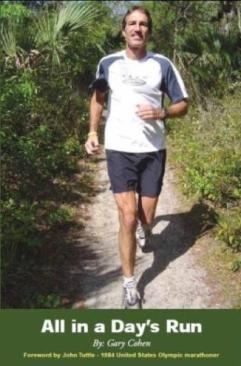 
"All in a Day’s Run" is for competitive runners,
fitness enthusiasts and anyone who needs a "spark" to get healthier by increasing exercise and eating more nutritionally.
Click here for more info or to order
This is what the running elite has to say about "All in a Day's Run":
"Gary's experiences and thoughts are very entertaining, all levels of
runners can relate to them."
Brian Sell — 2008 U.S. Olympic Marathoner
"Each of Gary's essays is a short read with great information on training,
racing and nutrition."
Dave McGillivray — Boston Marathon Race Director
|
 |
|
|
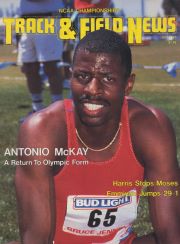
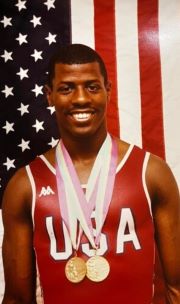
Antonio McKay is the 2008 Olympic Bronze Medalist at 400 meters. He was a member of the Olympic Gold Medal 4x400-meter relay in 1984 and 1988. Antonio is the 1987 and 1989 World Champion Indoor Gold Medalist at 400 meters. At the World Indoor Championships, in the 4x400-meter relay, he also earned a Gold Medal in 1987 and Silver Medal in 1991. McKay won the 1984 Olympic Trials at 400 meters. Antonio is the 1986 Goodwill Games Gold Medalist at 400 meters. He set World Records three times indoors at 300 meters, 400 meters, and 440 yards. McKay is a five-time USA Indoor Champion at 400 meters (1985/87/88/90/93). Antonio is a six-time Millrose Game Champion. His international victories include wins in Tokyo, London, Budapest, Rieti, and Bratislava. At Georgia Tech, he was 1984 NCAA Indoor and Outdoor Champion at 400 meters, before signing with the Mazda Track Club and Nike and turning professional, foregoing the remainder of his collegiate eligibility. At Roosevelt High School in Atlanta, Georgia, he was Class 2A State Champion at 400 meters in 1980, 1981 and 1982; at 200 meters in 1981 and 1982; and in the 4x400-meter relay in 1981. In 1982, he was Gold Medalist at the Golden South Classic in Orlando and Silver Medalist at the Keebler International Prep Invitational in Chicago. Personal best times are: 200 meters – 20.90; 300 meters – 32.51; 400 meters – 44.69; 500 yards – 56.30; 4x200m relay – 1:22.71; and 4x400-meter relay – 2:57.29. His 400-meters yearly best times as a pro are: 1984 – 44.71; 1986 – 44.69; 1987 – 44.69; 1988 – 44.79; 1989 – 45.59; 1990 – 45.08. Antonio has stayed close to the sport as he has coached Dunwoody High School and Sandy Springs High School, and his teams have won multiple Georgia State Championships. Through his business, ONTRACK, he coaches athletes, delivers motivational speeches, and shares his wisdom through social media. Antonio and his wife, Cameron, reside in Marietta, Georgia. He was very generous to spend two hours on the telephone for this interview in autumn of 2026.
|
|
| GCR: |
THE BIG PICTURE The ultimate goal in track and field is to earn medals against the best in the world. When you look back at achieving Gold Medals at the 1987 and 1989 World Indoor Championships. along with a Bronze Medals at the 1988 Olympics and Gold Medals on the 1984 and 1988 Olympic four-by-400-meter relays, how do you rate these achievements compared to your goals when you started competing as a young man with hopes and dreams of the future?
|
| AM |
When I was young, I thought I would be a quarterback in the NFL. But I was always running in my neighborhood and, when I was thirteen, I became the fastest kid in the neighborhood. I had always thought I would play football as I grew up watching Roger Staubach and the Dallas Cowboys. The biggest facet of track with me was always competing and taking one race at a time. Whether it was a high school meet or a World Championship, I was always nervous, but I wanted to be prepared. The big aspect for me was that I loved to compete.
|
|
| GCR: |
Though track and field athletes compete with many of the same competitors at the Olympics and World Championships, was there a different feeling when you scored your Olympic Bronze Medal and Olympic relay Gold medals versus when you earned Gold Medals at the World Indoor Championships?
|
| AM |
There was a difference between all of the medals. Some of them left a scar. In 1984, I won the Olympic Trials, and I felt very good about myself going into the finals in the Olympics. I thought I may have run a little fast through the rounds but that didn’t matter as I still thought I was going to win. I drew lane one for the final and that didn’t stop me from thinking I was going to win. When I got the Bronze Medal, It was truly a disappointment at that time. In 1984 I won the NCAA Championships, both indoors and outdoors, won the Olympic Trials, and the crowd was excited for my race. Even to this day, I don’t show the Bronze Medal a lot. It does mean a lot to me as I ran my fastest time and I have no complaints, but it was still one of those hurting moments because I wanted to win the Gold Medal. The World Indoor Championships in 1987 in Indianapolis was one of my greatest victories. The excitement of being indoors and knowing what people could do while I was so far behind with twenty meters left and to pull out the win was a great moment. The World Championships four-by-400-meter relay Gold Medal outdoors in Rome in 1987 was a big moment. I had missed making the 400-meter finals because I was a little sick. There was a question of whether or not I should be on the relay because I didn’t run well in the open 400 meters. The 1986 Goodwill Games was a big moment running in Moscow and winning that race out of the slow heat. The World Championships are always big because you can feel the crowd. I won USA Championships several times which were big. Setting World Records was magic. In 1988, in Seoul, Korea at the Olympics, I was the alternate on the four-by-400-meter relay and ran the first two rounds and earned the Gold Medal. I was hanging on but still wanted to be great. So, all of those medals gave me different feelings.
|
|
| GCR: |
How important was your performance as a member of the Olympic Gold Medal four by 400-meter relay team and Bronze Medalist in the 400 meters, plus your World Championship medals been to give you credibility, open doors and allowed you to mentor and influence others positively?
|
| AM |
Success is one hundred percent of what I aim for, whether it was coaching my kids or having a girls’ relay team I coached ranked number one in the nation. I hold kids accountable, meaning they have to be responsible to get to practice. I’m not going to keep up with them. I expect my athletes to be committed and to always come to practice and work hard. Our teams won five State Championships. So, success to me is taking an athlete and maximizing their performance based on their ability. I realize that every athlete is difference based on their speed and speed endurance. I love coaching and want to get the most out of my athletes. I don’t know if I’m more successful as a coach or as an athlete. There was one year that we only had twenty-four athletes on our team and we had nine of the girls receive scholarships to big schools. Track and field is one of the biggest sports, but it is so hard to get kids to love the sport more than they love basketball or football. When I went into the business world with OnTrack and trained adult athletes, they came out, respected me, and worked hard. I love my job, though it never seems like a job. When I was competing, that also didn’t feel like a job.
|
|
| GCR: |
You’ve coached teams at Dunwoody High School and Sandy Springs High School, and your squads have won multiple State Championships. How is it motivating others versus yourself, are there similarities and differences coaching boys versus girls, and how exciting is it to see your athletes reach their potential and win individual events and win as a team?
|
| AM |
I get just as nervous for my athletes. I could control what I did on the track but had to watch them. In the four-by-100-meter relay, no matter how good your team is, there is the possibility of mistakes. In seven years, we never dropped the baton though we ran fast. I had more girls win State Championships in the 800 meters and hurdles than the sprints because athletes who weren’t as gifted, but trained extremely hard, were able to win those events. Watching my athletes compete was hard but I always enjoyed it. One thing was that my athletes were always prepared. We didn’t make excuses. If someone came off the track and said, ‘I didn’t run well,’ I didn’t want to hear that. If they got a PR by one-tenth of a second, that was a great day. I had to help them develop positive attitudes. If someone thinks they are going to run a personal best every time they run, that is not possible. If they are close to their best time, then that is good. If you ran a PR every race, soon you would be running zero seconds and that is not possible. With females, if you love them and give them the avenues to question anything they want to ask you, they will run through a wall for you. The male athletes sort of love me in a different way – like a brother rather than a dad. All my athletes compete hard. Our goal if there were forty athletes on our team was for all of them to PR. Every year we would have ninety-five percent to ninety-nine percent to all of them get better – from the top athletes to the bottom athletes. We would have about ten track meets and seven meets would only allow two or three entrants per event per team. The other meets allowed everyone to run. We had a board and each athlete chose what event they wanted to run. If they were in the top two or three, they would race in the selective meets. The younger athletes would ask me what event they should run and I would steer them. When they were older, we would go for the events they had the best chance for a scholarship. To run well, you have to love what you do. So, the young athletes would run what they loved. As they got older, they would run where they had the greatest opportunity for success. They chose where they could win, even if it was a hard race. I didn’t love the 400 meters. I loved destroying people. It wasn’t that I wanted to run the 400 meters, but I wanted to be the best in the world and that race gave me that opportunity. I wanted my athletes to run races that gave their families the chance to save money if they got a scholarship.
|
|
| GCR: |
You mentioned a bit about your children running. Your daughter, Antoinetta, and son, Antonio, Jr., both competed in track and field in high school and at Georgia Tech. How was it balancing and separating the dad-child relationship from the mentor-athlete relationship?
|
| AM |
It was easy. When I coached them, I didn’t want to talk track with them in the evening. I trained and coached many of their friends. With Antoinetta, she would sometimes get upset. ‘You trained my friend to beat me.’ I had to remind her that she had great genes, a weight room downstairs, and many advantages. When Antonio went to Georgia Tech, I didn’t interfere with his coach whose job it was to coach him. When I coached the AAU basketball team, I mentored Antonio. When he played high school basketball, I sat in the stands and didn’t offer advice. If they won or lost, that was on the team and the coach. It was easy for me to separate coaching from parenting. If their coach was telling them one thing and I told them another, that would be too many hands in the pot and negative and so that wouldn’t work.
|
|
| GCR: |
The difference between Gold, Silver and Bronze Medals and no medal is so small at U.S. Championships and on the world stage. In the heat of competition, how focused are you on each phase of the 400 meters from your start to settling into your comfortably fast pace, to knowing where your opponents are, and to your final kick, as any small error can make such a big difference in your result?
|
| AM |
At the peak time of the year the biggest thing is slowing yourself down. Your body is in a certain rhythm, and you have to make sure you slow down during the first 150 meters. But you do want to focus on getting out the first sixty meters. So, every championship race in the early rounds, I would work to get out that first sixty meters and see where I was compared to the competitors. If I did that, I could control the race and back off. But if somebody was out too fast there was no reason for me to try to win the heat and quarterfinal. That is a mistake that I made in trying to win the early rounds instead of just qualifying.
|
|
| GCR: |
During your professional career, you crossed paths regularly with certain competitors. Did competing with Sunday Uti, Michael Franks, Alonzo Babers, Clarence Daniel, and others push you to a level that you may not have reached without them since you knew that, as hard as you were training, they were training strong to and wanted to beat you?
|
| AM |
Not in a major way. I respected many of the athletes off the track but on the track, I didn’t care who was there. People were talking about guys like Bert Cameron when I went into the 1984 Olympics. I knew his name but didn’t know him. My job wasn’t to worry about who was on the track. They were my enemies. I would shake their hands, but my job was to destroy them. I respected them but didn’t want to get to know them too well. I was more of a friend to guys like Johnny Gray that didn’t run my event. People that ran the 400 meters against me weren’t my great friends. There wasn’t a dislike, but I didn’t go to bed thinking about who I was running against. I was running against the track. I had respect for all the athletes. When I’m coaching, we know which athletes and teams are good, but I tell my team to do their job. We have a strategy in the 800 meters to stay close and to come from behind at the end. I know my competitors and my team know theirs, but the focus is on what we can do.
|
|
| GCR: |
I came out of Miami in high school, and it was awesome to be at a school with a diverse group of black, white, and Hispanic students and athletes. It’s interesting how the realm of sports has put the onus on social issues and helped with forward movement. Jackie Robinson’s step forward in desegregating Major League Baseball was big. The 1968 Olympic gesture by Tommie Smith and John Carlos, and I have interviewed John, is arguably one of the most defining events in the social and political history of sports in the United States. What are your thoughts on how sports figures even to this day are helping to advance social issues in the United States and are bringing people together to cheer for everyone on their favorite teams?
|
| AM |
I believe that athletes who have passion about female rights, voting rights, and health care, are on the right track. Those are all important to me. I don’t consider athletes as much as role models, but we do make an impact on the world. Religion is important but we need to remember that, though our religion is important to us, everyone’s religion is important. We need to instill in people to respect the law. We have to encourage all athletes to compete clean without PEDs. We need to help our communities. It’s our job to make this a better world. It has been is so important for me all of my life to think about people. When John Carlos and Tommie Smith raised their hands and when Jesse Owens said some things, I think that some people were confused by the moment. People were racist in the moment. There are people in this world who get on a bus with a bomb strapped to them and they blow up the bus. People don’t understand this, but I can because there are those with such strong beliefs that they do things we can’t normally comprehend. When Colin Kaepernick took a knee during the National Anthem at NFL games, it was important for people to take a stand with that. There are things that Lebron James does and said that are important. There are things Michael Jordan doesn’t do. We can’t just give money and then feel that we are fine because we have donated to charitable causes. We have to ask, ‘What do we believe in?’ A belief is planting seeds. Giving money is not planting a seed. It is important for us athletes to give back and to plant seeds.
|
|
| GCR: |
FORMATIVE YEARS AND HIGH SCHOOL RUNNING Can you describe your family, upbringing, your mentors as a youth and your sporting life before high school? Were you playing organized sports, pickup games in the street and at the park, or a combination of both?
|
| AM |
I played pickup games on the streets from age seven to thirteen. I also played organized football from age eight to college. Street ball was real and you could get hit in the eye or pushed down. There was trash talk all the time. In basketball I could be imitating Dr. J with a finger roll and calling out names. Sports was everything to me. That was all I did every day. We would start out at ten o’clock in the morning shooting basketball against a hard, metal backboard. We would play all day. It was usually three-on-three, we picked teams and hoped that someone would pick us. If you didn’t get picked, you had to work on becoming good. We ran races against each other in the street. In the home, I just had a mom, no dad. Mom didn’t have one partner that she dated. My mom was selling drugs out of the house. We got kicked out of the projects when I was thirteen and we had to move into different Section Eight housing. I grew up in rough neighborhoods. I grew up learning how to defend myself. Through all of this, I never had a drink in my life, any type of drugs, or smoked a cigarette. Some days there were gunshots and people getting shot in front of me. That’s how I grew up.
|
|
| GCR: |
How did you decide to start organized running and were you successful right away in transitioning from the fastest guy in the neighborhood to one of the fastest guys on the track?
|
| AM |
It happened right away. I could beat everybody. When I was fourteen and fifteen, I traveled with a track team, and we went to Florida once a year. We ran AAU meets and I would win my races. I raced against Stanley Blaylock and Sam Graddy. My first loss was to Sam Graddy in the one hundred meters. I always thought I was going to be a 100-meter runner. That was the only organized track that I ran until I was in high school.
|
|
| GCR: |
In addition to being a six-time State Champion on the track, you were also two-time All-State in football and All-State in basketball at Roosevelt High School. After I graduated from high school at Miami Carol City, my family moved north to Titusville and my brothers were track teammates with Cris Collinsworth who was All-State in football, made it to the State basketball final four and was the State champ at 100 yards, I got to see how Cris handled multiple sports. How did you balance success in three sports and was one sport your favorite?
|
| AM |
Track wasn’t a sport where athletes could make much money, so it was secondary. My favorite sport was basketball. I was a guy who could jump out of the gym, get the rebounds, and make the shots. I thought I was good, but I wasn’t as good as I needed to be. Football was good for me because I could throw the ball seventy yards, I could run, and I could jump. But I didn’t like to get hit. When I got to Georgia Tech, I decided that football wasn’t for me because these guys hit too hard. Track became the sport where I started thinking that I could make money. Back then, sport selection was very much about making money and earning a living. I always won and was used to winning. When you go forward to when I was nineteen and set a World Record, that steered me away from football to track. So, I was thinking about what I liked and how I could make money.
|
|
| GCR: |
When I think back to my high school track coaches, they weren’t great distance coaches, but they were great men and mentors who were rooting for me to do my best. What were the primary principles that your coaches at Roosevelt High School, including Coach Harris Pryor and Coach Jim Booth, used to guide you in multiple sports and what were the main tenets of your track and field training?
|
| AM |
My main coach was my basketball coach and football quarterback coach. That was Fred Price. He coached me in all the sports so all year around I was with him. We would go from football to basketball to the track. I can’t remember many of the track practices. We had a stadium track that was concrete. We would run around the track in our spikes and little sparks were coming out. I didn’t train much for track. I ran the 400 meters, and I ran the 200 meters and I was simply good. I used the talent I was given. It was the base work all year long of running and playing sports though I didn’t really train specifically for track.
|
|
| GCR: |
Let’s look back at some of your State meet results in high school. Your sophomore year at the 1980 Georgia Class 2A Championships, you won the 400 meters in 49.49, ahead of Christopher Yates of Mitchell County and David Lynn of North Fulton. What do you recall as you were fifteen or sixteen years old and took home the Gold Medal?
|
| AM |
The State Championship was held at Jefferson, Georgia, and the meet announcer was a guy named Mr. Morris Bryan. He used to really hype up the athletes. I would hear something like, ‘In lane three is Antonio McKay. You’ve got to watch him.’ I heard Mr. Bryan and I was getting so pumped up. I was nervous because there were guys from different schools though I did notice some of them in the preliminary rounds. After fifty meters, the race was over. I just got out. I was gone. I could hear Mr. Bryan as I was running. ‘Antonio McKay is leading and what record is he going to break today?’ It wasn’t a close race. I won by fifteen or twenty meters.
|
|
| GCR: |
Your junior year in 1981 at the Georgia Class 2A Championships, you ran much faster and won the 400 meters in 47.96 ahead of Daryl Wise of Vidalia and Milton Griffin of Putnam County. Then you won your second title that year in the 200 meters in 21.95 ahead of Miles Nicholson of Lakeshore, who had won the 100 meters, and Wayne Tate of Briarwood. What was that 200 meters like as two State champs faced off with you moving down from the 400 meters and Miles Nicholson moving up from the 100 meters?
|
| AM |
I felt like it was a fight and I couldn’t lose. I liked it. When you face competition and you know the person a bit because you are in the same city and state, it’s a little different. I didn’t feel that I could lose. We were lining up and I could feel that excitement. The 400 meters was a race where I was out front and worried if I was going to die in the last sixty meters. That finish line was like a time bomb ticking and I had to get there before it blew up. In the 200 meters, I felt that if I was close, I got it.
|
|
| GCR: |
What had to be exciting was that your relay teammates and you won the 1981 Georgia Class 2A Mile Relay for Roosevelt High. Reginald Merritts led off, followed by Lawrence Kelly and Donald Kelly, and then you brought the stick home in 3:20.74. Were you ahead when you got the baton or did you have to catch Reidsville anchor Terry Mincey, Lakeshore anchor Miles Nicholson, Upson anchor Johnny Cherry or more than one of them?
|
| AM |
Lawrence and Don Kelly played basketball with me, and those two brothers were like my family. They said before the race, ‘If we get you close, what are you going to do?’ We were way back when I got the baton. My nickname in high school was ‘Yo-yo’ and I could hear the crowd chanting ‘Yo, yo, yo, yo!’ When I was coming down the back stretch, one of those guys was so far ahead but I caught him at about three hundred meters. That was a great moment. When I look back – did it really happen? It was like a dream.
|
|
| GCR: |
Your senior year you were two-time defending champ in the 400 meters and the defending champ at 200meters. At the 1982 Georgia Class 2A Championships, you won the 400 meters in 47.28, with Daryl Wise of Vidalia in second place again followed by Archie Robinson of Calhoun County. Then in the 200 meters you dropped your time to 21.56, beating Wayne Tate of Briarwood and John McDowell of Pike County. Were there any challenges from these guys or were you off the front and steaming to the finish for these two wins?
|
| AM |
Daryl Wise ended up also going to Georgia Tech and we had some conversations about running. He had some type of injury in high school, they put dry ice on it, and he had a big scar there. He recovered from that. When I saw him at State, he was a great looking athlete, and I felt I had to go strong. I gave him respect but it wasn’t a tough race.
|
|
| GCR: |
Were there any national meets you raced after the Georgia State meet your senior year?
|
| AM |
After I ran that 47.28 for 400 meters at the Georgia State meet, I was invited to the Golden South meet in Orlando. James Rolle was the top high school 400-meter runner in the nation and had run something like 46.5 seconds. Stanley Blalock and I went down to the meet, and the announcer was talking up James Rolle. I heard, ‘Antonio McKay of Georgia has run 47.28 seconds but watch out for James Rolle.’ I was thinking, ‘Are you kidding me?’ But on the back stretch at 200 meters this guy was flying. I had to get to James Rolle, and I did get up to him. We went down the home stretch, and I pulled away with about five meters to go. I ran 45.84 which ended up being the Georgia state record until around five years ago. That was the biggest breakthrough for me. Then James and I ran at the International Prep Invitational in Chicago two weeks later and he got me back. We both leaned at the finish line, and I remember falling and tearing up the right side of my arm. We both had the same time of 45.9 seconds and that was my first loss. Those two races made me really love track. I was thinking, ‘This right here may be for me.’ That summer opened up my eyes before football season that track might be it for me.
|
|
| GCR: |
COLLEGIATE COMPETITION What colleges recruited you, did you narrow your choices, and why did you decide to attend Georgia Tech University?
|
| AM |
I had been on the Georgia Tech campus often because my mom worked at Georgia Tech’s Baptist Student Center. My grandmother lived at Techwood Homes which was between Georgia Tech and the Coca-Cola headquarters. So, I was always in the Georgia Tech area since I was about ten years old. I remember one time during my sophomore year when I was there with my mom, I walked onto the track. Coach Buddy Fowlkes was there and they were practicing. He asked me who I was and I said, ‘I’m Antonio McKay. Come to the State track meet and watch because I’m going to win.’ He looked at me like it was a joke but that was the start of me building up a little bit of a relationship with Coach Fowlkes. My college decision was really focused on playing football. Everybody thought I would play football and not be as serious about track. I was about to sign with Tennessee but, at the last minute, they told me they were going to have me play wide receiver. Georgia Tech was recruiting me and the recruiter I dealt with was Andy Young. When things fell apart with Tennessee, I ended up going to Georgia Tech.
|
|
| GCR: |
How was it for you transitioning to college at Georgia Tech athletically, academically and having more independence?
|
| AM |
I had my own room which was because I was as good as I was going into Georgia Tech. I roomed next to one of the basketball players. My situation at home was in such a rough neighborhood that, after I went to Georgia Tech, I only went home one time. I stayed at school in the summertime. Then when I decided to go pro in track during my sophomore year, I moved right into an apartment. The transition for me from home to college was the best thing in the world, especially eating. I went into college weighing 162 pounds. When football season started, I was over 180 pounds. But I had to lose that weight back.
|
|
| GCR: |
Can you describe your freshman year football injury and how this and the high talent level of the football players changed your major focus to track and field?
|
| AM |
I think the injury started my junior year in high school. I heard a pop in my knee when I was playing basketball. I sat out for a while as it was scary when I heard that pop. Over time it seemed to heal itself. When I started football practice at Georgia Tech, I did a fifteen-yard route, made a cut, and I heard a pop again. I remember Doctor Fred Allman doing my surgery. He was famous at that time. At that time, if you had ligament damage, you came out in a cast and you were basically done in track because your leg would be stiff for so long. They told me before the surgery that, if I came out in a wrap, that they were able to just do cartilage work which wasn’t as serious. When I woke up, I was nervous. I looked at my knee and it was wrapped. They had cleaned around the knee which allowed me to keep competing, but it also caused swelling throughout my whole track career. The surgery went well though, the first year or two, I would start running well and then have a setback. I do believe that the knee injury did hold me back from being genuinely great because it was never fully right after that.
|
|
| GCR: |
How did Coaches Bobby Fowlkes, Grover Hinsdale and others help you grow as a runner and person and what were the main points of their training system regarding endurance and speed compared to your training in high school?
|
| AM |
I loved all of the sports and loved to study the sports. When I was competing, I always thought that I wasn’t fast enough throughout my career. I thought I needed more speed. Our program at Georgia Tech was more of a conditioning program. We would do six repeats of 200 meters one day and eight repeat 200 meters another day. We would take a two-minute rest in between. Another day we would do four times 300 meters with more rest. We would sometimes do two times 600 meters. Some combination of those workouts was happening every day. I never switched coaches because I thought that for success an athlete should stay with a consistent regimen. So, my program was focused mostly on repeats of 200 meters up to 600 meters but never any pure speed sessions of under 60 meters. When I look at my career, going all the way back to high school, I don’t think I did enough pure speed workouts. My practices didn’t seem hard. What I mean is that, if I was doing six or eight 200s, I could start at 24 seconds and get down to 22 seconds. I would get tired but that wasn’t really the reason for long sprints. I got good every year because God is so good. During my whole career it came down to conditioning, but I was never geared up like I now gear up my athletes. We do repeat hundreds and then stretch out the pace for longer distances. We do fast sprints from ten to forty meters to work on turnover and speed. When I look back on my career, I do wish I could have been trained differently.
|
|
| GCR: |
Let’s look at a few of the key races from your short college racing before you turned pro. First, at the 1984 NCAA Indoor Championships you won an extremely close 400 meters in 46.66 seconds, just ahead of Sunday Uti from Iowa State who clocked 46.68, Michael Franks at 46.69, and Danny Harris at 46.81 seconds. Can you take us through the race and your great kick to come from behind to pass leaders with ten meters to go and win?
|
| AM |
I wanted to get out in the lead. When the gun went off, I was thinking, ‘Get out, get out, get out!’ But Michael Franks and Sunday Uti were out fast. I often come from behind. I did know that I could beat them. I felt comfortable that I wasn’t working that hard. Then I took the right moment to take them out. There was no moment in that race that I thought I was going to lose, even as close as it was, it wasn’t close to me. I do have so much respect for those athletes that I know I have to stay right in position so I can make my move. There is a lot of strategy and belief in what I am doing when I run these types of races. Though they are close, if you watch them, in the last stretch I am flying, and they seem like they are barely moving. I try to time the finish line and win the race.
|
|
| GCR: |
A few months later at the 1984 NCAA Outdoor Championships in Eugene you came from behind again but this time it was with fifty meters to go, and you won more comfortably in 44.83 seconds ahead of Michael Franks at 45.20, Sunday Uti at 45.23 and Sunder Nix at 45.67 seconds. Though you only won by three or four meters, was there any doubt that you were going to win?
|
| AM |
I knew I was going to win, and this was also how I felt at the Olympics, though it didn’t happen in Los Angeles.
|
|
| GCR: |
At the 1985 NCAA Indoor Championships, you strained your hamstring in the qualifying heat before Michael Franks beat you in the final with a quick 46.27 seconds to your 46.66 finish. Was that one of those races where you couldn’t shift to top gear because of the potential for a greater injury?
|
| AM |
At the 1985 NCAA Indoor Championships, you strained your hamstring in the qualifying heat before Michael Franks beat you in the final with a quick 46.27 seconds to your 46.66 finish. Was that one of those races where you couldn’t shift to top gear because of the potential for a greater injury?
|
|
| GCR: |
OLYMPIC TRIALS, U.S. CHAMPIONSHIPS, OLYMPICS, AND WORLD CHAMPIONSHIPS At the 1984 Olympic Trials you won your heat in 45.35 seconds, won your quarterfinal in 44.95, and were second in your semifinal in 45.20. Then in the final, Alonzo Babers led off the final turn until you passed him to win in 44.71, with Alonzo at 44.86, followed by Sunder Nix in 45.15, Ray Armstead in 45.25, Walter McCoy in 45.51, and Willie Smith also in 45.51 seconds. What was it like as you went through the rounds and was the final your race as you executed as usual and were strong at the end?
|
| AM |
I felt really good going into the Olympic Trials coming out of the NCAA Championships. I felt like everything was in my favor with the way I’d been running - finishing strong and catching people down the stretch. It was similar to how I felt going into the Olympic final; it just didn’t happen the same way. I didn’t know a lot about Alonzo Babers, but I knew about the other athletes going into the Olympic Trials. So yes, that made me feel rather good about my chances.
|
|
| GCR: |
In the 1984 Olympics you won your heat in 45.55 seconds, won your quarterfinal in a quick 44.72 and were third in your semifinal in 44.92; Can you tell us about the final as you were in position on the homestretch and then Alonzo Babers pulled away to win in 44.27, with Gabriel Tiacoh of the Ivory Coast in 44.54, you were third in 44.71, followed closely by Darren Clark and Sunder Nix, both in 44.75 seconds? Did you realize how close you were to not getting a medal?
|
| AM |
The only round I regret before the finals was the second round because Darren Clark went out so fast that I ran that 44.72 which was too fast to go in an early round. It wasn’t just Darren, but the crowd was so loud since we were in Los Angeles. But I felt good. I went through the rounds and felt like I was going to win in the final. I’ve been asked how it was going through the rounds. The whole experience was magic. I wasn’t used to running in front of that many people. The Olympic crowd was screaming. I tried to hold back but it was magic. I felt that I could fly. I didn’t totally understand how to ease up, and I didn’t understand world competition. I could have geared it back a little bit and saved more juice for the final. It still was great. But in the Olympic final, with forty meters to go, I could feel my whole body crumbling. I had beaten Alonzo Babers at the Olympic Trials, and he just walked away from me. Gabriel Tiacoh did the same thing. I wasn’t used to that. When I look back at it, could I have beat them even if they were right next to me instead of me being in lane one? But they just walked away. I thought I was going to win the race and they just left me. I was crushed when I saw Alonzo and Gabriel cross the line. If you watch the last five meters of the race, I started to back off and, at that moment, I didn’t know I was backing off. After the race, I didn’t know if I got a medal or not. All I had thought about was winning and I didn’t care if I got a medal because I was in a state of shock. I fell to the track and was pounding the ground thinking, ‘I can’t believe I lost.’ But I was so happy to find out I did get the Bronze Medal because, to go from aiming to win to getting nothing, would have been crazy and destroyed me even more. When you mentioned this, I didn’t even realize up to today that Darren Clark and Sunder Nix were so close to me.
|
|
| GCR: |
In the 1984 Olympics 4x400 meter relay the race was exciting and competitive through the first two legs. Sunder Nix was out strong for Team USA, but behind Australia and Nigeria at the first exchange. Ray Armstead passed Nigeria, but the Aussies led at second exchange with USA second. On the third leg, Alonzo Babers took the lead down the home stretch and handed you a ten-meter lead. Then you stretched it out and Team USA won by twenty meters in 2:57.91. What was it like watching Sunder and Ray stay in the mix, seeing Alonzo take the lead, and then you getting the baton in the lead with the home country crowd in Los Angeles going crazy?
|
| AM |
I love relays. I always tell the athletes I coach that, in the open races, there is an opportunity for them. In a relay they represent their school. In an individual race you also represent the school but, in the relay, there are three others with you. That doesn’t mean that you have to win but you can’t go out and run badly. For me to take that baton from Alonzo in the last track event of the Olympics with the crowd going wild, there was no way I wasn’t going to get it done. I hit throttle, throttle, throttle until I had nothing left. I wanted to get a big lead where I was so far ahead that they could come after me but couldn’t close the gap. I took that baton and, in the first 200 meters, I was running like it was a 200-meter race. I wanted that finish line to come because I knew I was going out so fast. It was a magic moment to cross the line and get a Gold Medal. And the guy that beat me in the open 400 meters gave me such a big lead. After I crossed the line, the pressure was off. I got a Gold Medal. I wanted to get two Gold Medals, but at least I could go back home to Atlanta with a Gold Medal. That moment changed my life. I think that, if we hadn’t won the relay Gold Medal, that could have been one of those instances where I decided I may never run track again.
|
|
| GCR: |
What was it like being on the podium with your three relay teammates since you have heard the National Anthem for others, but now it was for you and your guys?
|
| AM |
It started with the Bronze Medal in the 400 meters. The great thing about it was that Alonzo Babers won and we got to hear our song. I was a proud moment being a black male growing up in the south through all the things going on with racism and all the national events with Martin Luther King, Jr, Rosa Parks, and John Kennedy. I was standing on the podium and felt that I made a difference for this country. When they pulled the flag back down, they gave it to us. It was a magic moment and one of the best moments of my life.
|
|
| GCR: |
Moving forward, after the 1984 Olympics, you won the U.S. Indoor Championships 400 meters in 1985, 1986 and 1987. The first two times weren’t too close but in 1987 Clarence Daniel was leading until you passed him coming off the last turn. How did you like racing indoors, often on the boards, with the crowd so close – was it exciting?
|
| AM |
You hit it on the head. I liked the energy. I grew up fighting and I grew up in a rough environment. Being close indoors with the crowd around could make a crowd of two or three thousand fans feel like there were forty thousand there. We would break in after the stagger start and could feel the other athletes right in front of you or close to you. You knew where they were at all times. Outdoors you could let someone get away a bit. But indoors I utilized my quickness and power. I ran all year around and loved when indoor season started. There was strategy but it came down to that last 100 meters or, on the Madison Square Garden track, the last 120 yards. Those tracks were tight so to run 46 or 47 seconds let you know what kind of shape you were in. I would break it down going into a turn and surge coming out of a turn. And I knew that going into that last curve where I had power, I could swing up a little bit and with twenty meters to go I could take people out. Clarence Daniel was in great shape in 1987. He was a good friend of mine who, at one time, visited me in Atlanta with his wife, and I got us all tickets to see Michael Jackson in concert. But back to the race, though he was in great shape, I knew I could win. I felt that indoors I could beat anybody.
|
|
| GCR: |
After the 1987 U.S. Indoor Championships, the 1987 World Indoor Championships were held in Indianapolis. After winning your heat in 47.33 seconds and semifinal in 46.70, you raced a fast 45.98 to win the Gold Medal over Roberto Hernandez of Cuba who was a couple steps back in 46.09 and Michael Franks right behind him in 46.19 seconds. Can you take us through your Gold Medal win on the World Stage against strong competition?
|
| AM |
That is one race where I knew that Roberto Hernandez was like a mad man. He had run low 44s the previous summer and would just take the pace out. That dude was tough. When I went into the race, I knew what Hernandez would do. He was going to open it up. Michael Franks was a guy who was incredibly good before I came on the scene. He had some good international meets, and he also went out fast. I knew that I needed to stay close. I decided that I wasn’t going to stay way to the back. I planned to go out. We ran the first lap and I was behind. Ian Morris was also in the race. I hadn’t raced him, but he was a great 500-meter runner. He always was talking trash. ‘If I ran the 400 meters, you wouldn’t walk me down.’ I did have good respect for him. I remember Ian coming up on me and thinking, ‘No dude, not today.’ Then I exploded. I didn’t realize I was so far behind. Coming out of the last curve, I was thinking, ‘Can I get them? Can I get them?’ With about four meters to go and then two meters to go I shot past and threw my arms up into the air. I bounced around the curve after the finish. I usually stop and bend down after races, but that energy went through me. That was one of the most exciting races I ever ran.
|
|
| GCR: |
At the 1987 TAC Championships, you won your heat in 45.35 seconds and semifinal in 45.18, but in the final Butch Reynolds sped a quick 44.46, with Roddie Haley second in 44.83, followed by you in third place in 45.24 seconds. Though you made the team for the World Championships, what was it like having two different guys ahead of you?
|
| AM |
Butch Reynolds had been around and ran in the 1984 Olympics, but he was a whole lot faster. There aren’t a lot of guys at the top in the 400 meters, maybe four or five at a time in the U.S. A couple guys would fall off and new guys like Steve Lewis and Danny Everett would come up toward the top. When Butch was running well, we just had to get off the track. He was running crazy fast times and how was I going to get in the 43s? It was frustrating but I had to go out there and try to block that out. I had to run my race my way and still try to win. It was challenging when he got away in the first 150 meters and even more when he additionally pulled away in the last 100 meters. When I looked at his times it was tough because how could I catch a guy who was ten meters ahead of me with a hundred meters left in the race? If I ran 12.5 seconds, he would have to slow to at least 13,5 seconds. That was impossible, so I didn’t have a chance to catch him. I had to regroup every year and plan to win. Even late in the season with the times other guys were running, I still had to believe that I could win.
|
|
| GCR: |
At the 1987 World Championships, as we mentioned briefly, you were a bit under the weather and didn’t make the 400-meter final. But in the four-by-400-meter relay, Team USA ran a 2:59.06 in the semifinals and a World Championship Meet Record of 2:57.29 in the final for a Gold Medal victory. What can you tell me about that race, as Danny Everett was out in 45.1 and even with Great Britain, Roddy Haley split 43.9 to give you a small lead, you ran strong against Roger Black in 44.1 to extend the lead to twelve meters, and Butch Reynolds brought the stick home in 44.1 for a twenty-meter win over Great Britain and Cuba who also ran fast and broke three minutes?
|
| AM |
That was my fastest split ever on a relay. I had three days off before that race because I was knocked out in the 400 meters. Roger Black was almost right beside me when I took the baton. It wasn’t just that I couldn’t let the guys down – I couldn’t let myself down. When I got knocked out in the rounds, Thomas Schoenlabe got away from me and I couldn’t respond. In the relay, I got the baton and I felt good. Roger Black tried to pull up with me on the home stretch, but I pulled away. When I look at that race, I put us ahead with a strong leg. That medal has all the rainbow colors in it and that was another great moment for me. That was a moment when I represented my country, but I also stepped up. That was a big race for me and a big win. When Butch took the baton, he ran well and the leadoff leg was great. It was a beautiful race.
|
|
| GCR: |
You ran fast at the 1988 Olympic Trials with a 44.92 quarterfinal, 44.81 semifinal and 44.79 in the final that only yielded fifth place. Then in the Olympics in Seoul, Korea, you raced 400 meters on the Team USA 4x400-meter relay as we won the heat and semifinal. What was it like not to be in the final but to contribute to Team USA by giving some of your teammates rest so they would be strong for the final? How was the feeling of being a Gold Medalist, being an integral part of the team, but on a different pathway?
|
| AM |
I can’t say it any better than the way you described it. I had to play a different role. When I got fifth place in the Olympic Trials, I was happy that I had at least made the team for the relay pool. When I went into the Olympic Trials, I was still trying to win but I knew my career was closer to the end. Getting fifth place, making the team, and running in two rounds was a victory at that point in my career. I was that bench player like the sixth man in basketball. It was a special moment. I learned a lot from that moment, which helped me a lot when I was coaching my high school athletes. I learned that I may not run the fastest split, but my split is as important as the fastest person on the relay. That was big for me. Andrew Valmon was also on the sideline with me after he ran the first two rounds. We got Gold Medals and it was like when basketball players who don’t start or don’t play get a Gold Medal. But Andrew and I got to play, we got to run. There are so many things we can learn and that give us growth through sports and playing our part. I am honest with my athletes and honest with myself, which means knowing my role and executing my role. I always tell people when I do speaking engagements that we all are important. Someone may be the company CEO, but what about the janitor who keeps the office clean? What about the person that keeps the lights on? Every part is important. We clean up the home before bed, so it is neat in the morning. We take care of our dogs. All these things make a difference.
|
|
| GCR: |
Did you attend the Opening Ceremonies or Closing Ceremonies at the 1984 or 1988 Olympics?
|
| AM |
The Opening Ceremonies are so much fun. I went to both of them. We are around all these athletes when we come in, we are dancing, and we’re having fun. Those are moments that are so much fun. I didn’t go to the Closing Ceremonies.
|
|
| GCR: |
The following year we were back indoors where you love racing and you won the 1989 U.S. Indoor Championships before totally crushing it at the 1989 World Indoor Championships, winning your heat in 46.86 seconds, racing a fast 46.06 to win your semifinal, and then making a bold move with half a lap to go to win the final in an American Record of 45.59. Was that another one of those magic moments where it all came together?
|
| AM |
Thank God it was indoors. I had some juice left and that race was set up well for me. I knew that my career was nearly over and I won the Gold Medal. To win in Budapest was amazing. The rest of my career was just hanging on but that race was magic. I still don’t know how I won. Sometimes when I reflect back on my career, I think, ‘There were a lot of Gold Medals.’ I was pretty tough. I love the sport, and love competing. I respect the athletes from the other countries. Sometimes I think about foreign athletes who come to the U.S., get coaching here, and end up beating are athletes. Is this fair? Then I think that yes, it is. Many athletes come from countries where there aren’t great educational opportunities. I learned a lot about giving, what is important in this world, and I made many friendships.
|
|
| GCR: |
You mentioned your career winding down towards its end. At the 1991 World Indoor Championships, Raymond Pierre led off the 4x400-meter relay for Team USA and was in second place behind Germany. Chip Jenkins held second place. Andre Valmon passed the German runner after lap one of the third leg and gave you a ten-meter lead. But Thomas Schoenlabe closed on back stretch and went by you with 30 meters to go as Germany won by just over a meter in 3:03.05 and Team USA was second in 3:03.24. What was it like when Schoenlabe came up on you and you weren’t able to hold him off?
|
| AM |
When people ask me how that felt – it was like walking into a fight knowing you were about to get knocked out. I just knew I was going to get knocked out and there was nothing I could do. I took the baton with the lead and tried to hold him off. I was thinking, ‘I’ve got to hold him off. I can do it! I can do it!’ Then I felt him come up on me. I had never been walked down in my life. I knew that dude was going to knock me out which meant that I had doubts. I gave him everything I had but there was nothing I could do.
|
|
| GCR: |
OTHER MAJOR COMPETITIONS Let’s chat about a few other big competitions. You briefly mentioned the 1986 Goodwill Games earlier which were held in Moscow. What do you recall from that race as Team USA swept the first four places with you winning in 44.98, followed by Clarence Daniel in 45.10, Darrell Robinson in 45.15 and Walter McCoy, a Florida guy I watched race in high school, in 45.56. What was it like to race in Moscow and be a part of such a strong Team USA foursome?
|
| AM |
The heats didn’t go well for me. If there weren’t two heats in the final, I wouldn’t have been in the final. I was in the slow first heat and ran my 44.98 time. They didn’t think I would win but Darrell Robinson, who had run strong to make the final as the top seed, didn’t beat my time. I couldn’t believe that I won another Gold Medal and did it in Moscow. Ted Turner had started the Goodwill Games and, since I was from Atlanta, that meant a lot to me. Some people don’t look at that meet as a World Championships since the meet was discontinued after several years. I like Moscow and I got to see Red Square and Lenin’s tomb. I got a piece of the Berlin Wall in Germany.
|
|
| GCR: |
In 1986 you won races all over the world in Tokyo in 45.15, in London in 44.89, in Budapest in 44.79, and Rieti in 45.35. What was it like racing in so many cities worldwide where track and field is a popular sport and the crowd was going wild as you were taking home Gold Medals in these stadiums?
|
| AM |
One of my favorite movies is ‘Jerry MacGuire.’ I like it when he says, ‘Show me the money.’ I really appreciate what you just said. It is magic what you mentioned. It is powerful for me because of how and where I grew up. I got to see the world. I got to do all of those things. I grew up in a house of drugs. Racing all over the world was magic.
|
|
| GCR: |
Even the following year in 1987 when you weren’t winning as frequently, you raced in places like London, Nice, Rome, Zurich, and Berlin, were usually in the top four and were racing in the 45s. I travelled to Europe in 1998 on the Track and Field News tour and saw the big meets in Zurich and Monaco. It was almost like having the Olympic finals in one day in each of those two cities. Was it almost like every European meet was an Olympic final?
|
| AM |
That is how it was because we were invited to run. If we were invited, then we got paid. There were always top runners in these races. There may have been one or two races where I ran in a small town, but I had seven or eight years in Europe in the summers of traveling and competing. I always gave it one hundred percent. My athletes sometimes ask me, ‘Coach, did you ever run a bad race?’ I never ran a bad race. There were just times when I got beat. You step on the track and you run. I don’t know what a bad race is. Just because you didn’t win doesn’t mean you had a bad race. When you step on the track, you just go.
|
|
| GCR: |
Are there any other outdoor races that hold special memories?
|
| AM |
In Stuttgart, Germany I set the World Record in the 300 meters. The media thought that Sergei Bubka was going to get the Athlete of the Meet Award. But I did and it was this amazing trophy. That was another incredible moment when something special happened.
|
|
| GCR: |
We spoke quite a bit about indoor racing but not specifically about the Millrose Games where you won six out of seven years from 1985 to 1991. Tyrome Kemp did edge you in 1990. What was it like running at the Millrose Games with its history that spans decades?
|
| AM |
When we talk about track or anything in life, history is powerful. So, the Millrose Games represented history. I wanted to make a difference and running Millrose was like running into history. It was so special. Eamonn Coghlan was winning the mile every year. There were so many other great athletes there year after year. The meet director and his team treated us so well. It was like when we competed in Zurich outdoors. They awarded us watches and treated us special. Running on the board track was a piece of history. Also, at that time I was the first black athlete to run with the New York Athletic Club which was another neat aspect in the many things that were great about New York
|
|
| GCR: |
One final indoor race we have to chat about is the 1988 Sunkist Invitational that you raced at 500 yards. I watched it twice on my big screen TV and then got my wife to watch it with me. What are your memories of how tough that was running the extra 60 yards and then with Roddy Haley out in the lead, how he held you off when you challenged him on the backstretch of the last lap and then you surged to catch him and win in 56.3 seconds in a photo finish?
|
| AM |
I asked Roddy after the race, ‘What’s wrong with you, fool? You’re supposed to let me pass you when I go like that on the back stretch!’ I thought I had him right there and he hit another gear and, I tell you, I had to reach down. That was a battle. He hit his gear and we went down that last straight neck and neck. I went back and watched that race too and 500 yards teaches you a lot about life. Sometimes life doesn’t go the way you want it to go but you better keep fighting. There was that moment on the backstretch when I thought I had him. If I hadn’t been tough, I would have conceded like most athletes do at that point. This reminds me of what you did when you ran the mile, the two-mile, and the three-mile. You were used to someone saving an extra gear in those long races. In the 400 meters I’m not used to that. In the 500 yards, when someone goes to pass you, the leader usually says to himself, ‘I surrender.’ I wasn’t used to what Roddy did and I had to reach down deep in that race.
|
|
| GCR: |
WRAPUP AND FINAL THOUGHTS Keeping fit in our sixties gets harder and you are sixty-two years old now. What do you do now for mental, emotional, and physical fitness and health and nutrition so you can be your best in life despite the challenges of Father Time?
|
| AM |
You defeat Father Time by being smart and by knowing your body. You work out six days a week, You work on your cardio and keeping the right heart rate in your workouts. You lift weights. You try to look better than you did three years ago. The idea is to still train like an athlete but to not overdo. How do we train like an athlete? My workouts haven’t changed a lot in the last fifteen years. I can lift just as much but, if I lift too much, I get swelling in my body. I make sure I eat the right foods and herbs. The biggest factor is minimizing stress. If we can eliminate stress, it is extremely helpful. I get up every day and check out the news, try to find the truth, and fight for people that keep me living and keep me young. Every day I do what I can to help people. I try to pick the moments to give and not try to help people too much. I eat right, drink right and that can help us to live a long time.
|
|
| GCR: |
After your successful career, you were inducted into the Georgia Tech Sports Hall of Fame in 1993, Georgia HOF in 1999, USATF Georgia Track and Field HOF in 2012, Atlanta Sports HOF in 2014, along with being named to the Atlantic Coast Conference 50th Anniversary team in 2002. Is it both exciting and humbling to be so honored and are there special memories from these inductions such as fellow inductees and who gave a speech introducing you?
|
| AM |
I appreciate it when organizations induct me into their Hall of Fame. But what means more are the people I competed with. I also am impressed by people like Carl Lewis who go on to coaching after their competitive days. I’m not too big on what people vote on. If there is a standard you must reach to be inducted, then that is more important to me. When we run on the track and there are eight lanes, whether we are in lane one or lane eight, they are all lanes. So, for these Hall of Fame events, we dress up and they are nice evenings, but they aren’t as meaningful as earning the Gold Medals or NCAA Championships or State Championships in high school. Those were earned. How many athletes have an NCAA Championship, a World Record, and a Gold Medal? I do, so I can say to myself that, at one time, in addition to those victories, I was the fastest ever in the world. How many people can say that? So, I’m good, I’m great, I’m beautiful, I’m powerful, I love who I am.
|
|
| GCR: |
In your event, from 2004 through the next fifteen years, what are your thoughts as you watched the changing of the guard in the 400 meters? And how exciting is it to watch so many great athletes in the entire sport of track and field?
|
| AM |
I love track and field and watching these guys come along. I enjoy watching them compete against each other. I like to watch the strategy of the races and see their history against each other. I also like listening to how they speak and what they have to say about the sport. I like watching athletes not just over three or four years but over seven or eight years. I like to see how their careers progress. Fast times never amaze me. I look from the outside and see if they are in the sport as clean athletes. I love this sport and do think that some of the times that are run I can’t understand and can’t process. The only way I can process them is through time. I look at an athlete’s history. Track and field is done with talent that was given to us and there is only so much that we can develop. How do you train? There are only so many methods of training. There is a limit though there is new technology and there are new shoes. But if you love the sport, you love a clean sport. I try to look at each athlete’s history because during my time there have been so many times that athletes and races were not clean. I love it when there is purity in our sport. I am a big fan of Noah Lyles. I like him because of his personality. I am a big believer and fan of Sydney McLaughlin. I love all the 800-meter runners and milers. I love those distances. When it comes to the sprints, I love Gabby Thomas, but I wish she would speak out more about the sport and not, when an athlete defeats her, saying at that moment that someone may not be clean. That makes you look like a sore loser. So, when you ask me about athletes, it is hard for me to respect many athletes.
|
|
| GCR: |
What advice do you give to youth and teenagers so that they can be their best and reach their potential as human beings with the gifts they have been given that all come together in the ‘Antonio McKay Philosophy’ of being your best as an athlete and your best in life?
|
| AM |
Be positive. When you go into a race, think that you can win. At the same time, that may bring you an edge as others will view you in a certain way. Also, respect the sport. Remember that no matter great you become, we start a race and we finish a race but know that you are always in a race for the rest of your life. Life is long. To win is to be humble, give credit to others, and to keep moving forward – never stop. Enough is never enough. One medal is not enough. One victory is not enough. Practice good habits. You are what you do. Habits are particularly important. Stay away from drugs. Respect females. This is all key in loving who you are.
|
|
| GCR: |
Is there anything else you wish to add as we wrap up the main interview before we move on to ‘Inside Stuff?’
|
| AM |
My son Antonio, Jr.’s birthday was recently and this is the message I sent to him which should be meaningful to all who read it. ‘Happy birthday to you! I hope you have a great day on this rainy, beautiful, wet day. This is what makes things so great: being in a place, being around someone you love, and enjoying life. Keep growing. Protect your home and your wife-to-be. Make sure that comes first and then protect everything around you. Life is long, and it takes so many turns. I can think back to when you were born. I remember coaching you in baseball when you were younger, from when we lived in a townhome to moving to Acworth to living in Roswell. As I watched you play basketball, taking on responsibility, winning state championships, and graduating from Georgia Tech, you’ve been able to achieve at a higher level than 98% of people. Life truly is full of habits, good and bad. It doesn’t matter how old we are; we can still grow and mature. Our blessing is understanding everything we’re taught and also asking ourselves who do we want to be? Our parents, our friends, our pastor, and the people we work around give us history, knowledge, pain, joy, and embarrassment. But the biggest thing is taking a look at ourselves and always trying to be better. What I can tell you about me is that there have been many moments when I’ve been embarrassed by myself. There have been many moments when I wished I hadn’t said or done certain things, but I don’t want to live my life in regret. There will still be moments when I may be embarrassed or regret something, but I want to continue to be the best person I can be every day, living with responsibility and belief. Over these sixty-two years, people have tried to tell me what I should do, how I should live, and who I should help. What I’m willing to leave this earth with is what I’m willing to live with every day. I plan on living a long time. But if my life had ended 30 years ago, I would have loved the person I was. If it had ended yesterday, I would have loved the person I am. If it’s 30 years from now, I want to love the person I’ve become. The bottom line is to respect who you are. Happy birthday!’
|
|
| |
Inside Stuff |
| Hobbies/Interests |
I love golf. I started playing golf about fifteen years ago and have shot 67 and 65 a couple of times. I go at it just like track and field. I go out and play eighteen holes, go home, take a shower, and go out for another eighteen holes. I like to cook out. We grill often I don’t go out or travel much. We have three border collies and they are great. I buy what I want but don’t buy a lot of stuff. I keep my cars for fifteen to twenty years. I live a simple life and always have. Life is beautiful
|
| Nicknames |
When I was competing, some people were calling me ‘Special K.’ That happened right before the 1984 Olympics. ‘Yo-Yo’ came from when I was playing basketball. It was because of how I moved up and down dunking the basketball just like a yo-yo. I liked that nickname because it was different
|
| Favorite movies |
: I do love ‘Jerry McGuire.’ That movie goes through so many moments in athletics as to what is important, how an agent acts, and it is a great story about sports and how a coach and agent care about who they are working with. It’s just a great movie
|
| Favorite TV shows |
I used to love ‘Good Times.’ As an adult, ‘Game of Thrones’
|
| Favorite music |
Luther Vandross. I listened to ‘It’s Alright’ before every race. Marvin Gaye’s ‘What’s Goin’ On’ motivated me. Also, I’m big into Barry White
|
| Favorite books |
I don’t have a favorite book. I love history. I’m always on the internet going through history. We learn so much from history and what to repeat and not to repeat. There are patterns of people and I love history
|
| First car |
A Buick Regal that was light blue. That car was so sharp. I love my cars. I clean them, work on them, and take care of them
|
| Current car |
A 2016 BMW X5. It’s black. I also have an electric car. We are about to buy Cameron a BMW Roadster Z4. My cars are simple. I don’t buy new cars. I don’t believe in wasting money on new cars
|
| First Jobs |
I was mainly playing sports as a teenager. My first job was as a professional athlete. I had one fake job with Anheuser-Busch as part of their Olympic program. I had my own office that I never went to, and I did get a check
|
| Thoughts about work |
I believe that no human being should work more than four hours a day. Unfortunately, most people aren’t lucky enough to be in that position. So many people serve us every day, such as in restaurants, and many don’t have good health care. Some people work eight to sixteen hours a day. Life should be more than just a job and more balanced
|
| Family |
I am married to Cameron McKay. She is much younger than me by over twenty years. She makes me happy. My daughter, Antoinetta, has done a lot of nonprofit work. She is doing good in life and has been married for six years. Her baby, Leilani, is one year old. The baby is doing great. I’m called ‘Grandpa Yo-Yo’ now. This gives me another purpose in life that is different from having a daughter. I talk to Antoinetta all the time. I like taking care of my granddaughter, Leilani. My son, Antonio, Jr., is coaching. He got out of the corporate world about four years ago. He is back into the corporate world now along with his coaching. He will be getting married in three or four months. I’m proud of both of my children. In track, I thought that Antonio would be better than me because he was lighter than I was. He may not have had the mindset and killer instinct
|
| Pets |
Three border collies – ‘Kobe,’ ‘Blue,’ and ‘Bella.’ Bella will be thirteen in February. Blue will be nine later this year. We just got Kobe. She will be two in December. They all came up to me while we have been talking. They heard their names and are all around me now
|
| Favorite breakfast |
Bacon, eggs, and grits. I grew up eating that breakfast a lot
|
| Favorite meals |
I like seafood. We had lobster tail yesterday. We like ribeye steaks with sides of tomatoes and grits
|
| Favorite beverages |
I haven’t had a Sprite in probably two months, but Sprite is my favorite
|
| First track and field memories |
The first track meets that I went to were summer AAU meets when I was around thirteen years old. The first big track meet for me outside the state was a big moment in my life and that changed my life. When we ran in these big stadiums it felt like a dream
|
| Track and field heroes |
l look at the guys from the Mexico City Olympics in 1968 even though I was only about four years old. Lee Evans and the rest of the guys. I also think of Jesse Owens. Mel Pender is a good friend of mine, and he lives here in the Atlanta area. He is a good guy. He ran the hundred and relays and got medals. Those are the kind of guys I talk to. The guys back then put on long spikes, they didn’t have much, and they ran with a lot of pride. What those athletes endured was amazing. I love Carl Lewis. I don’t talk to the young guys as they have to learn the sport. For them to compete a lot of guys had to sacrifice. It’s not just about color. Look what Steve Prefontaine did when he was at Oregon. There is something about the passion and history that is beautiful. Guys like Lee Evans ran with some passion. When they left the Olympics and came back home, they didn’t get anything and no one cared who they were. Guys now make so much money and still cry when things don’t go their way
|
| Greatest track and field moments |
Number one is the World Championship in 1987. The World Record I set in Gainesville, Florida. The Olympic four-by-400-meter relay in 1984. The 1989 World Championship. The World Championship four-by-400-meter relay in Rome because Italy was my home base in the summer and I stayed there with a family. The NCAA Championships are great. There were many great moments
|
| Most disappointing track and field moment |
Number one would be getting the Olympic Bronze Medal in the 1984 Olympics. Other than that, not making a team or not doing something, even getting caught in that 1991 indoor relay, weren’t close
|
| Childhood dreams |
I mentioned wanting to be an NFL quarterback. But I have everything I want today. My life has truly been a dream. There isn’t anything I have not achieved that I want to achieve. So many different things have happened – good and bad. My sister was murdered. Life is still beautiful
|
| Proud memories |
One of the proudest memories I have of one of our athletes was in 1984 and it was with Willie Smith. It was before the semifinals of the 400 meters in the Olympic Trials. There was a gate where we were warming up and this man was beating his wife or girlfriend. Willie was warming up and told this man he was going to go over there and destroy him if he wouldn’t stop. I was amazed that in the heat of the moment when we were getting ready to race, he stopped the man from hitting the lady. That was so powerful to me
|
| Embarrassing moment one |
In 1988 I was in the cafeteria at the Olympics with all the athletes and I didn’t know what I was doing and I accidentally jumped the line. One of the guys from another country said something to me. I was so sorry and I went to the back of the line. Who am I to be jumping the line even though I was just going up to be with some friends. Those moments make me think about world peace. We are there to compete with each other and to have fun
|
| Embarrassing moment two |
Marty Liquori and I got into a bit of a difference of opinion because I had said I was embarrassed when I got the Olympic Bronze Medal. But we built a relationship as time went on. Marty announced many of my races and he talked about how I made a great comeback from that disappointment in 1984. The way people looked at me in 1984 was many thought I was cocky. I think Marty is a great person. We get an image of people because we don’t know them and we get sound bites. I do have a great relationship now with him
|
| Favorite places to travel |
Italy is number one. Zurich is number two and it is so clean. Monaco is a place to go and get out because it is so expensive, but it is beautiful. South Korea was different. Being in Tokyo was great. Morrocco was beautiful with castles and the beach. London was wet and cloudy. There was so much I was able to see. I love the west coast of the U.S. I love New York and especially the Broadway shows. Anytime I went to the Millrose Games I would go to Broadway. I love Atlanta and like living in the south. I wish the south would change a bit more. It looks like there is a good feeling toward blacks, but it is mostly for the top blacks that have made it
|
| Choose a Superhero – Batman, Superman, or Spiderman? |
Superman
|
| Choose a theme park – Disney World or Universal Orlando? |
Disney World
|
| Choose a Sylvester Stallone – Rocky, Rambo, or Dwight from ‘Tulsa King?’ |
Rocky
|
| Choose a comedian – Eddie Murphy, Redd Foxx, Kevin Hart, Chris Rock? |
Eddie Murphy. You can’t beat Eddie Murphy. Richard Pryor was old school and brought it home for everyone that followed him. Jamie Foxx is coming up now, but you can’t top Eddie Murphy
|
| Choose the beach or mountains? |
The beach
|
| Choose a tough guy – Vin Diesel or The Rock? |
The Rock
|
| Choose secret agent coolness – James Bond 007 or IMF Agent Ethan Hunt? |
James Bond
|
| Final closing comments from Antonio? |
You do a great job at this. You are really awesome. You are a good person. I can tell you love this
|
|
|
|
|
|
|