|
|
|
 garycohenrunning.com
be healthy • get more fit • race faster
| |
|
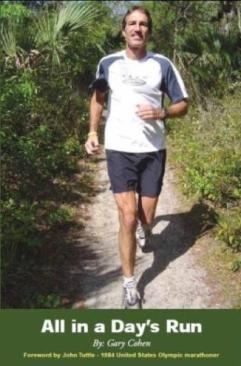 
"All in a Day’s Run" is for competitive runners,
fitness enthusiasts and anyone who needs a "spark" to get healthier by increasing exercise and eating more nutritionally.
Click here for more info or to order
This is what the running elite has to say about "All in a Day's Run":
"Gary's experiences and thoughts are very entertaining, all levels of
runners can relate to them."
Brian Sell — 2008 U.S. Olympic Marathoner
"Each of Gary's essays is a short read with great information on training,
racing and nutrition."
Dave McGillivray — Boston Marathon Race Director
|
 |
|
|
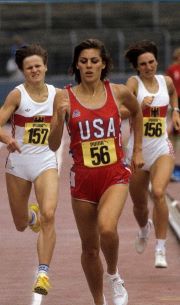
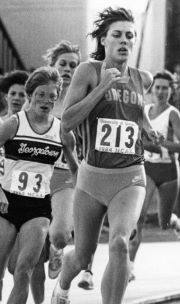
Claudette Groenendaal is one of the Oregon Ducks' top female distance runners of all time. Claudette captured the 1984 NCAA 1,500-meter title and finished second in the 800 meters. She finished second in the 1985 NCAA 1,500 meters before winning the 800 meters and leading the Oregon Ducks’ women to the NCAA track and field team title. Claudette was a member of the Ducks’ 1983 NCAA Cross Country Championship team. She is the 1985 and 1986 USA Champion at 800 meters and a member of the World Record four by mile relay squad whose 1985 World Record stands today. International wins at 800 meters include in Oslo, Lausanne, Sao Paulo, Gelnhausen, Larvik and Vancouver with additional podium finishes in London, Bern, Oslo, Rome, Hengelo, Byrkjelo, and Lausanne. At North Salem (Oregon) High School, Claudette was 1979 Oregon State 3A Champion at 1,500 meters and was Silver Medalist in 1980 and 1981. She also was Bronze Medalist in the 800 meters in 1979, 1980, and 1981. In cross country, Claudette finished in the top ten at the Oregon State 3A Championships all four years at sixth, fifth, seventh and ninth place, respectively. In 2014, at the USATF Masters championships, she was a member of the World Record setting 50+ 4x800-meter relay Personal best times are: 800 meters – 1:58.33; 1,000 meters – 2:37.89; 1,500 meters – 4:04.86 and mile – 4:25.29. Her 800-meters yearly best times are: 1984 – 1:59.98; 1985 – 1:58.33; 1986 – 1:59.39; 1987 – 1:59.53; 1988 – 2:02.44; 1989 – 2:01.37; 1990 – did not compete; 1991 – 2:03.30; 1992 – did not compete; 1993 – 2;02.38. Claudette was inducted into the University of Oregon Hall of Fame in 1997 and North Salem Athletics Hall of Fame as an inaugural year inductee in 2006. She was named to the PAC-12 Women’s All-Century Track and Field Team in 2016 and the University of Oregon’s all-time distance medley relay team, as the 1,200-meter leg, in 2023. Claudette has been a member of the Santa Monica Track Club since 1988 and is currently Co-Chair of the Santa Monica Track Club Foundation. She is also on the Boards of USA Taekwondo and North Salem High School. Claudette was very generous to spend over three hours on the telephone in two phone calls for this interview in the fall of 2026.
|
|
| GCR: |
THE BIG PICTURE When an athlete’s career is reviewed, we often look back to the beginning and early development. How exciting was it to progress from a novice to win the Oregon High School State Track Championships, at 1,500 meters, earn multiple other State medals in both cross country and track and field and to hold North Salem school records in the 800 meters, 1,500 meters, 3,000 meters and as a member of the four by 400-meter relay team?
|
| CG |
What is interesting when I look back and think of my running career, I started running competitively when I was in seventh grade and didn’t know what I was doing. I ran 1320 yards in my first race, which is three laps, and is a distance that hasn’t been run in thirty or forty years. I was third but there were only three girls running in the race. I kept running and kept getting better. By the end of that year, I won the city meet and I won it every year after that. I was in junior high but didn’t have any thought of the concept that I could run professionally. When I was in junior high, I was thinking about what I could run in high school. When I was in high school, I was thinking about what I would run in college. I was always thinking of the next step. I wasn’t considering that I could possibly run for Athletics West, race all over Europe, and get paid for it. My mind was on the next step. It was a wonderful experience for me. I had the innocence of someone who was just starting. In ninth grade, my school was a junior high, but I trained with the high school kids. In cross country my very first race was the Tillamook Invitational in Tillamook, Oregon. There were hundreds of girls, and I again didn’t know what I was doing. I was running along and there were girls ahead of me. At some point toward the end, I was in the lead, and I didn’t even know how that had happened. I was startled. I saw my coach along the course, and I didn’t know this at the time, but he was even more startled than me. I yelled to him, ‘How much further,’ because I had no idea about the course. I had assumed I would follow the crowd and run my race, whatever that might be. My coach was so stunned that he was speechless and didn’t say anything. He told me that after the race. I ended up winning the race. This is a description of my groundwork at a young age without knowing much about the sport. I progressed and my racing got bigger and better. The faster I became, the faster I wanted to become. Compared to what I thought in seventh grade, I came far. In cross country, I was in the top ten in the state all four years. My freshman year I went up against Erin Forbes in the 1,500 meters in the spring and she was Oregon running royalty with a long history. She won state meets and traveled internationally. I certainly admired her, but I didn’t know enough to know all her accolades. For whatever reason, I told my coach that I was going to win. I got second place, which was quite amazing for a freshman, but I felt like I disappointed people. The following year, as a sophomore, I beat her, but that was the only year I won state. My junior and senior year I was second both times in competitive races. I won more championships in college than I did in high school.
|
|
| GCR: |
Similarly, how exciting was it collegiately at Oregon to win NCAA championships in both the 1500 meters and 800 meters, set the NCAA Record at 800 meters and was it even more rewarding to win NCAA championships in both cross country and track and field and to celebrate with your teammates as a group?
|
| CG |
It was exciting to win as a team. What was unusual about our team is that it was comprised of mainly my high school competitors who were now my teammates. Leann Warren and I had some interesting cross-country races in high school. One year she beat me at District, and I beat her at State, Another year it reversed and I beat her at District while she beat me at State. She was a phenom on the track. In my opinion, both Leann and I didn’t develop to our fullest. Leann was a beast and I don’t say this lightly. I don’t think there were many athletes who could have beaten me if I had remained healthy. Leann was so good but, unfortunately, had injury problems. Kathy Hayes was also at Oregon and was my incoming freshman teammate. She had outleaned me to win the 1,500 meters at State my senior year. I didn’t realize she was coming up from behind me and she beat me. Rosa Guiterrez was in Class 1A, so we never raced and she was also my teammate at Oregon. Erin Forbes was a teammate A year later Kim Roth joined us. She was from a rival school in Salem. She ran the 1,500 and 3,000 meters while I was more of a 1,500 meter and 800-meter runner. I only ran the 3,000 meters on doubles and never fresh to run a good time. At Oregon, we also had Lisa Martin who was seventh in the 1984 Olympic marathon and the 1988 Olympic Silver Medalist in Seoul, Korea. She was funny years later at her Oregon Hall of Fame induction when she mentioned that she was an Olympic Silver Medalist but never knew in races if she was going to beat Kathy Hayes. My teammates were fabulous and are still fabulous. We stayed in contact and I just talked to Erin a few days ago. Oregon was a great place for me to train and to get better. We trained hard but didn’t race each other in training. There was a wonderful camaraderie amongst our team. Oftentimes when there are a group of runners that were all stellar in high school it becomes more competitive and harsh in training and racing with teammates. It wasn’t like that at Oregon. The atmosphere was very welcoming.
|
|
| GCR: |
How did the city of Eugene and its support of Oregon athletics also contribute to your success?
|
| CG |
The city of Eugene played a big role in the development of the athletes. My freshman and sophomore year I made it to NCAAs in the 1,500 meters. I didn’t double in the 800 meters. I place around tenth, eleventh or twelfth. I was finding myself but didn’t reach my potential. The local newspaper, the Eugene Register-Guard, loved and promoted Oregon’s athletes. When someone did well there were articles. If you weren’t one hundred percent confident or were having doubts, the newspaper publicity helped alleviate those doubts. For me the pivotal change during my junior year was that I was a year stronger, a year fitter, but not crazily so. Also, I started genuinely believing in myself. I had set a PR in the 800 meters indoors of 2:07. We had our outdoor opener at Berkeley and I ran 2:04. I just ran and had no inkling that I was going to chop three seconds off of my time. Those were the days! That gave me confidence and set the path for me. I continued with my training, and things were set in motion for me. There were other pivotal races where I had similar improvements. One was when I ran the Bruce Jenner meet in San Jose and this is actually a funny story. I was running in the open 1,500 meters and was in second to last place at one point. My boyfriend at the time was from San Jose and his parents were in the stands. They had heard that I was a fast runner. I was in the back and feeling terrible. But, in my head there were thoughts that I was going to bring myself up to the front so they could watch me and see me in the front for a little bit and not at the back the whole time. I think it was on the third lap. I started feeling good and I came in second place. I ended up with a big PR around 4:16 or 4:17. The time wasn’t important. What was important to me was realizing that we can sometimes not feel well and trick ourselves into moving up and it works. We sometimes feel that we aren’t going to have a good race, or we don’t feel good during a race and that one taught me a lot.
|
|
| GCR: |
After winning at the State level in high school and NCAA collegiately, how similar and different was it to win at the highest level in the United States which you did twice, as U.S. Champion at 800 meters in 1985 and 1986?
|
| CG |
It was incredibly exciting. In 1984 I was in sixth place at the Olympic Trials and that was a PR. I also broke two minutes for 800 meters for the first time that summer in Europe. The first year I was at the U.S. Championships in 1985 it was right after graduating from college. I was in the big leagues. But some top women who were slated to run the 800 meters didn’t run. They put up the heat sheets on a wall in our hotel. Runners whom I respected like Diana Richbourg and Kim Gallagher weren’t running. When I won the race, it was amazing. It truly was everything I could have imagined and more. It was so fantastic. When an athlete wins when it isn’t expected, there is nothing better than that innocence of the first win. After that. There is a target on your back. I remember when I first won the 1,500 meters at NCAAs, Marty Liquori was the commentator, and I could tell afterwards that he didn’t know who I was. Marty and the woman who was commentating were figuring out who I was on the fly because the prior year I was way back in the pack.
|
|
| GCR: |
How important was the coach-athlete relationship to your running success?
|
| CG |
I have so much gratitude for all my coaches – Dan Lees in high school, Tom Heinonen in college, and both Luiz de Oliveira and Joe Douglas as a pro. I think that young athletes can be ruined by doing too much or by the coach not adjusting to the kid’s individual particulars. My coaches encouraged me. I heard other athletes say that their coaches made comments like, ‘You’ll never amount to anything.’ That is a horrible statement to make. I remember being incensed by that. That’s also not the point. If you are in last place and enjoying running, then that is okay.
|
|
| GCR: |
Many of us who were successful runners, including you and I, have mentored and coached others. Was it an easy transition from motivating yourself to motivating others with various talent levels and ambition? How did you find guiding your son and trying to separate mom from coach?
|
| CG |
Track and running were never my son’s focus. He was super-talented. I stayed quiet as much as possible with my son. I would take his splits, but I was in the background. He had an innate ability and talent, that killer instinct that you cannot teach. We saw that when he was at an early age and ran a short road race of a mile or a kilometer. He wouldn’t give up. He could have taken running to a high level but that wasn’t his desire. I never pushed him. Every time I started to share something with my son, he would say, ‘Mom. I really don’t care.’ So, I kept quiet. I wasn’t one of the moms who pushed a kid in any way, shape, or form. I never interfered with his coaches though I think they could have trained him a bit differently. It is fun talking to kids about running though I haven’t formally coached. My high school has had me speak and I have shared stories that were relevant to me like that first cross-country race when I didn’t know any of the other runners or how far I still had to run. I have three or four stories that are relevant like that one I just mentioned about feeling terrible, changing my thoughts, and finishing well. Moments that taught me a lot are ones I share with the kids. That being said, athletes have to experience many of these racing situations themselves and, though my stories will resonate to some extent, you learn when you experience these circumstances.
|
|
| GCR: |
How have characteristics we develop as athletes and distance runners such as discipline, structure, goal setting, teamwork, and overcoming adversity served you in your professional career in the insurance field?
|
| CG |
I was hired by the Olympic Job Opportunity Program and am still in the same field. Unfortunately, that program no longer exists. What the program did was to select athletes for work and to set our schedules around our morning and afternoon training sessions. Even more than that, there were extended time periods when we were competing in Europe. Ernst and Young were sponsors at the time. They connected athletes with companies and I was their spokesperson. Initially, as an athlete, I was happy that I could leave work at 3:30 or 4:00 in the afternoon for my training. I was happy with the logistics. Then I realized how lucky I was because it provided me with career options. As an example, one of the larger companies that hired a lot of athletes didn’t expect the athletes to show up. They assumed we would just get our check. I wouldn’t have minded getting a check to not show up, but I was hired by Johnson and Higgins, which was a privately held insurance brokerage company. I was with them for about ten years until they were bought out by Marsh where I stayed for a year. Next, I was hired by a client and was their risk manager. Four years ago, I came back to Marsh. So, I am in the same industry and the same company where I started. An athlete doesn’t have to do this, but I had options. I have many athlete friends who weren’t winning races or racing strong as their careers came to a close and they retired. They no longer had their sponsors and needed to get a job. No one wants to be flipping burgers in their thirties, so I am grateful for the opportunity I had. Athletes work our butts off. We work extremely hard. My field is very demanding. I do hit all my deadlines. I’m an athlete. I don’t shirk from anything. One thing I told prospective companies who were considering joining the Olympic Job Opportunity Program was that all my athlete friends are dedicated and hard-working so they would be getting the kind of employee they wanted to have. What makes us so good as an athlete is what makes us so good as an employee. It’s all those factors and it wouldn’t occur to me ever to shirk my responsibilities. When athletes transition to a career, they have high drive and ambition and do well.
|
|
| GCR: |
RUNNING AS A YOUTH AND IN HIGH SCHOOL You mentioned you started running in seventh grade. Before that, were you an active youth and in what organized sports and neighborhood activities did you participate?
|
| CG |
I was an active youth. I was the only girl on my block, and I have a brother who is thirteen months older than me. We played football. I was fast. We would play pickle, where we ran from base to base and runners were in between the guys at each base. All the guys were older than me. Since I was fast, I loved playing pickle, tag, and dodgeball. I was always very athletic. We moved from Los Angeles to Corvalis when I was in sixth grade. Then we moved to Salem when I was in seventh grade. Before then I wasn’t aware of organized sports. My father had a friend who was a runner and this man ran a few marathons. I remember going to a cross-country meet when I was about nine years old and watching girls run in various shoes including ballet slippers. Some were crying. Through this friend of my father, my brother and I became a bit interested in running and ran a few times. I was aware of the running world, but it wasn’t part of my day. In sixth grade, we had P.E. classes. When we moved to Salem, I participated in all sports. I played basketball, I was a swimmer, and I ran. My ninth-grade year, I had to make a big decision because swimming conflicted with cross country. I was going to try to do both. Swimming practices were before school, but I ultimately decided that would be too tough even though I truly enjoyed swimming. I loved basketball too. By ninth grade, running became my one and only sport. Many athletes have to specialize – not everyone – for example, Leann Warren continued to play basketball in high school.
|
|
| GCR: |
Can you tell us about your junior high school and senior high school coaches, their overarching principles, and highlights of your training including favorite stamina and speed sessions during cross country and track seasons?
|
| CG |
There wasn’t much to recall of note with my junior high school coach who worked with me in seventh and eighth grade. Coach Ball was a teacher who was there when I started running and was emerging. In high school, Coach Dan Lees had a profound impact on me. Some of my favorite workouts are ones that Dan had us do. He threw himself into coaching when I was running. He was an English teacher who coached cross country and track and field. He had coached before I got to high school but truly took it upon himself to spend a lot of time developing and coaching my workouts and he was fantastic. We still stay in touch. Years later he told me that, when I was in high school, he asked an experienced coach at Sprague High School for advice. The advice he received was, ‘Don’t ruin her.’ That is quite simple but also very profound. High school athletes today can become overtrained. I like to do repeat 400 meters on my birthday which is what I did yesterday on my birthday. So, on my seventeenth birthday I was scheduled to do sixteen repeats of 400 meters. But, because I was seventeen, Dan had me do seventeen repeat 400 meters. We would regularly do 400 meters twelve or sixteen times in sets of four. Those were great workouts. He put a lot of himself into training me. He was a fabulous guy who was my English teacher my sophomore year. He was also my Philosophy teacher. I learned so much from Dan Lees and am incredibly grateful for him. I don’t think he received the props he should have because he wasn’t known as a great coach. Also, he smoked and was overweight. My senior year he did get a bike and rode to school from his home where he had a wife and kids and he lost some weight. He was a great coach, and I was incredibly lucky to have him coach me.
|
|
| GCR: |
Let’s go to your high school cross country racing where you finished top ten at the Oregon State meet all four years at sixth, fifth, seventh and ninth place, respectively, and start first with the Oregon State Cross-Country Championship, your freshman year in the fall of 1978. During your freshman year race, Mary Hanlon was off the front in 11:19.60, followed by seven of you within five seconds - Jody Smith at 11:33.0, Terri Wells at 11:33.0, Leander Barinaga at 11;36.0, Kathy Glasgow at 11:37.0, you also at 11:37.0, Leann Warren at 11:38.0, and Linda Becker at 11:38.0. Do you recall details from that race as seven of you were so close at the finish?
|
| CG |
Thank you for sharing that I had a fifth-place finish one year as I didn’t remember finishing that high. You are sparking memories as I remember being at Lane Community College and there being a lot of good runners there. I can’t differentiate my freshman year from the other years too well. I also didn’t realize we were all so close.
|
|
| GCR: |
Your sophomore year in the fall of 1979, Eryn Forbes won in 10:59.3, followed by Pam Vassey in 11:05.0, Leann Warren in 11:12.9, Linda Becker in 11:13.7 and you in 11:21.5. When you look back, is it cool to note that three of you in the top five were future teammates at Oregon?
|
| CG |
That year I beat Leann at District before she beat me at State. The prior year Leann beat me at District, and I beat her by a second at State. It is neat that Eryn, Leann, and I all went to Oregon. Mary Hanlon also went to Oregon but didn’t have the same success in college as she did in high school probably due to some injuries.
|
|
| GCR: |
You mentioned briefly earlier about winning the 1,500 meters the following spring at State. When you won in 4:28.41, did you come from behind or pull away and surprise her at some earlier point in the race?
|
| CG |
I came from behind and nipped Eryn. There is a photo collage somewhere with Eryn just ahead of me the year before and me ahead of her that year. She led most of the way and I came on at the end.
|
|
| GCR: |
At your junior year State Cross Country meet, Kathy Hayes won in 10:23.5, followed by Alice Munz in 10:33.6, Kerry Martinson in 10:39.9, Pam Vasssey in 10:43.0, Tiki Morrow in 10:43.3, Lisa Johnson in 10:43.8, and you seventh in 10:49.6. Then on the track that year, Tiki Morrow won the 1,500 meters in 4:32.79,with you in second place though you had raced 4:31.8 earlier in the season. Did she come from behind or pull away and you couldn’t match her pace?
|
| CG |
I don’t remember that race too well. I was disappointed with my place and with the time. After running 4:30 as a freshman and 4:28 as a sophomore at State, I was terribly disappointed with that race. My main memory of that race isn’t the details. I was just sad. Each year I wanted to run faster. We didn’t have many invitational track meets so, at the smaller local meets I ran 4:31 all by myself. It’s much different today as kids now get to run in big races frequently. I would have welcomed the opportunity my junior year to get some better races under my belt before the State meet.
|
|
| GCR: |
Your senior in Cross Country Kathy Hayes won in 10:26.3, followed by Kim Roth in 10:33.8, Karen Voss in 10:39.3, Lisa Johnson in 10:40.2, Brenda Bushnell in 10:46.9, Tiki Morrow in 10;49.0, Lisa Mulllin in 10:49.6, Ellen Schlotter in 10:50.1, and you in ninth place in 10:51.2. The following spring, you ran the 1,500 meters at State and faced the reigning State Champ in cross-country, Kathy Hayes, who won narrowly over you in 4:24.54 to your 4:24.56, as defending champ, Tiki Morrow, was third in 4:28.46. What are highlights of that race?
|
| CG |
I led that race from start to finish. I went out hard, slowed down, and then the field caught up with me. I didn’t run as strategically as I could have. Kathy came from behind and leaned for the win. When Kathy did that to me, they didn’t announce the winner for fifteen or twenty minutes because the finish was that close. In that case, I was not aware she was there at all. If I knew, I would have kicked it in a bit more. I saw Kathy more as a runner who was best at 3,000 meters and up and that was one of few times she beat me at 1,500 meters. I was disappointed as I thought that I should have won but we learn those lessons the hard way. We have to be aware of our surroundings through the tape.
|
|
| GCR: |
Results were hard to find in the 800 meters, but I did locate them your senior year as Brenda Bushnell won in 2:09.62, Sandi Leavitt was a second back in 2:10.86, you were third in 2:14.58, followed by Linda Brock in 2:15.16, and Teresa Katterheinrich in 2:15.31. What were highlights of that race and did you race the 800 meters on a double all four years?
|
| CG |
I did race that 1,500 meter / 800 meter double all four years. Each year I finished in third place, and I ran about the same 2:13 or 2:14 times all four years. I was expecting to run faster in my senior year, but we were waiting for them to announce the 1,500-meter winner for so long and, when it was announced, I was devastated. I had to warm up and didn’t warm up as well as I could have. Maybe saying I was devastated is a bit strong, but I was numb. I didn’t run to the best of my ability. I’m not saying that I would have won. Brenda ran a great race and fast time at 2:09. That would have been a big PR for me. I ran that race as an aftermath to the 1,500 meters and went into that race feeling down in the dumps.
|
|
| GCR: |
COLLEGIATE RACING YEARS Were you recruited by many schools and how did you choose Oregon?
|
| CG |
I was only interested in Stanford and Oregon. When other coaches or schools approached me, I didn’t pay attention. I was all set to go to Stanford. As much as I wanted to go to Oregon, how could I not want to go to Stanford? I remember going south to Stanford with my dad to look at the school. Coach Brooks Johnson showed us around. I met many athletes. It was a beautiful campus. When Tom Heinonen called me from Oregon a bit later, I was thinking, ‘He is so nice, but I should tell him that I want to go to Stanford.’ I didn’t do that though. What changed for me deals with when I ran the Kinney Cross Country West Region Championships my senior year. I didn’t run great. I liked cross country but used it mainly to get ready for track season. I didn’t have the ability to be in the top ten, but I went out hard with the leaders and didn’t finish well. I don’t know where I finished (note – she finished 12th and did not qualify for Nationals). Brooks Johnson was there. I remember that he called me at some point after the race and he was grilling me about it. I hadn’t signed to go to Stanford yet. I got to know him better later and found out that was his way, but it struck a chord in my head. I knew then that he could be abrasive. Also, nobody is harder on me than me which is true of many athletes. If someone is over-the-top hard on me, it has a counter effect. If I am working my butt off and someone is saying that isn’t enough then they lose importance to me because I am already performing to the fullest of my ability. If someone wanted me to do more, they would have to be more strategic. So, that was a kind of warning sign in my head. Red lights went off in my brain. It wasn’t dramatic. He wasn’t yelling at me. But it made me stop and think. This was the hardest decision in my entire life and still is to this day - whether to go to Stanford or Oregon. I went back and forth again and again. I turned down a full ride at Stanford to accept a partial scholarship at Oregon. Everyone thought I was crazy. But once I made the decision, I was fine with it. Oregon was a wonderful place for me to run. And I’m sure I would have run great at Stanford. They had a wonderful program and great athletes. I did hear stories that the girls were more competitive with each other though at Stanford and that easy runs could turn into 5:40 pace on what were supposed to be easy days. I am grateful for what I had at Oregon. I’m not one who looks back and laments about the past. That isn’t the way I operate. A funny anecdote is that when my son was applying to colleges Stanford was one of them. It made me think, ‘How did seventeen-year-old me know what to do?’ My son didn’t get accepted to Stanford. He ended up going to Northwestern. Maybe he would have had a better chance to gain acceptance at Stanford if I had gone there.
|
|
| GCR: |
How was your transition to college academically and athletically? I’m sure being an hour or so from home was comforting. And how was it having a group of strong athletes to train with?
|
| CG |
I had a great group of male teammates that I trained with in high school. We had a cinder track at our school. If it were raining, after the guys did their track workout, Coach Lees would drive me over to a local school with a great track for my workout. That happened about five times. But for the most part I ran with the guys. At Oregon it was fabulous to have female teammates. In cross country, Tom would have us do thirty times a minute hard with a thirty second jog in between. I could kick butt on the fast minute part but teammates like Kathy Hayes and Jenny Spangler wanted a faster jog in between while I wanted a slower jog. That helped me get stronger. On the track I loved it when Leann Warren, Ranza Clark, and I would do repeat 200s. There would be a leader, one of us on her shoulder, and one of us behind. Then we would switch positions for each interval. We always pulled each other along. If there was a day when I was tired, having our triangle helped. It was great and I loved that. It was nice to have a small group who were close in ability and could trade off to help each other. It works perfectly with three athletes who are compatible runners. I was lucky and grateful for that training trio. Sometimes someone would join us, and it never worked out as well as that additional person would usually ‘race’ us but then only ran every other rep with us. They got more rest and it messed up our energy. The three were us were a cohesive group, we all helped each other, and it was definitely helpful to me.
|
|
| GCR: |
Since your freshman and sophomore years you made it to NCAAs in track but didn’t finish high, what were some of the highlights of those two years since details are hard to locate and were your results indicating that you were on your way to big performances in the future?
|
| CG |
I had some races where I made big mistakes. They were breakout races in that I learned lessons. At the same meet in Berkeley where I ran that breakout 2:04 for 800 meters in my junior year, I ran two years earlier my freshman year in the 1,500 meters and went out fast with the leaders. I was excited because it was my first big meet. It didn’t feel quite the same toward the end as I was very tired. I did the same strategy at NCAAs my sophomore year in 1983 when it was held in Knoxville. There is a picture in a popular magazine like Sports Illustrated or Life Magazine of Mary Slaney in the lead. There was this huge two-page photo of Mary and I’m right next to her. I went out with the leaders in the 1,500 meters since I was inexperienced. I don’t remember how I finished but it was very painful. I felt great the first lap and not so great the last lap. I shifted focus more to the 800 meters my junior year and that season was the first time I broke two minutes which I did in Europe. That is when I was beginning to be seen as primarily an 800-meter runner. I do think that both races help each other. I did have some health problems toward the end of my career and, though Joe Douglas and I thought I would run under four minutes for 1,500 meters, it never happened despite the fact that my workouts pointed toward that time.
|
|
| GCR: |
Your junior year in the fall of 1983 you were a member of the Oregon cross country team that won the closest five-team race in NCAA history as Oregon won with 95 points, followed by Stanford 98, N.C. State 99, Tennessee 103, and Wisconsin 107. The Oregon individuals were Kathy Hayes in third place; Lisa Martin, 17th; Kim Roth, 27th; Kim Ryan, 41st; Gretchen Nelson, 52nd; you in 63rd; and Birgit Petersen in 72nd. What was that like when you finished and you had to wait for results plus how exciting was it to find that you and your teammates had won as a team?
|
| CG |
It was super exciting. My situation was a bit different. I’m sure my finish freaked Tom Heinonen out. My senior year was one where I was consistently the number three runner on the team. I even beat Kathy Hayes in one race. I was sure that I was going to be All-American that year in cross-country. I was never lower than top three on my team in every race. I was so happy with how my season was coming together. I had some things happen before the race and ran terribly. I’m glad Gretchen was able to run strong and we won. If we hadn’t won, I would have felt terrible because I gave up many points that day. It was my only poor race of the season. I had never been top three on the Oregon team until that year because the depth on the Oregon team was crazy. Lisa Martin earned an Olympic Silver Medal in the marathon in the 1988 Olympics but wasn’t always our top cross-country runner. We were so strong. So, it was truly exciting as a team but personally devastating for me. I wanted to prove I could perform well nationally in cross country and I had through Regionals. Then I had that terrible race. Thank God we won, or I would have felt tremendously guilty.
|
|
| GCR: |
Let’s chat about the 1984 NCAAs when you won the 1,500 meters and were second in the 800 meters. What are highlights from the 1,500 meters as you won in 4:14.31, about a second ahead of Linda Detlefsen in 4:15.25, who was followed closely by Suzanne Girard in 4:15.47 and Mary Ellen McGowan in 4:15.71? Were you in a pack and you used your speed at the end?
|
| CG |
That race was different as it is an example of putting a plan in my head, visualizing, and believing. In that race I was coming off being around tenth or eleventh the previous year. Prior to the race, I had been thinking for several months ‘If I am near the front with a lap to go, I’m going to win.’ I had that thought in my head, but it wasn’t like anything predicted that would happen. I was toward the back and also in lane two or three for much of the race. With a lap to go, I took off decisively into the lead. And no one caught me. Afterward, I remember Linda Detlefsen saying, ‘If you hadn’t gone so strong with a lap to go, I would have beaten you.’ I wasn’t paying specific attention to her. I knew her name but didn’t know her. We did get to be friends later. I was focused on my race and not on the other runners. I made me definitive move and then no one was able to catch me. I surprised my coach. Yes, Tom was shocked. It was amazing. It was great.
|
|
| GCR: |
So, going into the NCAA 800 meters, you are most likely more confident since you were an NCAA champion. Can you take us through that race as Joetta Clark won in 2:02.60 you were second in 2:03.38, and followed closely by Patty Bradley in 2:03.59, Annette Campbell in 2:03.95, and Louise Romo in 2:04.07 as your teammate, Ranza Clark finished seventh?
|
| CG |
That race was interesting with Ranza Clark in there as she was my best friend. When you race against your friends, you are friends five minutes beforehand and afterward but for those two minutes you are running your race. There is something that happened that a runner shouldn’t do in a race. Ranza and I were running on the outside and I needed to cut toward the inside. If I had done that when I wanted to it would have been legal as I wouldn’t have impeded her. But I would have cut her off somewhat. So, I didn’t make this move when I should have as it would have put Ranza in a box. I paused and had to go around some other runners, which cost me some time. I’m not saying that I would have beaten Joetta, but I would have run faster if I hadn’t intentionally avoided hindering Ranza’s race. To this day, I don’t think Ranza even knows this occurred. A runner can’t do this in a race. If you do, you won’t do your best. You can’t think of your friends to this extent in a race. I’m not going to be cutthroat, but I messed up my race by being overly mindful of not impeding her. I was overthinking for sure.
|
|
| GCR: |
At the 1985 NCAA Championships, you returned as defending champion in the 1,500 meters. Cathy Branta of Wisconsin was a step ahead of you after a lap but extended her lead to five meters after two laps and ten meters after three laps en route to winning in 4:12.64, nearly two seconds ahead of you in 4:14.34 with your teammate, Leann Warren another second back in 4:15.28. What were keys to Cathy pulling away? Were you unable to respond?
|
| CG |
In that race, I felt like I should have beaten Cathy because I had run faster during the season. But I was nervous. The stakes were higher and different. I remember being on the line and feeling very nervous and that hurt me. I felt that I didn’t run my race. If I had run more confidently like the year before there may have been a different outcome. I feel like it was well within me to beat her.
|
|
| GCR: |
In the 1985 NCAA 800 meters, Veronica McIntosh of Villanova, who finished second behind you in 1984, took it out in 28.1 and 58.3 to lead by four meters at 400 meters. Then she lengthened her lead by another couple meters at the 600-meter point before you reeled her in to win convincingly in 2:01.20, ahead of Veronica in 2:02.07, who was followed closely by Evelyn Adiru in 2:02.27 and your teammate, Leann Warren in 2:02.54. Did you feel you had her in your sights or were you a bit unsure what would unfold in the last 200 meters?
|
| CG |
Veronica was one of the athletes who was known for going out extremely hard and then not finishing quite so strongly. I won’t say that I wasn’t worried, but I felt that she was going to come back.
|
|
| GCR: |
That year Oregon won their first NCAA Women’s Track and Field Championships in a close race with 52 points ahead of Florida State and LSU with 46 points; Arizona and UCLA with 45 points; and Texas with 41 points. One of the cool factors was that you and Leann Warren scored so many points with finishes of second and third in the 1,500 meters and then first and fourth in the 800 meters. How exciting was it that you and Leann raced back in high school and now led Oregon to the NCAA Championship?
|
| CG |
It was great. That was amazing that Leann and I were able to score as we did.
|
|
| GCR: |
U.S. CHAMPIONSHIPS, INTERNATIONAL AND POST-COLLEGIATE RACING In 1984, after your junior year in college and the Olympic Trials, you raced in Europe with highlights being second at the Oslo Bislett Games 800 meters in 2:00.28, second at the Lausanne 1,500 meters in 4:08.13, plus an 800 meter victory in Larvik and second place in Byrkjelo, both in Norway. What was that like at around the young age of twenty to be traveling throughout Europe and racing at the highest levels?
|
| CG |
It was a dream. I flew there right after the Olympic Trials. After I finished in sixth place at the Olympic Trials in the 800 meters, it was decided that I would race in Europe. I wasn’t sponsored as I was in college, but Nike took care of everything. Nike coordinated my travel and I went with their group of athletes. That was the best summer ever. I went to Europe in subsequent years and ran faster but that first year of racing and getting some wins and second places was big. That was also when I learned to respect the other runners but not to fear them. In my first race, the Oslo Bislett Games, Doina Milente won but I was second in just over two minutes which was a PR. There were many women in the race who were better than me, but I didn’t know it such as Sherine Bailey, who became a good friend of mine, and Lorraine Baker. Sherine was very feminine and pretty and didn’t look like a runner. Lorraine had hair like Rod Stewart. So, I instantly categorized them. Both of them had better times than me but I didn’t know that. I was just this uninformed, young kid. In the Bislett Games 800 meters with three hundred meters to go Sherine was ahead of me and I was thinking, ‘I’m not going to let that prissy girl beat me.’ She looked very tall and elegant. That is funny because we did become such good friends and saw each other in London about fifteen years ago. I charged forward, passed Sherine and Lorraine, and that is how I got second place.
|
|
| GCR: |
You mentioned about breaking two minutes for the first time. You accomplished that three weeks after the Bislett games back in Oslo as you won the race in 1:59.98. That has to be a big memory.
|
| CG |
It is a huge memory and there is another learning story that I share with kids. When I ran the 2:00.28 at the Bislett Games, I broke my 2:01.51 PR from the Olympic Trials semifinals. These races were so exciting when I was feeling like I was in the zone. I was formulating plans to go out in a specific time for the first 200 meters, second 200 meters, and so on, and it looks so easy when it is written down on paper. It is logical and makes sense, but it doesn’t work that way as races are different. My best races throughout my career occurred when I wasn’t thinking. I wasn’t looking back one second or ahead one second. I was precisely in that moment. In that race in Oslo, I was feeling each step as I was in it. I wasn’t thinking about time or my splits. I might have heard them, but I was so in the moment. I don’t remember who else was in the race. I just recall going under two minutes. The amazing thing about that was, once I broke two minutes for the first time, then it became easier to do. So, it sticks in my head that once you accomplish a goal, you don’t even blink twice and you do it again and again and again. It also reminds me of a cross-country race with Kim Roth in high school when I didn’t think but just moved away from her and it was one of my easiest wins. She was better than me, but I beat her that day. So, it’s nice to get outside of your head and to compete. In the U.S., we are often focused on beating one or two competitors. In Europe, There are so many good athletes at each race that there isn’t time to think. If you are worrying about one person, you will end up underperforming. The European races are so much better because you get in there, get in good position, move forward, and you wind up running greatly. You are in the moment and competing.
|
|
| GCR: |
At the 1985 U.S. Championships in the 800 meters, you won a close race with a time of 1:59.48, fifteen-hundredths of a second ahead of Louise Romo at 1:59.63, with Delisa Walton at 2:00.17 and Joetta Clark at 2:00.24. What was it like not just winning, but having such tight competition?
|
| CG |
I went into the lead with about 150 meters to go. When I watch that video, which I haven’t done in about ten years, it makes me nervous because I am so far behind. I know the outcome, but it still looks like I’m not going to win. When I was leading, I was beside myself with excitement. I look to one side and see Louise who had run the 1,500 meters earlier and set a PR. In my head, without thinking, I had the thought, ‘There is no way in hell that I am letting her beat me.’ Those moments are so subtle. Unconsciously, there was no way I was going to let her beat me. I knew she had just run the 1,500 meters and I was going to kill myself getting to the finish. There is no way she should have beat me there. She passed me and then I passed her back. I didn’t know how close it was at the finish. I also realized that, if an athlete gives another athlete a reason or a power to want to beat them, they will do everything they can just like I did that day. When you finish a race, you are always doing everything you can, but I learned that day you have something extra unconsciously that can propel you. I’ve always been cordial to my competitors, but I learned then that you don’t want to make an enemy or give someone a reason to get that extra boost. One time a teammate made flippant comments to others about how she was going to beat me in a 7k road race. For the entire 7k, I had one goal which was to beat her. I didn’t see her for the first three miles, but I did not let up. That’s a long race for me and towards the end I saw her. I locked down on her and passed her. I beat her handily because there was no way she was going to beat me after she said what she said. She gave me the power to beat her. But back to the U.S. Championships 800 meters, a funny part of the story of that race is that Willie Banks set his World Record in the triple jump that day and he timed it so that it would happen at the same time as his girlfriend, Louise Romo, was going to win the 800 meters. I didn’t know this until later. Now, when Willie talks about this story, he mentions that he set the record when his teammate, namely me, won the race.
|
|
| GCR: |
After the U.S. Championship, you raced in Europe at the London Peugeot Games 800 meters, finishing second in 1:59.85 and then in Bern, Switzerland you also finished second but your 1:58.33 was your PR and Oregon school record. As athletes, when we run a PR, we never expect it to be our last PR at that distance. So, how did you feel when you ran that PR and years later when you looked back and that was your all-time PR?
|
| CG |
I never would have guessed that, and it shouldn’t have been my PR. The following year there were so few 800-meter races. I did run a 1:58.5 at the Mobil Grand Prix but the rabbit did a poor job. She went out in 60 seconds. I was so upset since there were few 800-meter races and I was ready to run fast. In that Bern 800 meters, Mary Slaney set the American Record and I set my PR. About fifteen years ago Mary flew down to a clinic and I had a topic on breathing while running. I was speaking and said, ‘Mary doesn’t know this story. After that race, there was a warm down with Mary and she always runs her warmup and warm down fast. I wanted to be cool and to not breathe hard. We were going much faster than I would have run. I would run this fast in workouts, but we were warming down. I didn’t want to show that I was breathing hard. I was so fixated on this that there was the opposite effect. At one point, I thought my head was going to explode. It was ridiculous because I was trying to be cool and act like we weren’t running fast. I was worried about my breathing, and it ended up being hilarious.’ So, Mary found out thirty years after the fact when I was telling these kids what to do and giving them an example of what not to do. That crazy breathing on the warm down is my biggest memory of that race and day.
|
|
| GCR: |
In 1985 you were part of a World Record four by mile relay by University of Oregon 18:39.58. Brenda Bushnell (4:40.0), Leann Warren (4:39.6), Kathy Hayes (4:40.3), and you (4:39.7) broke the then-standing World Record of Athletics West and beat them handily that day as they ran 19:00.46. They were even with you after two legs. Then Kathy Hayes pulled away by nine seconds, and you increased the lead by 12 more seconds. How much fun was this to beat Athletics West and set a World Record?
|
| CG |
What is crazy is that we wanted to race against Athletics West. We did that the year before in a four by 800 meters and were good for three legs until Mary Slaney pulled away convincingly on the anchor leg. So, this was another time we could race Athletics West. We were all friends. We all used the same track. We just wanted to beat them, but the significance is greater when I look back. Had I known that was an unofficial World Best, I would have run faster, and we all would have attempted to run faster. It was a fun day as we wanted to beat Athletics West.
|
|
| GCR: |
The next year at the 1986 U.S. Championships you were the defending champion in the 800 meters and won a close race in 1:59.79 over Delisa Floyd in exactly 2:00:00 and Joetta Clark in 2:00.32. What was that like defending your title and having a target on your back?
|
| CG |
It is interesting when you are the target. What I did that year in every domestic race was to think that it was Nationals and I had to be untouchable as that would help me at Nationals. I wanted to give it my all in every race so, when my competitors raced me, I wasn’t showing any weakness. The prior year it was easy to come out and race when there weren’t high expectations from others. It’s harder when there is pressure. It’s still fun but it is different. Delisa and I were duking it out. We were out front and I pulled away with about 150 meters to go. I knew that Delisa had fifty-point 400 meters speed and she was right up on me. But I thought to myself that I had the strength and I wasn’t going to let her beat me. She had never broken two minutes and, poor Delisa, she ended up running exactly two minutes flat. She did break two minutes later. Delisa was certainly a formidable competitor – one of my fiercest ones as she had that speed. That gave me confidence when I realized that someone could have fifty-point speed and I could still outkick them. I remember thinking at the time that, if 400-meter runners trained like middle distance runners, they would run amazingly. Then along came Jearl Miles, Athing Mu and others. At the time there weren’t many runners who were that fast who could run fifty seconds, so a first lap of fifty-four seconds was comparatively fast for them.
|
|
| GCR: |
That summer you raced strong in Europe as you raced your 1,500-meter PR of 4:04.86 in Koln, at Lausanne you won the 800 meters in 1:59.39, and you ran a PR mile of 4:25.29 for eighth place in Brussels. How exciting was it racing so well that summer over a variety of distances? Also, it was your second year as a pro and didn’t come off a collegiate season so how was this transition?
|
| CG |
In 1985, I had an exceedingly long season because I ran cross country, indoor track, and outdoor track for Oregon and then went to Europe to race. In 1986, it was great because I opened my season at Mt. SAC and tailored my racing so that I wouldn’t run out of gas. I should have gotten a big 800-meter PR but didn’t because there weren’t fast races that year.
|
|
| GCR: |
In 1987, you raced sub-2:00 a few times but weren’t where you had hoped to be as you won the Mt. SAC Relays 800 meters in 2:01.43, and in Vancouver in 2:02.06, before running 1:59.53 for third place in Hengelo and 1:59.73 for third place at the Rome Golden Gala. You wrapped up the season with a win in Gelnhausen, Germany in 2:01.72 and a second place in Lausanne in 2:00.58. Had you settled into the European tour lifestyle, where was your European home base, who was coaching you, did you have training partners, and how did you feel about that season’s races?
|
| CG |
I was still training in Eugene before heading to Europe and was training with Coach Luiz de Oliveira. I started training with him after graduating from Oregon in 1985. There was a small group including Joachim Cruz, Agberto Guimaraes, and Jose Luiz Barbosa. The only other woman in our group for the most part was Ranza Clark and only for a short time. It was a great training group, and I ran many of my PRs under Luiz. What he did differently with me is that I started running fast workouts. At the 1984 Olympic Trials I was around last place at 400 meters in 57 seconds and my best 400 meters at the time was 56 seconds. That startled me a bit to be only a second off my PR and when you start thinking too much you don’t have a good race. When I set my 800-meter PR in 1985, in a workout I did 600 meters in 1:25 and then back-to-back 400s in 58 seconds so I was much faster. We also did core work which made me strong. Now as we went into 1987 my opener at Mt. SAC in 2:01 was significant as we had done no speedwork and it was only off of strength training. I went into that track season and, based on my workouts and early races, I was thinking that, if I only ran 1:56 or 1:57, I would be disappointed. In one workout that year I ran 600 meters in 1:25, took a minute rest, did two 400 meters in 57 to 58 with a minute rest and I felt great. I expected to have a phenomenal season which did not happen. At the 1987 U.S. Championships I only ran 2:01, with both splits being sixty point, and I was devastated. I had dreamed of that last 200 meters the night before and woke up sick to my stomach. Luiz had already gone to Europe to coach and work with Joachim Cruz and some other Americans. It hadn’t occurred to him that I wouldn’t make the team for the World Championships. We were training before USAs and were on the track five times that week. I wasn’t doing volume but did fast 400s in fifty-five to fifty-seven seconds. He printed out our workouts and planned times each week. He spent a lot of time each weekend tweaking these workouts based on what had occurred previously and then we received our training schedule printed out on Monday. That week I remember being physically and mentally tired. It was super windy and I wasn’t hitting my times. I asked him if I could skip one of the workouts and he said I could push it to the next day. That didn’t help me, so I did it. I was always ‘the good student’ and didn’t skip workouts. I followed his instructions and completed all the workouts. So, I went into the U.S. Championships in San Jose completely exhausted. With 200 meters to go there was someone fast in front who had taken out the pace. I was on her heels and that last 200 meters it felt like the whole world passed me. Essie Washington, Delisa Floyd and Joetta Clark all ran in the 1:59s and made the team. Three other runners passed me (note – Julie Jenkins, Debbie Grant and Rose Monday). It didn’t matter who was there. That was horrible for me. I went to Europe and did run under two minutes, but it was a very disappointing season for me. I was a year stronger and was faster in workouts than I was in 1986. Since I anticipated running 1:57 at the slowest, a best time that year of 1:59 was a disappointment.
|
|
| GCR: |
1988 was an Olympic year, but you had a falloff in performances, running mainly in the 2:02s to 2:05s. Were there injury, health, cumulative fatigue issues, or other factors in what would usually be the year to aim for a peak?
|
| CG |
I had some okay races. We were still training hard. We should have backed off because my body was exhausted. Back then, the U.S. wasn’t doing testing to figure out what was wrong. I did know since I was around twelve years old that I had a tendency to become anemic based on my annual blood test. I had low hemoglobin and hematocrit. In 1988 my ferritin level became extremely high – over one hundred, then two hundred and up over three hundred. Then it plummeted. I thought a high ferritin level was good, but I found out years later that it isn’t as it is an indicator of inflammation in your body. My hemoglobin and hematocrit continued to be low. My body was exhausted and training harder didn’t help. It was frustrating because athletes were beating me that I didn’t feel should be ahead of me. More importantly, is that I wasn’t running how I should when I used myself as a marker. That summer I made the decision to switch coaches. Luiz was a phenomenal person and coach, and he helped me so much, but I realized I was doing too much. I wished I could have trained under Luiz and done ten percent less. I never was injured and my teammates who were at times may have had more recovery due to their injuries. I didn’t miss any workouts and my body was exhausted. David Krummenacker trained under Luiz after I did, and I remember years later joking with him about how hard we trained. I don’t think other Americans trained as hard as we did under Luiz. It was great when it worked but not great when it didn’t. A few years later I found out that my cortisol to testosterone level was way abnormal.
|
|
| GCR: |
In 1989 you raced in Europe including Lausanne, Oslo, Stockholm, Edinburgh, Malmo, Hengelo, Zurich, and Monaco, usually around fifth or sixth place while running 2:01 to 2:03, which couldn’t have been too satisfying. Were you still incurring those fatigue issues?
|
| CG |
That lasted for a while, and it was difficult for me. And each year I thought I would just try harder. There were issues happening within my body. I left Luiz which was difficult. It was emotional like a divorce. I was very close to Luiz and to our training group. I came down to Los Angeles and started training with Joe Douglas and the Santa Monica Track Club. We would have glimmers of hope that I was going to do great things. The residual effect of beating my body to the ground affected me.
|
|
| GCR: |
In 1990 you raced mainly 1,500s in Spain, Lausanne, Oslo, Brussels Zurich, Koln finishing usually around 10th place and with times around 4:10 to 4:16. How disappointing and frustrating was it to try so hard to be your best and to have less than stellar results?
|
| CG |
It was horrible. When Joe Douglas was coaching me, he would see how we responded from the day before and adjust workouts. He learned to back me off even when I was looking good in training. We thought I was going to run sub-4:00 for 1,500 meters because in March I ran 1,200 meters in 3:15 that felt easy followed by two 400s in 58 or 59 seconds. I felt great and I thought I was going to race fast. But this didn’t hold for long. In 1990, I went to Austin, Texas for a study on the cortisol to testosterone ratio to determine if elite athletes who were at peak performance levels were on the cusp of breaking down because we pushed ourselves so hard. They tested me a lot. The coach was Robert Vaughn, and the doctor was Robert Josephs who was conducting the testing. Other countries were ahead of us in testing. Dr. Josephs said I was in a state where my pituitary was off kilter. After that, my iron levels were wacky. My ferritin was 120, and then it went down to 80 and 60 and 30 when I went into USAs. It’s hard to remember my races from those years when I wasn’t racing well. It was so frustrating and horrible. Running was what I loved, I was training hard and taking care of myself with supplements and using a juicer to make healthy juice with carrots and spinach. I was disciplined in every aspect of my life. But my body needed to rest and I didn’t know that. The head of Sports medicine at UCLA had a thick file with all my lab tests. But they didn’t test for DHEA, cortisol, and testosterone which is done routinely on athletes now. They did test for red blood cell count and ferritin. Sports medicine in the USA was well behind the rest of the world as far as what I had access to. I had dropped from being in the top two in the country and running 1:58 to 1:59 to being in the top five in the country and running 2:01 and 2:02. My weight had also gone up slightly by about four pounds. I was asked if I had tried fluid replacement drinks after working out, like Gatorade, but I hadn’t because they aren’t super nutritional. He also said I was getting older, but I wasn’t that old.
|
|
| GCR: |
Your final time racing in Europe was in 1993 as you raced 800 meters in Lausanne in 2:02.45 for seventh place and in Weltklasse Zurich in 2:04.03 for eighth place. Did you know this was your last time being in Europe and there was joy in racing or was it frustrating to not hit the times you wanted.?
|
| CG |
It’s not fun to go over to Europe and not run well. An athlete doesn’t go there to run slow. We don’t have a farewell tour. That was difficult.
|
|
| GCR: |
In that same time period from 1990 to 1993, you raced in March the Carlsbad 5k road race in 1990 in 16:41 for 14th place, in 1992 in 17:07 for 18th place and in 1993 in 16:38 for 10th place. Were those merely hard training runs?
|
| CG |
Yes, and it’s interesting you mention that because, one of those years when Joe thought I was going to break four minutes for 1,500 meters, my workouts were so good that he thought I was going to run low fifteens for 5,000 meters. I did have some decent races during this period, but it was too much for my body and there is a fine line between training hard and too hard. After so many years of hard training my desire was still there but my body’s threshold wasn’t at as high a level as before as it had diminished. I also ran a 10k where I came through the 5k in 16:30 and I was excited as I wanted to run 33 minutes. But it was super windy on the way back and a minute slower. I bring this up to reinforce that my strength training was good. We did lots of long fast runs such as ten-milers in sixty-one or sixty-two minutes. As the year progressed, we added strong track workouts, and it became too much for me, and my body couldn’t manage the workload.
|
|
| GCR: |
Weren’t there some additional testings and procedures performed on you to determine health challenges as you tried to get on track leading up to the 1996 Olympic Trials?
|
| CG |
In the fall of 1995, Joe Douglas introduced me to a doctor who helped me get my life back because he knew I had an undiagnosed thyroid issue. When he first shook my hand, he immediately diagnosed me. He instituted a protocol for me to take my basal temperature each morning when I awoke. I shared this test with Tom Heinonen in case any of his athletes at Oregon had a similar condition. My temperature in the morning was routinely 95 or 96. When I ovulated it increased to 97. This was around Thanksgiving of 1995. He put me on Armour for my thyroid right away. Before this, I had a tough time keeping up with my teammates on the warmup. After starting Armour, I felt better and my training improved. I was a couple months behind where I wanted to be in preparation for the 1996 Olympic Trials. But I told myself I wasn’t going to think about that. I was going to take each day and appreciate the workout. I wanted to be in the moment each day to see where it would lead. I started feeling better each day and could train and do my workouts. I went into the Olympic Trials not exactly where I wanted to be, but I was fit. I made it through my qualifying heat but in my semifinal, no one would take the lead. So, I took the lead even though I was the last person who should have done so. I ended up not making the final. It irritates me when athletes aren’t aggressive when there isn’t a reason to do so. The winning time in the final was slow. I’m not saying I would have won but it was within me. Then Joe didn’t have me go to Europe to race that year. I was disappointed but was getting back a bit of my life and that was great.
|
|
| GCR: |
In 2000 at age 36 you ran some 2:10s – 2:12s Were you trying to get in shape for one final Olympic Trials and was this your last hurrah before retiring?
|
| CG |
My son was born in 1998 and for the 2000 Olympic Trials I wanted to make it to the Trials even though I knew I wouldn’t get past that. I went to Joe and told him my thoughts. I didn’t look him in the eyes because I felt that he probably didn’t think I could achieve that goal and I didn’t want to see that in his eyes. I avoided eye contact. Since I had a young baby and both my then-husband and I worked full-time it wasn’t like I had a lot of free time. I was working out three times a week with a race being one of times. I would do workouts on Monday and Wednesday and race on Saturday. I often didn’t do anything on the other days because that is all I had the time for and I just couldn’t worry about it. Even when I ran, there were limited windows of time. There were times when I would go to the track and warm up and I only had twenty minutes before I had to go back and take care of my son. Since I was a new mom, I wanted to minimize the time away from my son. But I wanted to see where I could get to. That 2:10 would have been faster if I had adequate time to train but I enjoyed racing and I liked to train. I still love running. At that point, I wanted to see if I could make it to the Trials, but it didn’t work out. It was still fun for me to do those races. Joe normally set workouts and there were no deviations. You had a workout to do. But he accommodated me. Ideally, I would finish the entire workout but, with limited time of twenty minutes, he would devise a workout that would simulate a full hour or hour-and-a-half workout. He would figure out the perfect workout so that I would do what I needed to do. That is taking the science of coaching and turning it into the art of coaching.
|
|
| GCR: |
After that attempt to make the 2000 Olympic Trials, what did you do in training as you continued staying in shape over the next few years?
|
| CG |
Afterward, I ran for a few years every Sunday with Katie Dunsmear. We ran ten miles and, because it was my only run of the week, each Sunday was as hard as the previous Sunday. When my son was playing in organized sports, I would watch his practices. When he got older, I would run to a nearby track and train. I got super fit for my age though I didn’t run fast times. Around then, David Greippenheimer and I met three or four times a week with Joe Douglas for hard workouts. I would run by myself in between on the other days.
|
|
| GCR: |
WRAPUP AND MISCELLANEOUS Let’s switch gears and chat about your masters racing. When you were forty years old in 2004 at the Southern Cal USATF meet you raced 2:19.94. Ten years later you were a team member of the World Masters Record 50+ four by 800-meter relay at the 2014 USATF Masters Championship with your teammates Beth Shisler, Sarah Allers, and Lorraine Jasper as you raced to victory in 10:24.21. What are recollections of this milestone racing?
|
| CG |
We set the four by 800-meter World Record both indoors and outdoors. I ran with almost the same team in both races. Lorraine was my contact and we swapped out one woman. It was fun. The difference at the master’s level is that you have ‘old legs.’ Any slight injuries or glitches can sideline you for a couple weeks. I love interval training and still do so a couple times a week. I did get very fit for those races, but it never translated into times I thought I could run.
|
|
| GCR: |
How is your health and fitness now and what is your typical exercise regimen throughout the week?
|
| CG |
I do intervals twice a week and a long run on Sunday. I need to do more core exercises. I train now with Tom Walsh who coached at USC for nineteen years. We started training together twelve, thirteen, or fourteen years ago. On a Saturday, this time of year we will do a hard mile, a couple of hard 800s, and then we always finish with hills. We do two sets of 200 meters uphill followed by two times one hundred meters uphill. On Wednesdays we usually do 400-meter repeats. I would like to do some more master’s racing now that I’m in my sixties. I made the decision when I started running after my son was born that running could not be another stress point in life. I like running but, if I have to miss a day, then I have to miss a day, and I wasn’t going to worry about it. That has been my attitude and it’s been great.
|
|
| GCR: |
The University of Oregon inducted you into their Hall of Fame in 1997 and you were inducted into the North Salem Athletics Hall of Fame as an inaugural year inductee in 2006. You were also named to the PAC-12 Women’s All-Century Track and Field Team named in 2016 – one of three in the 800 meters. Is it both exciting and humbling to receive these accolades?
|
| CG |
It is fun. When I went to train with Joe Douglas, my teammates were all Olympians, medalists, and World Champions. So, I didn’t feel I deserved to be out there with them. All those accolades are great as, when you are competing, you aren’t patting yourself on the back. I enjoyed all those inductions and recognitions, but the love of running is what drove me.
|
|
| GCR: |
You are still staying close to the sport and sports leadership as Co-Chairman of the Santa Monica Track Club Board and on the Boards of USA Taekwondo and North Salem High School and as Contract Coordinator with the 2022 World Athletics Championships held in Oregon. How nice is it to stay close to the sport so long after your competitive days?
|
| CG |
I worked with the 2022 World Championships on purpose. It was the first time the World Championships were to be held in the United States, and they were at my college. I started the Worlds job a week before my other new job. I would take my laptop to Eugene to work on both jobs. I wanted to be a part of the World Championships and enjoyed doing contract review. It’s fabulous and I love it.
|
|
| GCR: |
What advice do you give to youth and teenagers so that they can be their best and reach their potential as human beings with the gifts they have been given that all come together in the ‘Claudette Groenendaal Philosophy’ of being your best as an athlete and your best in life?
|
| CG |
You have to do something that you love to do. It is important that kids and adults have a passion. I’m lucky that I have several of them with running being one of them. When you asked about my son earlier, he was super talented at running, but he didn’t have that passion to excel at it. Do you push a kid to do something they don’t want to do? No, That is my philosophy. I was lucky that running for me is something I still do at age sixty-three which I just turned. I like to do those repeat 400s and 200s on my birthday and hope that I still can for the next thirty plus years. It’s a part of me and I love it. When kids are coming up, they should find their passion and be happy with what they are doing. I have always compared myself against myself instead of using artificial markers of others. I think a child has to realize their motivations and also realize that you don’t have to be first in the world or first in your school to be able to enjoy what you are doing. It is especially like this with running. It is such a beautiful sport that you don’t have to win for it to be wonderful.
|
|
| |
Inside Stuff |
| Hobbies/Interests |
I’m a huge reader. I love reading fiction though I do less of that now because of my interest in health, nutrition, and the functioning of our brain. If I were to go back to school now, I would gravitate toward neuroscience and sports medicine. There are so many advances today that help athletes and that are there for their advantage. So, they are less likely to overtrain like I did due to the many tests that spot issues before they get to the level I experienced. I am always interested in reading about general health
|
| Nicknames |
A couple of my teammates at Oregon called me ‘Jet.’ It was the coolest because at the old track at Hayward Field, we would do our pre-race strides on the backstretch and that is where many of my friends would sit. It was great to be doing my strides before the race and hear, ‘Go, Jet!’ I was focused on my running and wouldn’t stop to acknowledge this but inside it was very cool
|
| Favorite movies |
I am a member of the American Cinematics. It isn’t fancy and I just pay for this. There are three theaters that are a part of it in Los Angeles. The Arrow is a few blocks away from me. The Egyptian is in Hollywood. And there is one in Los Vilas. So, I am able to watch movies all the time. Many of them have speakers. A few days ago, I saw a premier screening of ‘Paper Tiger’ and Adam Driver was the speaker. I like many foreign films. I’m not as big a fan of the big blockbuster films. I am more interested in smaller, more thoughtful films. There are many outstanding films that I have seen
|
| Favorite TV shows |
When I was growing up there was one TV in the house. When I was a little kid, on Fridays we would watch ‘The Brady Bunch’ and ‘The Partridge Family.’ Then my dad watched ‘The Wall Street Week’ so we weren’t allowed to watch anything else at that time. We also watched ‘All in the family’ and ‘Hawaii Five-O.’ I don’t watch much TV now because I don’t have a great deal of free time. I tend to watch shows after the fact. A couple weeks can go by without watching any TV. When I was in Panama for the Taekwondo annual meetings a couple weeks ago, one of my colleagues got me hooked on a drama
|
| Favorite music |
I like most everything except country, bluegrass, and folk, though I am up for trying new things. I like rock, alternative rock, and hip-hop. I went to see Aerosmith on my birthday. I like them but they weren’t one of my big favorites. I like ‘Sweet Emotion’ and then when Run-DMC did ‘Walk this Way.’ That revitalized Aerosmith’s career. Since my nickname was ‘Jet,’ I have to like ‘Jet’ by Paul McCartney. I go to a lot of shows, but when Prince died in 2016, sadly, I had never seen him in concert. I like to see artists, especially as they get older. I’ve seen Diana Ross a few times
|
| Favorite books |
In high school I read the Russians, so I read Tolstoy and Dostoyevsky. I am a fast reader, so I read ‘Crime and Punishment’ and ‘The Idiot.’ Of course, with Tolstoy, I read ‘War and Peace’ and ‘Anna Karinan.’ That was all in high school. When I was in college, Ranza Clark and I were in a book club, and we read a variety of books. Now I have several friends who are authors and I read their works. When my son was young and I had time to read, a friend who was a writer let me borrow books, so I had a steady stream of books to read. When my son was in elementary school, I read to him every night until he was in about fifth or sixth grade and he had more homework. We went through all the ‘Harry Potter’ books. When he was older, he would read other series for teenagers and young adults, and I would read what he was reading. When I was growing up there was a lack of books in that young adult space but now it is booming
|
| First car |
I didn’t have a car during college and walked everywhere - even to the grocery store which was about ten blocks away which was fine unless I bought too much and it was then a long walk back. My first car was a used Audi in 1985 when I graduated from college. It cost four thousand dollars
|
| Current car |
I have a Lexus. I’m not super fixated on having a super nice, fancy car especially living in Los Angeles where your cars get dinged all the time
|
| First Jobs |
When we moved to Oregon when I was a kid, I picked strawberries. When I was fifteen, I got my first real job working at The Oregon Runner, which was a running specialty store. It was great. One of the owners was the cross country and track coach from another school, South Salem High School. It was such a great experience because other runners worked there and runners came in all the time to buy shoes. It was a great place to hang out and not really what I would consider a job. I would fit people with shoes, but it was mainly like hanging out with my friends and occasionally fitting someone with shoes
|
| Family |
My parents both grew up during World War II. My father was in Holland, and my mother was in Germany. They came to the U.S. when they were in their late twenties. They were both absolutely wonderful. They trusted us so I never wanted to take advantage of their trust. I used that parenting style with my son. What I told him was that I was giving him a fair amount of independence and flexibility, and it was because I could. It worked with me as a teenager because I didn’t want someone hovering over me but wanted them to be there. I had an incentive to excel. My parents went through exceedingly difficult times during the war. My grandfather was a prisoner of war. My father’s town was evacuated. I don’t have a great deal of knowledge of their times back then and wish they had spoken more about that, but they didn’t. I was cognizant of how hard my parents worked for my brother and me. I learned my work ethic from my parents. They were both wonderful people
|
| Pets |
We had dogs and cats when I was growing up in Los Angeles. When we moved to Oregon, we only had cats. I am fostering cats now. I did foster dogs for a couple of years starting in 2016, but I am not able to do that now. Back then a neighbor was helping by walking the dogs during the day. I saved nineteen dogs. If a dog that is rescued doesn’t have a foster home, it is less likely for them to be adopted as they have to pay for boarding fees. Now I just have cats and at some point I will foster dogs again because I loved doing that
|
| Favorite breakfast |
I’ve always liked eggs. When I was growing up, my mom would always make a hot breakfast of eggs and another protein. We never had cold cereal. My entire life I have had two eggs a day. I did this in college. I don’t eat much for breakfast now as I usually wait until later in the day to eat something substantive
|
| Favorite meal |
I loved the food in Europe, especially in Italy. I’m not a person who likes fast food. I enjoy the good meals made by my friends. For example, my teammate, Danny Everett, is a great chef. Everything he makes is so good. He cooks so many amazing dishes
|
| Favorite beverages |
I’m boring because I mostly drink water. I do like good red wine. I don’t usually drink soft drinks
|
| First running memory |
When I was in elementary school around second or third grade, the kids would race to the fence and back. It was both boys and girls. I recall some kids cheating by not going all the way to the fence before turning around to go back and I still beat them
|
| Running heroes |
I was a big fan of Steve Ovett and Sebastian Coe, particularly Steve Ovett. I also was a fan of John Walker. He ran at the Prefontaine Classic when I was in high school and ran in the high school invitational 1,500 meters. I was blown away that John Walker was there. What blew me away later when I was running in Europe was John being part of the small friend group I was a part of with Brit Townsend. I was at a meet in 1984 and the most exciting accomplishment that year was when I broke two minutes in the 800 meters for the first time. Equally as exciting was when I was at dinner in one of the cities for a race, all the invited athletes sat down, and Steve Ovett sat next to me. I remember thinking about how I was sitting next to Steve Ovett and it was so exciting that I couldn’t speak. When people I looked up to became part of my circle, it was fun for me
|
| Greatest running moments |
Winning State as a sophomore in high school. When I won the NCAA 1,500 meters in my junior year at Oregon because no one expected that. I did but it was also this enormous dream come true. It was amazing to break two minutes for 800 meters for the first time. Those were big, pivotal, key moments. When I close my eyes, I can still feel them. I remember when I won the 1,500 meters in Eugene that my eyes were partially closed because I was euphoric
|
| Most disappointing running moments |
The NCAA 800 meters when I ended up in second place was significant to me because I stopped my usual racing and did something I shouldn’t have done. I still got second place, I had won the 1,500 meters the day before, and who knows what may have happened? That was more striking for what I should or shouldn’t do in a race. I hadn’t done that before or since – being too polite during a race. When I think of disappointment, I think of that period when everything pointed to me racing well and then the rug was pulled out from under me. We all have bad races but, the beauty of having bad races is that we learn a lot from them. This happens when we make mistakes like in the race in 1983 when I went out too fast with Mary Slaney and went in the opposite direction as I finished well behind. But that is all part of the learning process. The one that was the most disappointing to me was my senior year in cross country at NCAAs. I was aiming for All-American and I wanted to be in the top twenty. I had a horrible race because something was off with me that day. That was so devastating because I had raced great the entire season and that pointed to a strong outcome at NCAAs. Then it looked to outside people like I was having another typical 800-meter race in cross country. I wanted to show that wasn’t the case and I could do more than I did
|
| Childhood dreams |
I don’t recall anything in particular when I was in elementary school. I didn’t have a dream when I was young to be an astronaut or a nurse or a specific profession and I’m not sure why. I still don’t know what I want to be when I grow up. I think I always would have loved to be a writer
|
| Funny memory |
We were running in Lille, France a couple hours from Paris. I was racing for adidas so it must have been around 1987. We had to do our own laundry which we did about every two weeks. I would bring two weeks of socks and underwear to Europe. I had white shorts and I happened that day to be wearing turquoise blue underwear. I didn’t want to change my underwear for the race as I felt it wasn’t going to rain that day. Fast forward to the race time and it was raining. I said to Rose Monday, a 1,500-meter runner, ‘Can you see my underwear?’ Her response was, ‘No.’ This was as we were doing strides. Then we were on the line and, as the gun was getting ready to be shot to start the race, she says, ‘Are they blue?’ This of course meant she could see my underwear. Rose set a PR in that race, and I didn’t have a great race, though I remember our exchange. There was a woman who did an anthology years later with interviews of women athletes from my time. I read my contribution and then I read what Rose had submitted. Rose had verbatim the whole story about my underwear because she set her PR. I spit out my water and I almost died laughing. Rose lived in Texas at the time and was ahead in the time zones, but I think I called her. Anyway, I about peed my pants laughing. Years later when I did a masters race, unfortunately our first leg pulled up, and I didn’t get to run but I was wearing turquoise underwear under my shorts specifically to show Rose since she was also racing that day. I have a picture of Sean Pickering and me with Rose and I have my shorts hiked up so it can be seen that I am wearing blue underwear. That is our funny joke now between Rose and me. When she sees me, she will pretend she is me and say, ‘Can you see my panties? Are they blue?’
|
| Embarrassing moment |
When I was in college during one year we were running at the Mt. SAC meet. For some reason, we flew from Walnut, California to Long Beach before flying back to Oregon. We had a short layover in Long Beach, and we went to an area where we could make phone calls home on payphones. We were all standing there and I was talking to my boyfriend at the time for a few minutes. After making a phone call, I noticed I was the only one still there. I hadn’t heard an announcement about our flight. I went running to our gate. Our plane hadn’t left yet but they had closed the airplane door. So, I couldn’t board and I had to spend the night. I was scheduled to fly on Alaskan Airlines. I have to give a big shout out to them and one of their flight attendants who let me go home with her and stay the night. But I had to wait until the flight attendant finished her shift, so I was there for about six hours. I had run in a relay and left everything on the plane. I only had one shoe on because I had blisters on the other foot. I was wearing my race uniform underneath my jeans and an Oregon t-shirt. Since we were only supposed to be in the airport for a short time, I had nothing with me. This was before the 9-11 attack, so procedures weren’t strict and they cleared me to fly the next day without my identification. Evidently, they had been talking about me over the airways and other pilots heard about me. Somehow, they heard of this stupid woman. Every time a pilot came off their flight, they would see me from the description that I had one shoe on and one shoe off and they would laugh. Then the flight attendant took me to the airport the next day. What she did for me was amazing
|
| Favorite places to travel |
My son moved to New York and I love visiting New York. I live in Los Angeles and love visiting San Francisco. I love the northwest U.S. and going home to Oregon. I was at Daytona Beach for a board meeting two weeks ago and loved it there. Internationally, for running, I like Oslo, which is the first place where I broke two minutes for 800 meters. Except for my last race there, I set a PR every time I raced in Oslo. I almost didn’t run there that last time because I didn’t want to break that streak. Oslo has been an incredibly special place for me. It’s a beautiful city. I love Zurich because its Zurich. Other favorite places are Italy and London. I was on the board with one company, and the board meetings were in London or the Cayman Islands so that was fun. Europe is wonderful. There are so many more places where I wish to travel. As a tourist, Paris and Rome are great
|
| Choose a Superhero – Batman, Superman or Spiderman? |
Superman
|
| Choose a theme park – Disneyland or Universal Studios Hollywood? |
Disneyland
|
| Choose a Sylvester Stallone character – Rocky, Rambo, or Dwight from ‘Tulsa King?’ |
Rocky
|
| Choose the beach or mountains? |
That is a tough one. I live by the beach. It is amazing and so are the mountains. I need to be by both
|
| Choose a tough guy – Vin Diesel or The Rock? |
This is embarrassing. I thought they were the same person. Are they not the same person?
|
| Choose a comedian – Bill Murray, Dan Akroyd, Richard Pryor, Adam Sandler, Will Ferrell, or someone else? |
I have too many favorites. There were so many great ones on Saturday Night Live over the years. I love the guy who has been there forever – Keenan Thonpson. He is phenomenal. I also love Dave Chappelle. Saturday Night Live is one show that I still watch. I used to love Saturday Night Live’s impressions of Sarah Palin when she was a popular political figure. I used to enjoy watching the Colbert Report and The Daily Show with Jon Stewart
|
| Choose a football team - Los Angeles Rams or Los Angeles Chargers? |
The Rams
|
| Choose a basketball team - Los Angeles Lakers or Los Angeles Clippers? |
The Lakers
|
| Choose a baseball team - Los Angeles Dodgers or Los Angeles Angels? |
The Dodgers
|
| Choose secret agent movie coolness – James Bond 007 or IMF Agent Ethan Hunt? |
James Bond 007 – no question
|
| Final comments from Claudette: |
I appreciate your thoroughness and want to know where you found all the information on my races as I have forgotten many of them and don’t find them even when I Google myself. It is amazing what you do. I commend you because you are so thorough. I have never had anyone discuss many of these stats with me. Thank you for your research and thank you for your thoughtful questions. You’re the only person who has asked questions so thoroughly that my memory took me back to when I was right there. I went to work, became a parent, life took over, and I’ve been on warp speed. So, it had been fun to relive this. It makes me realize that I should pay more attention to my running and racing details as I sort of forget about it all. Thank you for your diligent research and sleuthing as you have done a better job than anyone has and better than I would have been able to do. You should be commended as it is evident that you spend a lot of time on your subjects and I want to say thank you
|
|
|
|
|
|
|