|
|
|
 garycohenrunning.com
be healthy • get more fit • race faster
| |
|
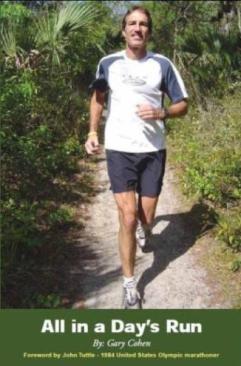 
"All in a Day’s Run" is for competitive runners,
fitness enthusiasts and anyone who needs a "spark" to get healthier by increasing exercise and eating more nutritionally.
Click here for more info or to order
This is what the running elite has to say about "All in a Day's Run":
"Gary's experiences and thoughts are very entertaining, all levels of
runners can relate to them."
Brian Sell — 2008 U.S. Olympic Marathoner
"Each of Gary's essays is a short read with great information on training,
racing and nutrition."
Dave McGillivray — Boston Marathon Race Director
|
 |
|
|
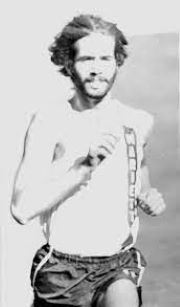
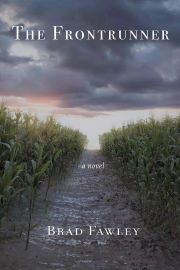
Brad Fawley is the author of ‘The Frontrunner,’ the story of a young man who embarks on an epic quest to find his limits. It delves into the physical and psychological depths of a great runner’s training plus the beauty and power of racing while celebrating human resilience, honor, sacrifice and triumph over loss. ‘The Frontrunner’ is the winner of the 2025 IndieReader ‘Discovery Awards’ in the Sports/Fitness/Recreation category as well as a Finalist in the 2024 American Book Festival’s ‘Best Book’ Awards in the Sports category. Additionally, Fawley’s first novel is the 2024 Runner Up for ‘Best Sports Book of the Year’ from the American Writing Awards and 2024 Silver Winner as ‘Best New Voice in Fiction’ from the Independent Book Publishers Association. Brad competed for Marietta (Ohio) College and is a two-time NCAA DIII All-American in the 1976 Cross Country Championships (25th place) and 1977 Track and Field Championships 5,000-meters (fifth place). He is the 1976 Ohio Athletic Conference Indoor Gold Medalist at two miles and 1976 OAC Outdoor Silver Medalist at six miles. Fawley was elected by his Marietta teammates as captain of both the cross-country and track and field teams his sophomore, junior and senior years. At Westerville South (Ohio) High School, Brad was a two-time competitor at the Ohio AAA State Championships. His prep highlight was winning the 1973 AAA Central District mile in his high school personal best of 4:21.3, besting Tom Byers who was a future winner of the Bislett Games 1,500 meters in Oslo, Norway. Brad’s personal best times include: 880 yards – 1:53.8; Mile – 4:11.8; 2-Mile – 9:13.1; 5,000 meters – 14:43.0; 5-miles cross-country – 24:58; and marathon – 2:33:09. He was inducted into the Marietta Hall of Fame in 1996 and was named to Marietta’s top 100 all-time athletes. Fawley received the Tom Lull Award as the outstanding cross-country runner at Marietta three times and was twice named track team most valuable player. He was named the 1977 Way-Weigelt Award recipient which recognizes one senior male who combines scholarship, leadership, character, and sportsmanship in addition to participation in athletics. After attaining his law degree from the University of Virginia, Brad has practiced law since 1983 as an intellectual property and environmental litigator. His next novels will include a sequel to ‘The Frontrunner’ while he also works on a screenplay adaptation. Brad and his wife, Anne Marie Howard, split their time between Guilford, Vermont and Marina del Rey, California. He was very kind to spend over two hours on the telephone for this interview.
|
|
| GCR: |
BIG PICTURE As a distance runner you have been immersed in the sport of running for your entire life since your early teenage years as an athlete, fan, and author. Could you have imagined in your youth a future such as this and how has running contributed to and shaped your life?
|
| BF |
I started running in seventh grade when it wasn’t immensely popular. The track for my junior high school was on the blacktop parking lot in front of the school. I went out for the track team because my older brother had been a runner who ran the mile for his high school. I don’t think he ever broke five minutes for the mile, but I admired him and I thought it might be a cool sport for me. Over my life, running has taught me that, if you work hard at something, you will find success and satisfaction. For me personally, what distinguishes me from many people is that, in everything I try to do, I can outwork anybody. I’m a lawyer by profession; I have this novel I had published and running gave me this dogged determination to pursue anything until I reached my limits. That is what my book, ‘The Frontrunner,’ is about.
|
|
| GCR: |
That leads into my next thought about participation versus reaching for one’s potential. As you look back on your running career and the solid years of strong training and racing, your solid case preparation as a lawyer, and consistent work as a writer, what was it that drove you to aim to reach your potential rather than just participate and how exciting was it to push yourself to try to reach your ultimate best?
|
| BF |
It is enormously satisfying. I should add that one of the reasons I wrote this book, which started off as a screenplay, was because I think I was dissatisfied with my dedication at the time and how hard I had pushed my running career. When I graduated from college, I felt I was on the brink of being able to make a choice of either continuing training at a high level or moving on to the rest of my life and my career. I don’t regret what I did. I earned a graduate degree, went to law school, had a family, and had a career. But there was always this unfulfilled promise as I never knew what might have happened if I had trained for the next three or four years. If I had run a hundred to a hundred and twenty miles per week, what could have happened? A lot of runners like me, when we look back, remind ourselves, ‘What would it have got me?’ Now, we would be twenty-nine or thirty years old, be done with accomplishing what we strove for in running and have to catch up with everyone else who had started careers and families. What would it have got us if we ran a certain time or achieved a goal in athletics? I don’t know what might have been for me but part of writing the book was a fictional way of exploring what happens when you take things to the limit.
|
|
| GCR: |
Many of us who competed in track and field, cross country and road racing stay close to the sport via master’s racing, coaching or as a spectator. How fulfilling is your foray as a running author with your first book, ‘The Frontrunner?’
|
| BF |
It is extremely fulfilling and I never had more fun in my life. I have been a writer my whole life. As a lawyer, I am a litigator so I’m always writing, though it is a different kind of writing. As a young man in high school and college, I developed an interest in reading frequently – mostly fiction – and I have a slew of favorite writers. I have always admired them. I have notebooks filled with ideas and beginnings of short stories. I never wrapped them up but made the decision that I wanted to complete a story from start to finish. I have to give some credit to my wife, Ann, who encouraged me to complete this book. To get a finished book through all the writing, editing, locating a publisher, and getting a box of books that arrived at my door was one of the coolest things ever.
|
|
| GCR: |
As a lawyer and litigator, you had to develop a storyline to present the facts in legal cases. Did this experience help you in the process of writing a novel and, if so, how was it similar and different?
|
| BF |
In two ways my training as a lawyer helped me to write the book. Number one is I learned how to put my butt in the chair as a lawyer and work at something for eight or ten hours until it was done. I learned how to edit and edit and edit. Second, there is that discipline that goes back to what I was saying before. I may not be the best lawyer, and I may not be the best advocate, but I can work as hard as anybody. That is my superpower.
|
|
| GCR: |
How similar is the process of daily training for a lengthy period as a runner to reach smaller goals and bigger goals, and the disciplined effort necessary to plot, write daily, rewrite and edit a novel?
|
| BF |
It is absolutely the same. You nailed it. To be successful as a runner, it’s not what you do for two or three months or even for two or three years. It is building the base of endurance, training to a peak, recovering, and sticking with a program. There must be consistency over time to make good runners into great runners. It’s the same with anything we do. If we want to do well, we won’t be a flash in the pan. We have to dedicate ourselves and stick with it for a long time to be successful.
|
|
| GCR: |
RUNNING AUTHOR Most books on distance running tend to be autobiographies or highly focused on training, though there are some great novels going all the way back to ‘Once a Runner’ by John L. Parker, Jr. What were your primary plot thoughts as you set out to write a novel that is a work of fiction, but based on popular themes in distance running?
|
| BF |
This book started off as a screenplay. My wife is an actress and has been in that profession her entire adult life. We enjoy watching movies and she inspired me to think about a running movie. I thought that there aren’t any great movies about running except ‘Chariots of Fire.’ There are some good movies about Steve Prefontaine and a few other running movies, but they either don’t have great athletes as actors or aren’t epic. So, I decided I would write an epic screenplay about runners who had visions of running across the plains, Serengeti, dramatic landscapes and in stadiums filled with thousands of screaming fans. I envisioned epic races. I was focused on the action, the running, the drama, and the visual impact which I wanted to capture. So, I wrote a screenplay and showed it to my wife. She looked at it and said, ‘It’s great, but where are the characters? Where are the internal struggles of the people?’ Then I realized I had no idea what I was doing. I started studying what makes a great screenplay, character development, finding conflict and the ‘heroes journey’ that goes back in literature even to ancient Greece. The heroes’ journey is in everything we read as it is part of the human storytelling outline. I updated my screenplay and was able to share it with a famous screenplay writer in Hollywood with whom I had a connection. We talked about it over dinner and he told me that in Hollywood they will take your story and change it so much that you won’t even recognize it. He said they suck the soul out of your creativity. It occurred to me then that I should write a novel from my screenplay. I felt that, if I were able to publish the novel, I could generate some interest in the screenplay. I used the screenplay as the outline to write the novel. As far as the specific themes, I knew I wanted a coach-runner relationship that went off into a sequestered location. I love the southwest United States and picked that as the background. I wanted to have a father-son relationship in the novel that related to both my relationship with my dad and my relationship with my son. Since I grew up and ran in the Midwest, I decided to set the story in Kansas. There is a side story about the Russians because I wanted to compare and contrast the spirituality of my American protagonist Russ, who has the same name as my son, with the mechanistic, former East German and Soviet focus on science to drive runners to their limits. Of course, there was a reputation for doping in some cultures that I wished to include. So, I used certain characters that were part of the Russians in the novel as my antagonists to compare and contrast with my American hero who was running in the desert while the Russians were running on treadmills and in tanks of water and being timed to the hundredths of a second.
|
|
| GCR: |
What are the main characteristics of some of the supporting characters that make this story compelling?
|
| BF |
I added the character of Lauren, the strong American high jumper. Russ was kind of naive. He left Kansas, got a scholarship to run at Oregon and that is where he met Lauren. I thought it would be fun to have a romantic entanglement in the book. There are many important female characters in the book. Russ’ mom was someone he tried to find out about and find what had happened to her. Dot, the woman who owns the diner, gives him sage advice. It was a bit of a challenge for me to write from a woman’s perspective, but they added texture to the story that wouldn’t be there otherwise.
|
|
| GCR: |
‘The Frontrunner’ has many elements in its main character, Russ Clayton, that could be based on your running career to a point. Did you rediscover facets of your own character while you developed the character of Russ Clayton?
|
| BF |
The journey of Russ in the book isn’t just physical. It’s emotional and psychological. He explores doubts, fears, and has to be able to learn to push his limits. One of the principal themes of the book is to stop fearing what is ahead of you and to set it aside. As you know, front runners have no one to chase. They are running against themselves. There are many times in the book that emphasize keeping the little voice in your head from whispering in your ear, ‘Hey, ease up a little bit,’ when you are reaching toward your limit.
|
|
| GCR: |
In ‘The Frontrunner’ there is a quote – ‘It is not the pain we are in that holds us back, it is the fear of the pain that lies ahead.’ Did you discover this during in high school or college, or did you gain this wisdom later in life?
|
| BF |
I was somewhat of a front runner. I wasn’t someone who hung on and kicked. I didn’t have the patience. When I was in a race and everybody was jockeying strategically, I would usually take the lead and push the pace. The famous Australian runner, Ron Clarke, who set so many World Records was my hero and one of the guys I looked up to in my era. He set World Records in obscure races. He would run from the front, and I wondered what that would take. In my own experience, even in training, I pondered, ‘What is it that makes runners push and push and push even when they are in extreme pain?’ Running is as mental as it is physical and is about being able to overcome those little voices that whisper to you and tell you, ‘If it hurts now, just wait until the next lap.’ Learning how to overcome that is an interesting factor that each runner has to struggle with as it is so much easier to hang on someone’s shoulder and kick at the end.
|
|
| GCR: |
How challenging in the process of writing ‘The Frontrunner’ was staying true to the story you wished to present while adding elements that would increase readers’ interest and hold their attention? Also, were there some potential storylines or elements that were discussed or written and then discarded?
|
| BF |
As I was writing, I consciously made some leaps in chronological time. I didn’t write and then discard a portion of the story. I dealt with his high school career and was focused on where the story was going. It’s a long book already at over four hundred pages and I was concerned with people losing interest with race after race after race. So, I decided to pick races that had new elements rather than repeating similar races. The way publishing works is that the writer publishes a draft with typos and elements that don’t end up in the final book. I printed those and circulated them to some people to get comments. There was a section of the book in my original draft that includes a scene where Brad Coy is in the desert and he is so concerned with having lost his wife that he is going to commit suicide and Russ talks him out of it. There was also a section in the advance copy where there was a whole relationship with a native American shaman figure that Brad Coy had. Then he introduced Russ to the shaman. Both of those were cut. First, I wanted the reader to feel that Coach Brad Coy was strong and that he was saving Russ rather than Russ saving him. Second, I decided that I wasn’t qualified to talk about native American culture in the way that it needed to be addressed. That is why I removed those scenes and they were the only two passages I cut. There were a couple people who read the original version who said they wished those scenes were in the final published book, but I think it is better without them.
|
|
| GCR: |
As time has passed since its publication, when you re-read or think about ‘The Frontrunner,’ is there anything you would do to improve the novel or are you still pleased with your inaugural novel?
|
| BF |
I’m happy with the book. I haven’t gone back to read it in over a year. I’ve held readings at bookstores and other events, but I have only read some of my favorite sections of a page or so. I haven’t read the book again because I am working on my second novel. As far as changing the book, I am working on a screenplay for the book that isn’t like the original screenplay, and it is going to be a little different than the book. It will be similar, but many things will be cut out to keep the movie moving along. Nobody wants to sit through two-and-a-half hours of people running. I’m aiming for an hour-and-a-half, so there are some practical considerations.
|
|
| GCR: |
Do you have plot ideas for future novels, and could we see a return of Russ Clayton, perhaps in adventures such as racing in Europe or doing ultramarathons?
|
| BF |
I do have a sequel to ‘The Frontrunner’ planned and, when I finish the novel I’m working on, I will work on the sequel. It has a pretty detailed outline. My favorite character in ‘The Frontrunner’ is Sergei Puskin, the troubled one of the Russian twins. He is the most interesting character. The sequel will have the same characters from the first book but will be told more from Sergei’s perspective. Here is another clue – Russ and Lauren will stay together, and they will have a child. Combined with the child from the first book, the two kids have great athletic genes. In the sequel there will be a circumstance where the kids have grown up and are racing against each other while Russ is at the end of his career but is still able to race. So, the three of them will be in a race together.
|
|
| GCR: |
How much time do you spend writing on most days and how long was the process of writing ‘The Frontrunner’ including plot formation, writing, editing, and generating the finished product?
|
| BF |
I’m trying to wrap up my legal practice now and, when I finish with three or four cases, I will be fully retired from that endeavor. When I don’t have briefs to write and have a free day, I will hammer away at writing for four or five hours. At that point, I start to lose my focus and am not as creative. If I have a free week, I can write for that many hours a day for seven days in a row. As far as how long it took to develop ‘The Frontrunner,’ I wrote the first screenplay in about three months. The next version of that with character development took around four months. My wife and I go running together and, as we were running along, I remember specifically bouncing ideas off of her. I would get excited and, when we got back to the house, I would try to get the ideas down on paper. To turn the screenplay into a novel took nine months to a year. My publisher has an editor whom I worked with for about four months. Then we got to the point where it was headed for publication. So, the whole process took about two years.
|
|
| GCR: |
You have mentioned to me that you are working on a screenplay for ‘The Frontrunner.’ If you were the casting director, who would you choose to play the main characters in the movie even if they were beyond your financial reach?
|
| BF |
The most important aspect for me and why I probably wouldn’t want it to go to Hollywood but to an independent film producer is that the running scenes would have to be authentic. I mentioned ‘Chariots of Fire,’ which I thought did a good job with the running scenes. But it bothers me to see most running movies that aren’t up to par. I would want elite runners to be the main actors. They wouldn’t have to be the top-notch runners that I couldn’t access, but certainly NCAA Division I topflight guys. The high jumper would also have to be a good athlete. Then we would have to determine if they could act. The main characters are Russ’ dad and his mom, Brad Coy, and Buck. For Brad Coy, I would pick Christian Bale. For Buck, the Oregon coach, Ed Harris, would be a good choice. For Russ’ dad, Chuck, I would like Sam Rockwell. For the Russian coach, Yuri Grilov, I would cast Ben Kingsley.
|
|
| GCR: |
If someone wants to order ‘The Frontrunner,’ online or get an autographed copy from you, what should they do?
|
| BF |
‘The Frontrunner’ is available on Amazon in hardback, audiobook, and kindle. For the audiobook, the narrator is my wife. She does all fifty voices and it is elegant and well-done. She did a great job. For a signed copy endorsed by me, go to www.thefrontrunner.com There is presently a pre-holiday sale and people can get a signed copy for less than a purchase made on Amazon. Also, I have a deal for running clubs, track teams, and book clubs to purchase multiple copies at a lower price.
|
|
| GCR: |
FORMATIVE YEARS, HIGH SCHOOL, AND COLLEGE Were you an active child and in what sports did you participate as a youth and teenager prior to starting to run?
|
| BF |
I was definitely active, but somewhat uncoordinated. I wasn’t one of the guys who was going to be on the high school teams in basketball, baseball, or football. I was skinny, tall, and gangly. But that didn’t stop me from playing basketball, football, and tennis with my friends. We played whatever sport that was in season. I grew up in a little town in Ohio and those were some of my favorite memories when I was growing up. I liked hanging out with my buddies and playing sports. We could even play football one on one for hours – figure that out.
|
|
| GCR: |
How did you start running and begin to take it more seriously?
|
| BF |
Like I mentioned, in seventh grade I went out for the track team. The season was short. I went out for football the following fall. That is where I discovered that I had better endurance than most of the other guys on the football team. At the end of practice, the coach would have us run to the far goal post and back. The first five guys to return would get to go take a shower. We would go again and the first five of round two would go to the showers and so forth. I quickly figured out that I wasn’t one of the five fastest guys but, by the second round, I would make it because I had good endurance. That is the reason I decided to become a distance runner which I pursued into high school, college and beyond.
|
|
| GCR: |
What were some of the highlights of your running and racing as a novice in junior high through your freshman year in high school in 1970 when you ran a 5:02.8 mile?
|
| BF |
In seventh and eighth grade, I didn’t have that much success. I was kind of in the mix with the other kids. Then I decided I should train rather than wait for the season to start. I started doing stadium steps and weight machine circuits. I also physically grew and my shoulders became wider. The summer after eighth grade, I would run from my house to the high school track and then I had a routine. I would run ten one-hundred-yard pickups, do a set of pushups and sit ups, and run home. That was it, That was my workout. I did that all summer as many times as I could. In ninth grade, we only ran the half mile. But for the final meet of the season, our coach decided to add a mile race. One of the kids on the track team was talking about how he was going to kick my ass. His brother held the school two-mile record. He was one of those kids who would wear a hat like Kip Keino and throw it down on the track with a lap remaining in the race. So, he had a lot of character. There was a lot of trash talk for about two weeks before this big race. Then I crushed the guy with my run of a 5:02.8 mile and that was very satisfying.
|
|
| GCR: |
Let’s chat about your sophomore year when you were introduced to cross-country and ran a 4:37 mile in the spring during track season. Did cross-country season help your endurance to drop your mile time so substantially and what are highlights from your sophomore year?
|
| BF |
In the summer between my freshman year and sophomore year I trained more diligently. My cross-country coach had a ‘500-mile club’ over the summer before high school. The coach had a meeting with all the eighth graders who were going to run cross-country in the fall plus the returning high school runner. If you ran 500 miles over the summer, you earned a t-shirt that had ‘500-mile club’ on it and I wanted that t-shirt more than anything else in the world. Yes, I ran over 500 miles and had a rather good cross-country season though I can’t remember my times. I continued to run through the winter and, when sophomore year track came, in the first meet I ran 4:47 which shocked the coach. The school record was eight seconds faster at 4:39 and I was only a sophomore. I kept improving my mile time throughout the season and improved to 4:37 by the end of the year.
|
|
| GCR: |
How exciting was it to break the school record as a 15-year-old sophomore?
|
| BF |
It was a nice achievement, but track wasn’t the big sport at my school. Football was the most popular sport, and the football players made fun of us when we were running on the track. I used that in ‘The Frontrunner’ as the football players called us grasshoppers. We were a bunch of skinny guys and took it as a source of pride, though the football players looked at us with their noses down.
|
|
| GCR: |
After your solid sophomore year, was your junior year more of the same with the summer 500-mile club, a strong cross-country season and another year of training helping you to drop your mile time to 4:27?
|
| BF |
During my junior year of cross-country, I was under ten minutes for two miles. I qualified for State and placed in the largest school division among the top forty or fifty runners. When track season came and I got down to 4:27 in the mile, I was excited with that improvement. At this point in my life, running was basically everything for me. From my sophomore year to my junior year, I became very dedicated. I was reading books I could find about running and I was running almost every day. Other than going to school, running was what I did.
|
|
| GCR: |
With that 4:27 mile, were you able to qualify for the Ohio State Championships?
|
| BF |
I didn’t get to State my junior year. That 4:27 was good, but it wasn’t good enough. We had some fast guys in my conference. Also, we had to place in the top three at Sectionals to qualify for State.
|
|
| GCR: |
At the 1972 Ohio AAA State Cross Country Championships your senior year, the combined results of Division Three show you in 25th place with a 10:10 time on the Ohio State Golf Course. How amazing was it that the field was so strong that, from eighth place in 10:01 to 40th place in 10:20, there were thirty-three runners in that twenty second span of time?
|
| BF |
That was the year that one of my friends, Larry Coy, won the meet. I was fifteenth in the individual race and 25th when they combined us with the team race. When I look back at that meet, I remember the mass of runners across the golf course at Ohio State University. I was stunned by the number of people around me and I started picking them off one by one. I moved up through the crowd. I wish the race had been longer as I believe I would have done better.
|
|
| GCR: |
In cross-country, how much fun was the camaraderie of the cross-country experience and running with the team especially, as the saying goes, ‘Our sport is the other sports’ punishment?’
|
| BF |
The guys on the team were my best friends and many still are as I am connected with them. That is true with my teammates from high school and college. The camaraderie of being with guys who were doing their best and putting it on the line every day is unbelievable and fun.
|
|
| GCR: |
During your senior year track season, one of your memorable races had to be at the 1973 AAA Central District meet held at Whitehall, where the great Tom Byers won the 880 in 1:54.7 but only placed third in the mile at 4:29.7 as you won the mile in a meet record 4:21.3 ahead of Tom and second place in 4:25.6. What do you recall of winning and beating Tom Byers who years later won the Bislett Games mile in Oslo, Norway?
|
| BF |
When I saw Tom run that race in Oslo, it stunned me. I used some elements of Tom’s Bislett Games mile race in ‘The Frontrunner’ when Russ is the assigned rabbit at the Prefontaine Classic. During my senior year, I ran multiple times indoors against Tom Byers and never came close to him. He was a beast and an amazing physical specimen. He was super-fast and could run a quarter mile around fifty-one seconds in high school. He was mainly a half-miler, but he doubled at that District meet in the mile. That helped me because the mile was after the half mile. What I remember about that race is with about 660 yards to go I lit it up. I took the lead at that point and never looked back. I got faster and faster and faster. I didn’t even know where Tom was or who was in second place. It was an amazing feeling, and I had peaked at the right time.
|
|
| GCR: |
At the 1973 Ohio State Championships, you didn’t place in the top six as Mark Hunter won in 4:17.6 as there were six strong runners up front down to Tracy Moleka who was sixth in 4:22.7. Since your 4:21.3 time would have put you in the mix, were you close to sixth place, or had you faded back?
|
| BF |
I don’t remember in what place I finished. The State Championships were at Ohio Stadium. To me, it looked like the stadium was filled with a hundred thousand people. In reality, there were probably four or five thousand people in the stands. It was a hot day. When I went down to the track, there were all these guys who looked super-fast. I was out of my element. I choked. The gun went off and I was never in the race. I don’t know my time – probably the high 4:20s. I use that scene in ‘The Frontrunner’ when Russ chokes at his high school state meet.
|
|
| GCR: |
Are there any other races we haven’t discussed in either cross-country or track season that stand out for a high finish, beating a tough foe or a fast time?
|
| BF |
I had good success at many relay meets in Ohio. I am seventy-one years old and have a vague memory of some of the races, but nothing stands out as amazing.
|
|
| GCR: |
When you finished up high school and were deciding where to go to college for academics and athletics, how did you decide to go to Marietta and were there other colleges in the mix of your choices?
|
| BF |
I had a big stack of letters from college coaches because my 4:21.3 mile gathered attention. I had an offer with a small scholarship from Bucknell. I also was recruited by Dartmouth and many smaller schools. I was flown by plane to several schools that recruited me. At the time, I was enamored with my high school girlfriend and we were very, very close. One day I asked her where she was going to go to college. She said, ‘I’m going to Marietta.’ I said, ‘I’m going to Marietta too.’ I had to reach out to the Marietta coach to let him know I was interested in going there. I went to Marietta, and I don’t regret that choice, but the school was probably a little smaller than where I should have gone as far as track teams and running. And then my girlfriend and I broke up within six weeks. We are still friends over the years but the only reason I went there was because of her. It was an excellent small college, and I had success running there, but it was a dumb way to make a choice as an eighteen-year-old. Neither of my parents had gone to college and they went along with whatever I chose. I didn’t get much guidance.
|
|
| GCR: |
Let’s go through your college running starting with the Ohio Athletic Conference, NCAA DIII, your personal best times and then any other important races. During your collegiate years, you were Gold Medalist in the 1976 OAC 2-mile indoor and Silver Medalist in the 1976 6-mile outdoor. When I ran at Appalachian State, the Southern Conference Championships were always a big focus. What are your recollections from these medal-winning races at the Ohio Athletic Conference Championships?
|
| BF |
I was happy with the indoor two-mile which I won in my PR of 9:13.8. My main competition in college was Larry Coy, who was a formidable runner for a Cleveland high school and Baldwin-Wallace College. He and I went head-to-head and more times than not he would beat me. I did beat him in that two-mile indoors running from the front. He told me afterward that, before the race, he went to his coach and said, ‘I would like to ask Fawley if we can trade off the lead during the race to see if we can break nine minutes.’ His coach looked at him and said, ‘Are you out of your mind. You’re here to win the race, not to try to run under nine minutes.’ So, he never made that proposal to me. I had a good day and I beat him. I was disappointed in my time in the OAC outdoor six-mile. It was an extremely hot day, and I can’t remember who beat me. Since I had already qualified for the NCAA DIII three-mile for Nationals with a 14:12 time, I didn’t want to run the three-mile at conference. The previous cross-country season I has run a 24:58 for five miles on a hilly course and finished second in the OAC. I wanted to run a different distance, so I ran the six-mile.
|
|
| GCR: |
At the NCAA DIII Championships, you earned two All-American designations, the first when you finished 25th at the 1976 NCAA DIII Cross Country Championships in 25:53. It was another packed field as from 15th place to 32nd place there were eighteen runners with twenty seconds. Was this similar to your high school state meet with so many bunched fast runners?
|
| BF |
I recall it was about ten degrees with a layer of snow on the ground. The race was in northern Ohio near Cleveland. It was so cold. I never ran in a race that was so cold in my life. I went out hard and tried to stay with the leaders. I was in fifth or sixth place through three miles. I started to tie up after the third mile of the five-mile race. I dropped back into the runners in places in the thirties. During the last half mile, I picked up my pace and was able to sneak in and get that last All-American twenty-fifth place.
|
|
| GCR: |
The following spring you finished fifth at the 1977 NCAA DIII 5,000 meters in 14:56.82, which was thirteen seconds slower than your personal best time. Were you fighting for the lead or was someone off the front and you were battling for top five?
|
| BF |
Unbelievably, there were qualifying races, and I had to run two days before the final. I ran a time that was similar to my time in the finals. I tried to qualify and got fourth of fifth in my qualifying heat. In the final, it was a hot day. The track was a black all-weather track, and it felt like we were running on tar. The track was incredibly soft and extremely hot. I didn’t have a strategy except to make the top six and be All-American. I hung in there and it wasn’t a great memory one way or another.
|
|
| GCR: |
During my life, when people wanted to know more about my running, it didn’t matter if I were training for a marathon, because I would frequently be asked, ‘What did you run for your fastest mile?’ What can you tell us about racing your personal best mile of 4:11.8? Were you focusing on the mile and did you win that race?
|
| BF |
I ran that 4:11.8 mile my senior year at the Ohio Athletic Conference Championships. I actually was disqualified in that race. I was in the lead and was trying to run a personal best. With about a hundred yards to go, a guy cut in on me with only a half step in front of me. I stuck out my arm to prevent him from coming in and I pushed him. I was disqualified for that. But my coach timed me even though I wasn’t in the official results. He counted it as the school record even though I had been disqualified. The guy who cut me off beat me by a couple steps. There is a picture of that race with a mass of guys coming toward the finish. I think Steve Babson won with a 4:08 or 4:09. Other than Steve in the lead, the rest of us were in this tight group.
|
|
| GCR: |
You have a fast 1:53.5 personal best for 880 yards that is faster than I expected. Where did you gain that speed and what are highlights from that effort?
|
| BF |
That was run in a dual meet. I loved the half mile though I didn’t think I could ever run it at the national level. My quarter mile speed was only around fifty-four seconds and change. With that lack of speed, I knew I could never be a great half-miler, but I loved running that distance. It was a sprint the whole way for me. There was no strategy. I aimed to go under fifty-eight or fifty-seven seconds for the first lap and then to keep sprinting. I was proud of the time I ran in that race. Our team always needed points, so there were many meets where I would run the half mile, mile, and three-mile.
|
|
| GCR: |
Before we discuss your 5,000-meter personal record, here is an interesting fact; Your 14:43 PR for 5,000 meters and 9:13.1 PR for two miles are both one second faster than my PRs. Also, your high school mile PR is one-tenth of a second faster than my high school mile PR. What do you recall of your 14:43 PR for 5,000 meters? Was it a big race or exciting win?
|
| BF |
That is interesting that we were so close with our race times. I ran that 14:43 in a dual meet on a good track against guys from Baldwin-Wallace. I didn’t race Larry Coy that time. That was a race where I told my friend, who was a distance runner, to get my quarter mile splits for each lap. I was aiming to run 71 seconds for each lap and hit the times on the nose. That’s what I did for many laps, I faded a bit, and then ran the last lap in 67 or 68 seconds. The other runners faded and were a couple of hundred yards behind me when I finished all alone.
|
|
| GCR: |
You served as team captain for both Marietta’s track and cross-country teams as a sophomore, junior, and senior. Was that per your coach’s appointment or a team vote and did you enjoy this leadership position amongst your fellow athletes?
|
| BF |
The selection of captain was an election by the team. I had four different track coaches in college and one cross-country coach who was also the golf coach. The only reason he was the cross-country coach is because he had access to the golf course for our training runs. He didn’t know anything about running as he had experience as a golf coach and basketball coach. The school couldn’t keep a track coach for more than a year so, as captain, I would write and set the workouts for the distance runners. I read the Lydiard books and that is how it played out.
|
|
| GCR: |
POST-COLLEGIATE RACING AND MARATHONS You mentioned training for a couple of years after college and trying to determine which fork in the road to follow – whether it was grad school and law school, work, or training while a being poor distance runner. Were there some race highlights over 10k, 20k, or possibly that big 25k race in Youngstown, Ohio?
|
| BF |
I knew that competition on the track was over for me so I figured if I was going to make my mark that I should be a marathoner. I had previously run a 2:33:09 marathon in my junior year in college at the Washington’s Birthday Marathon in Beltsville. For that race, one of my buddies said, ‘Hey, let’s go run a marathon.’ I was running somewhere between 70 and 100 miles a week at that time. The marathon was in February between cross-country and track season, so I was putting in a lot of distance. We had raced at an indoor meet the night before the marathon and I tripled. I ran the half mile, mile and two-mile indoors at that dual meet. After the track meet, we left Ohio for Maryland about six o’clock in the evening. We had four or five guys crammed into the car. Our car broke down somewhere in Pennsylvania. The guy who was driving called his dad who was a couple of hours away. His dad drove to where we were and gave us their other car while he took over responsibility for the broken car. We piled into the second car and left for Maryland. The trip ended up being a nine-hour drive and we arrived at around 4:30 in the morning in Beltsville. We had little money, so we got one hotel room. We all kind of slept on the bed horizontal, on the couch, and on the floor. None of us had any good sleep. We got up, went to the race that started about nine o’clock and paid our entry fee. We warmed up a little bit and ran the marathon. My goal during that race was to not go into oxygen debt at any time and to not have to struggle for air. I got into a comfortable pace and ran 5:50 per mile for the whole marathon. It was a three-loop course and I loved that. The first loop was so easy that it hardly felt like a jog. On the second loop, I was amazingly comfortable. Since I felt particularly good, I thought, ‘Let’s see what I can do.’ I passed a lot of people that last loop. I felt amazing coming in. The last five miles I was flying. Because of that race I thought that I could be a marathoner.
|
|
| GCR: |
Did you race any memorable races in your post-collegiate running period or were you basically training for a marathon? And how did the Virginia Beach Marathon pan out where I read you were on that 2:20 marathon pace, or 5:20 per mile, for about sixteen miles?
|
| BF |
I was super-fast for ten or fifteen miles but didn’t have endurance for the marathon. I loved that Virginia Beach Marathon race. It was off of the repeat quarter miles training. I was up in the lead with a few guys and cranking down the boardwalk in Virginia Beach. I was flying. I ran under 5:20 pace for fifteen or sixteen miles and then I blew up and finished in 2:43. That shows the fallacy of hoping to run a marathon without the proper work. Like we talked about earlier, you have to put in the right work for a long period of time to be successful.
|
|
| GCR: |
So, did you figure out that you would have had to execute sixty repeat quarter miles like in the book, ‘Once a Runner,’ or like Emil Zatopek did in his training?
|
| BF |
That is true. I couldn’t accomplish proper marathon training in an hour a day.
|
|
| GCR: |
TRAINING Since you mentioned earlier about the ‘500-mile club’ in high school summer training, can you tell us about your high school coach?
|
| BF |
My coach was John Evans, and he passed away earlier this year. He was my Biology teacher, my Guidance Counselor and both the track coach and cross-country coach. He was the best coach I ever had. As a Biologist, he knew a lot about exercise physiology. Early in my first cross-country season, he asked us all to run at least five miles over the weekend. That sounded like a lot to me as a sophomore. But I went to the cinder track and ran twenty laps which wasn’t hard or difficult. My buddies weren’t runners and were waiting on me to go to Dairy Queen. They kept asking, ‘When are you going to be done with this?’
|
|
| GCR: |
During cross country season, did Coach Evans mix in hills, fartlek, long runs, or other elements of training?
|
| BF |
There was a dam where we lived that was about four miles from the high school. We would run out to the dam. It had an extremely steep long hill from the base to the top. We warmed up on the run to the dam and then we would do intervals up the hill and jog back down. He had a megaphone and would yell encouragement at us. Then we would run back to the high school. That was the hardest workout we did. Whenever we ran on the roads, he would drive and stop every mile to tell us our mile split. I loved that. We didn’t have Garmin or watches to time ourselves back then. I wanted to beat my mile split each mile during these seven or eight mile runs. He had some fun workouts. One involved his Volkswagen Square Back. He would put the car in neutral gear and have the team push him around the parking lot. If you want to get in a good workout, push a car a quarter mile. No matter how many guys are pushing, that is a workout.
|
|
| GCR: |
How did your mileage, length of long runs, and intensity increase during your high school years?
|
| BF |
The training was similar. We just ran faster. I never ran more than ten miles straight during high school.
|
|
| GCR: |
What were some of your favorite track interval sessions for stamina and speed?
|
| BF |
Coach Evans had us do a lot of repeat quarter miles. We didn’t do any longer intervals like 660s or half miles. We did some ladders of 440 yards, 330 yards, 220 yards and 110 yards. We would go up and down and up and down again with equal jogs in between.
|
|
| GCR: |
You mentioned that in college that your cross-country coach was the golf coach who had no input into your training and that you had a different track coach each year. Did any of those track coaches help at all or were you integrating what you learned in high school with what you read in books? And what did you do differently since you raced longer distances in both cross-county and track?
|
| BF |
The coaches in college didn’t contribute much at all. My golf coach was William O. Wetzel, and we called him ‘Wow’ since those were his initials. He had been a B-17 bomber pilot in World War II, and my dad was a P-38 fighter pilot in Europe during the war, and they hit it off personally. He was a great guy but didn’t know much about formal running training. One thing he did prescribe is, because of his basketball coaching drills, for the first two weeks of each cross-country season, he had us run backwards on the track. We would show up on the track and alternate running a lap forwards, a lap backwards and so on. It would culminate in a two-mile backwards, two-mile frontwards time trial. I ran about eleven minutes flat for two miles backwards which I thought was pretty cool. The bottom line was that not a single person on our team in four years had a knee or hip injury of any kind. I attributed it to the backwards running and using those opposing muscles as a base. I still run backwards in training now, And I don’t have any problems with my knees. I do have some age-related arthritis, but I have thick padding in my knee joints and am not close to bone-on-bone issues. I think that backwards running from Coach Wow was a bit of magic.
|
|
| GCR: |
When you focused on road races and the marathon in the two years after college, were you self-coached and what were keys as far as mileage, long runs and intense sessions and did you have goals such as becoming a sub-2:20 marathoner?
|
| BF |
The Olympic Trials qualifying time was around 2:20 and I thought, with proper training, I could run that fast. But then I went to grad school majoring in oceanography. It didn’t work out because I was going to school full-time and had to work a job to pay for school. I ended up having an hour each day to train. I decided that the best training I could do in that limited time was to run quarter mile intervals so that’s what I did. I would run to the track, run quarter mile intervals for an hour, and run home. That was my training.
|
|
| GCR: |
WRAPUP AND FINAL THOUGHTS When you were past the age of fifty, you did some focused training and racing. How did you adjust your training as to intensity and mileage since you were older and what are some highlight race performances?
|
| BF |
I had a resurgence in my running interest in my mid-fifties and I trained relatively hard. It wasn’t as much or fast as what I did when I was in college, but I ran thirty to forty miles per week. That usually included one long run and a track workout with some other runners who have a club in my town. I became very competitive during those track workouts. I loved that. There is one guy in my town named Bill Dixon who was one of the top master’s runners in the United States when I trained with him. He was an amazing runner who, unfortunately, can’t run anymore because of his knee issues. We would run together three or four times a week He was better than me, so keeping up with Bill was a challenge and enough of a workout for me. His methodology was to warm up easily and to hammer for three or four miles. Those were similar to tempo sessions, and we would do that maybe twice weekly. The training paid off and I ran a 1:26 half marathon at age 56 or 57. I also ran an 18:30 5k around that time. One day I went out on my own and ran a half marathon in 1:32 on the roads. I was in good shape and enjoyed the feeling of recapturing what it was like when I was younger and able to run fast.
|
|
| GCR: |
When you were younger and had success at 880 yards, the mile, two-mile and 5,000 meters, what was your favorite racing distance?
|
| BF |
It was the mile. I was better running the three-mile and 5,000 meters, but there was an elegance in running the four laps of the mile. There was also the idea of the magical four-minute mile that was beyond my reach but out there. I always enjoyed the mile. I would run the first lap and get the early part of the race under my belt. Then I would sustain on the second lap, hold steady the third lap and see what I had with one lap to go. Mentally, it was easy to find myself being highly competitive over that distance. The three-mile and 5,000 meters – come on – you lose interest and get bored somewhere in the middle of the race. Maintaining the mental toughness over that distance is more difficult.
|
|
| GCR: |
You have mentioned some guys you raced in high school and college. From your many years of racing, who were some of your favorite competitors in high school and college due to their ability to give you a strong race and bring out your best?
|
| BF |
In high school, Tracy Moleka from Worthington High School was quite good. Tracy’s teammate, Tom Bryant, was a couple years ahead of me and he was an excellent runner who went to Ohio State and ran with Tom Byers. Other than that, one race where I beat Tom in the mile, I never felt I was in the mix with him. In college, there were a handful of three or four guys from Mount Union and Baldwin-Wallace. Joe Dotson was an incredibly good runner as were Larry Volk and Larry Coy from Baldwin-Wallace.
|
|
| GCR: |
Let’s talk about recognition for your running and racing exploits. First, you received the Tom Lull Awards as the outstanding cross-country runner at Marietta three times and were twice named track team most valuable player. Was it exciting, after putting in the hard training and racing, to earn and receive these awards?
|
| BF |
Yes, it felt good to receive those awards. I was more interested though in the NCAA Nationals than the college’s awards.
|
|
| GCR: |
There was one incredibly significant award each year for one Marietta senior male and that was the Way-Weigelt Award which memorializes James W. Way and Henry C. Weigelt, two Marietta College athletes from the 1950s who tragically lost their lives in an automobile accident. How neat was it to be the 1977 recipient of this award which combines scholarship, leadership, character, and sportsmanship in addition to participation in athletics?
|
| BF |
That was quite an honor to receive that award. Only one person was honored each year and I appreciated it.
|
|
| GCR: |
In 1996 you were inducted into the Marietta Hall of Fame, and you were also named to Marietta’s top 100 all-time athletes in the fifty-eighth position. How did it feel to have these two accolades?
|
| BF |
It was nice. My goal when I was in college was to hold every distance running record at the school. I did at one point hold the school records for the mile, two-mile, three-mile, 5,000 meters, six-mile and 10,000 meters. I also was on a few relay teams that set school records along with setting some course records during cross-country season. Being on the record board was more of a driving force for me than getting awards.
|
|
| GCR: |
What do you typically do now for health and fitness in your early seventies so you can enjoy all life has to offer?
|
| BF |
My wife and I run together four to five days a week. We typically run four miles, though sometimes as long as six miles. On days she doesn’t run, I will do quarter mile intervals. I may do six to eight of them with an equal jog distance in between. I don’t do long runs anymore. The longest run I do is six or seven miles. We also do a program called ‘Dynamic Runner,’ which is amazing and I recommend it. There is a series of videotapes from a group in Canada. Each workout is about twenty minutes long. There is strength training, flexibility, and mobility. The workouts are designed only for runners. There is a low cost per year for access to hundreds of programs which use a mat, a pole, a block, and some bands. I always feel exceptionally good after doing those workouts, so we have tried to be more diligent with those. If we don’t run, we go for a fifteen to twenty-mile bike ride.
|
|
| GCR: |
What are some of your goals in terms of fitness, possible age-group racing, writing, and new adventures after you finish up your final three legal cases and the ‘Golden Years’ are on the horizon?
|
| BF |
We split our time between Vermont, where I am now, and Marina del Rey, which is along the beach in the Los Angeles area in California. We go back and forth every three or four months. I enjoy both places. What we would like to do when I wrap up these legal cases is to do some international travel. We have some ideas about going to places in the Mediterranean like Portugal, Greece, and Spain. We would plan to live in European places for two or three months at a time. My wife is a painter as well as a writer like me, so those are transportable passions. We would aim to live in a village and get different experiences. We will spend time with my two kids and my grandchild who live in New England. That is what I envision in the future. I plan to travel, write, stay fit, and stay connected with my family.
|
|
| GCR: |
When you sum up the lessons you have learned during your life from the discipline of running, balancing academics, athletics and social life, overcoming adversity, and undertaking new challenges in your career and as a writer, what can you share with my readers that will help them on the pathway to reaching their potential in athletics and as a person?
|
| BF |
Never underestimate what you can do. Never shy away from something because you feel it may be too difficult a goal to reach. Follow through with persistence. There are many people who dabble in what they do. I have dabbled as well but there isn’t much satisfaction achieved. Stick to your guns, work hard consistently, and see what you can do with those efforts.
|
|
| |
Inside Stuff |
| Hobbies/Interests |
I play the guitar. I remember connecting with you when I saw that picture of you on Facebook holding a guitar. I can’t sing well but I like to play acoustic and electric guitar, usually with backing tracks. I’ll never be a great guitar player, but it gives me a lot of pleasure. I do love to cook. My wife and I have a deal. She shops and preps and I cook. We try to split the cleanup. I’m a neat cook so there isn’t much to do at the end of the cooking session. I love making something good to eat, having a glass of wine and enjoying it with her
|
| Nicknames |
There weren’t any nicknames from friends. In my family, my kids called me ‘Big D’ for dad. Now my grandchild is calling me ‘Big G’ for grandad
|
| Favorite movies |
I like dramas. I enjoy independent films more than Hollywood blockbusters which I often find dissatisfying. I like the drama of a good war movie because my dad and brother were in the armed services. I never was in the military, but it always fascinates me with the courage it takes to put yourself in that situation and what that must be like. If we think about the book, ‘The Red Badge of Courage’ by Stephen Crane, it is all about what it takes for a guy to get out of a ditch and run into a hail of fire. I don’t know what that takes but it is a fascination and is a reason why I enjoy watching that type of movie if it is well done
|
| Favorite TV shows |
As a kid, ‘Leave it to Beaver.’ Also, ‘Hogan’s Heroes,’ and other shows from that golden era of television. Without offense to those who grew up in the 1980s, to me that was a blank decade as far as music and TV. I may have been so busy that I wasn’t paying attention and so that is a blank spot in my cultural world. More recently, ‘The Americans’ is one of the best series on TV. ‘Breaking Bad’ and ‘The Sopranos’ were both well done and great
|
| Favorite music |
Neil Young and any iterations of his music. I prefer women folk singers, and I like Joan Baez and Joni Mitchell. Some folk singers I like are obscure and are less famous names that people don’t recognize like Meg Hutchinson and Antje Duvekot from New England. I particularly like their music. I love classic rock and groups like Creedence Clearwater Revival and Led Zeppelin. My favorite guitarist is Gary Moore. I also like Roy Buchanan. I enjoy that wailing, screaming electric blues sound that is differentiated from classic blues
|
| Favorite books and authors |
My favorite author is Cormac McCarthy. My favorite book he wrote is ‘Suttree.’ Other favorites by McCarthy are ‘The Border Trilogy’ which includes ‘The Crossing.’ I’ve read all his books and love his style. I love ‘The Stranger’ by Albert Camus and many of his other books. I have read many of John Updike’s books, including his ‘Rabbit’ series of four books. What inspires me to write are the beat writers. I’ve been a fan of Jack Keroac and the entourage around him. I’ve read many books by Kerouc and the other beat writers. I’m always looking for new books to read. I am constantly reading. I have so many books that my bookshelves are growing
|
| First cars |
A 1960 Triumph TR3A. I bought it for eight hundred dollars. My dad was a good mechanic and we restored it. My dad was always collecting cars. He had a 1954 Ford DeSoto that I drove in college
|
| Current cars |
As an adult I became interested in Porches. I have a 1973 Porsche 911, a 1978 Porsche 911 and a 2015 Porsche Cayman. I even have a couple of patents because I invented a valve adjustment system for the old 911s. I sold that system for five or six years. I used to spend a lot of time under cars and get very greasy. I have a lift in my garage. It was a passion of mine, but now not so much. At seventy-one years old, I’m getting tired of being dirty. I will probably sell the two old 911s soon. Other than the Porsches, we have Subarus
|
| First Jobs |
I was a bike store mechanic and I delivered pizza, both in high school. The pizza delivery place I worked for advertised that there was an oven in the van to keep the pizzas hot. All they did was stick a fake smokestack on top of the roof of the van. The ‘heating system’ was the defroster. I put the pizzas on the defroster, turned it on, and delivered the pizzas. It was ridiculous
|
| Family |
I had great parents. My mom, Florence Fawley, was quite a character. She passed away at age ninety-two in 2016. She was a Marine in the women’s corps in World War II. She was a poster model for the Marines. She worked as a ‘Rosie Riveter’ for the Pratt-Whitney company at one point. She was a runner and set the American Record in her sixties for her age group. Mom was a smoker until she was about thirty-two years old and started running after I did. My dad, Robert Bradford Fawley, was from West Virginia. He was in college at the time of the Pearl Harbor attack. He left college, enlisted in the U.S. Army Air Corps, and became a fighter pilot. He flew many planes on dozens of missions including P-37s and P-48s in Europe. He flew cover for the Battle of the Bulge. He had a twenty-three-year military career and retired as a Lieutenant Colonel. We lived in Spain and Turkey when I was a kid because of dad’s service. My dad passed away in 2018 at age ninety-four and received full military honors at Arlington National Cemetery. . My parents were married sixty-eight years. My name is the same as my dad’s and I am a junior. My grandfather’s name was James Bradford Fawley and my son’s name is Russell Bradford Fawley. Russ is thirty-three years old and lives in Vermont. His passion stems from his purchase of an LMTV – Light Medium Tactical Vehicle – which is a late 1990s four by four all-terrain vehicle. It is massive and has 48-inch wheels. He has restored the vehicle’s mechanics. He is building a box home on the back of it and his dream is to live remotely in the vehicle, travel to the U.S. southwest and ride his dirt bikes. My daughter, Caroline, is living in Maine, has my grandkid, and she will start law school next fall at the University of Maine. My wife, Anne Marie Howard, has been an actor professionally since she was eighteen years old. You can find her on IMDb. She was a regular on a couple soap operas early in her career. She has been in dozens of movies, commercials, and television shows such as ‘Monk.’ She is quite talented and has also appeared on the stage in plays. Also, as I noted, she narrated my audiobook. She is a lot of fun and highly creative
|
| Pets |
When I was growing up, my dad was a bird hunter who hunted quail and pheasant, so we always had bird dogs around. They were usually English Setters. I had an English Setter when I was in college. His name was ‘Mikey.’ He was a member of the track team because he ran with me. I had him trained so that he didn’t need a leash. He would run ten miles with me and heel the whole way. That dog was an amazing runner. At track practice, he came into the stadium, which was fenced. We would let him loose and, every time guys would run, he would take off. If we did intervals, he would chase us. He was a great dog. We have had Labradors and Golden Retrievers, but don’t have any dogs now
|
| Favorite breakfast |
Oatmeal with fruit. I’m a coffee hound. I drink a lot of coffee – six to seven cups per day and it doesn’t seem to bother my sleep
|
| Favorite meal |
I lean toward Mediterranean food. I like making fish, calzone, beef bourguignon, smash burgers, pizza, lasagna, and salmon
|
| Favorite beverages |
Coffee and water. I drink a lager beer sometimes. I like wine with dinner. I rarely drink hard liquor. If I do, it’s whiskey, but not often. I don’t drink soda often. Every once in a while, I get a craving for Coke and have half of one as eight ounces is enough
|
| First running memory |
The President’s Council of Physical Fitness 600-yard run. I forgot about it, but I crushed that. There was nobody close to me when we started doing that in eighth or ninth grade. That is my first memory of actually racing
|
| Running heroes |
Definitely Jim Ryun. Also, Marty Liquori and Ron Clarke. I raced Marty Liquori once when I happened to be in Florida for spring break and there was a road race. I jumped in the two-mile but didn’t do too well because I had been drinking a lot of beer on spring break. Dave Wottle became a hero when he won the 800 meters in Munich in 1972. Frank Shorter also when he won the Olympic marathon. I didn’t hear about Bill Rodgerw until I was older. What has been cool about my book is that I have come into contact with many of my heroes. I’ve been in contact with Bill Rodgers several times and I’m sure he would recognize me. He enjoyed my book and was very congratulatory to me about it. I’ve become good friends with Dick Beardsley, a fantastic marathoner who had that ‘Duel in the Sun’ with Alberto Salazar in 1982 at the Boston Marathon. Mike Dunlap was a great 2:18 marathoner and friend of Dick Beardsley who is now a friend
|
| Greatest running moments |
Number one would be my 2:33 marathon because it felt so easy and it was after that all night drive and racing three races at that indoor track meet the night before. When I look back at that group of guys piling in a car, at twenty-one years old, we felt we could do anything. I’m going to write a short story about that. What ranks up there is my 4:21.3 mile in high school. I love that race. I did well and peaked at the right time. Another is in college, when I ran 24:58 my senior year at the Ohio Athletic Conference Cross-Country Championships. That race is described in the book. I took the lead early on and ran up a long grassy hill at mile three. It was quite a slope and at the top was the sky, the ground and my mother. She had left the crowd and gone to this obscure part of the course. I still can remember our eyes meeting and then I was past her. I will never forget the connection we had at that point. It was so cool. At about four-and-a-half miles, two guys passed me – Larry Coy and Joe Dotson. I mustered up whatever energy I could, passed Joe, and Larry finished about five or six seconds in front of me. That race was a fun experience. I wish I could do that last half mile again. If I could ever repeat any race, that would be the one
|
| Most disappointing running moment |
I tried racing the Bay State Marathon at age fifty-nine or sixty. I was on about 3:15 pace at mile eighteen. I was doing well and thinking I would at worst be in the 3:20s. I finished, but my time was about 3:54 as I dragged my butt in. The marathon can be so humbling. It is so crushing when you blow up
|
| Childhood dreams |
At first, I thought I was going to go into the service like my brother and my dad. But my eyes were not good enough. Thank God because I don’t think I would have been very good in the military. I wanted to be an archaeologist for the longest time. I used to go hunting for arrowheads. I was influenced by my high school coach to become a Biologist which is what I studied in college
|
| Funny memories number one |
I was a gangly kid and was goofy. I was annoying to my sister because I was a goofball. I used to tease her. I am often reminded of that by her
|
| Funny memories number two |
Another memory that is funny is that I didn’t know what cross-country was when I went out for the team. I thought there was this idea of running across the countryside. The idea of not running on the road was appealing to me. I would charge out the back door of my house and take off across the knee-high fields. I would come back home all scratched from brambles. But it was fun and I thought that was what cross-country was all about. Little did I know I would later learn that we raced on manicured golf courses
|
| Embarrassing moment |
I went to my law firm’s Christmas party wearing buffalo plaid pajama bottoms
|
| Favorite places to travel |
In the U.S., my favorite place is Big Sur, California on the coastline. My wife and I were married there. We rented a house up on a cliff with a stunning view overlooking the ocean. The second place is anywhere in the New Mexico desert. I used that locale in the book as I get a sense of peacefulness there. The southwest is a favorite place for me. I was in second and third grade when we lived in Turkey. I travelled to Spain and Italy and love the Mediterranean area. I prefer those countries when I’m outside the U.S. I’ve never been to Asia and don’t have a great desire to visit there
|
| Choose a Superhero – Batman, Superman or Spiderman? |
Superman, because I’m old school
|
| Choose an Orlando theme park – Disney World or Universal Studios? |
I haven’t been to Universal but have been to Disney World. So, if I were to visit Orlando now, I would go to Universal
|
| Choose a Sylvester Stallone character - Rocky or Rambo? |
Definitely Rocky, though I do enjoy the Rambo movies which are so off the wall. I also like his ‘Tulsa King’ series
|
| Choose a favorite spectator sport – Baseball, Basketball, Football, Hockey, or Soccer? |
Totally basketball
|
| Choose the beach or mountains? |
The mountains
|
| Choose a comedian – Adam Sandler, Kevin Hart, Steve Martin, Will Ferrell or someone else? |
Ricky Gervais
|
| Choose a tough guy – Vin Diesel, The Rock or someone else? |
Jason Statham
|
| Choose movie secret agent coolness – James Bond 007 or IMF Agent Ethan Hunt? |
Ethan Hunt
|
| Final comments from Brad |
You didn’t miss anything. The two hours flew by, and it was fun. It’s cool what you’re doing. There were many interesting questions, and I got to know you through the questions you asked. It is good to meet you
|
|
|
|
|
|
|