|
|
|
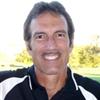 garycohenrunning.com
be healthy • get more fit • race faster
| |
|
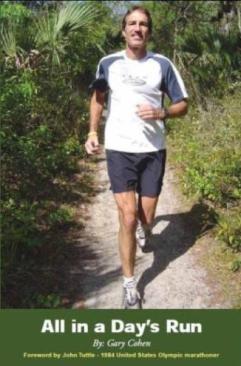 
"All in a Day’s Run" is for competitive runners,
fitness enthusiasts and anyone who needs a "spark" to get healthier by increasing exercise and eating more nutritionally.
Click here for more info or to order
This is what the running elite has to say about "All in a Day's Run":
"Gary's experiences and thoughts are very entertaining, all levels of
runners can relate to them."
Brian Sell — 2008 U.S. Olympic Marathoner
"Each of Gary's essays is a short read with great information on training,
racing and nutrition."
Dave McGillivray — Boston Marathon Race Director
|
 |
|
|
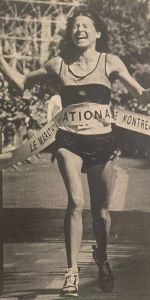
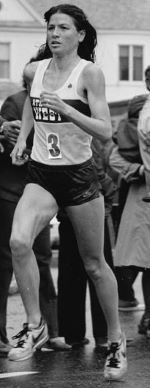
Patti Dillon was known in the late 1970s and early 1980s running community as the ‘Queen of U.S. Women Distance Runners’ as she set World Records or World Bests for the marathon, half marathon, 30 kilometers and five miles along with American Records in those distances plus 10k, 15k, ten miles and 20k. Patti was the first American woman to break 2:30 in the marathon which she did as runner-up in the 1980 New York City Marathon. She also finished in second place at the 1979, 1980 and 1981 Boston Marathons. Patti won the Bermuda Marathon and Montreal Marathon in 1980 and the Houston Marathon and Providence Marathon in 1981. She won her first marathon attempt at the 1976 Ocean City Marathon and scored four more victories at Ocean State in 1977, 1978, 1979 and 1981. Patti won the Honolulu Marathon four straight years from 1978 to 1981. After rebounding from injuries, she finished in 16th place at the inaugural U.S. Olympic Women’s Marathon Trials in 1984. Patti concluded her career by winning the 1985 Rio de Janeiro Marathon. Her many victories at shorter distances include the 1978 AAU 10-mile, 1979 Albany 30k, 1979 Maple Leaf Half Marathon, 1980 and 1981 Crescent City Classic 10k, 1980 Midland Run 15k, 1980 Cascade Run Off 15k, 1980 Peachtree 10k, 1980 and 1981 Bobby Crim 10-mile, 1981 Bonne Bell 5-mile, and the 1981 Jacksonville River Run 15k. Patti was a twenty-three-year-old overweight smoker whose mission as she started running was to lose weight and find a happy outlet in life and she succeeded well on both counts. Her personal best times are: 5 miles – 25:48; 10k – 32:09; 15k – 49:34; 10 miles - 53:40; 20k – 1:08:35; Half Marathon - 1:11:01; 30k – 1:52:29; and Marathon – 2:27:51. Patti was inducted into the Road Runners Clubs of America Hall of Fame and Honolulu Marathon HOF in 2002, National Distance Running HOF in 2006 and the Rhode Island Runners HOF and North American Indigenous Athletic HOF in 2023. She also received the 2023 Abebe Bikila Award from the New York Road Runners. Dillon is head coach for the Wings Elite Program for Native Athletes, does motivational speaking known as ‘PattiSpeaks,’ and coaches distance runners on an individual basis. A documentary film based on Patti’s life, struggles and running career is under development. She has been married to Dan Dillon, former national class distance runner, for nearly 34 years and they have two adult children. Patti and Dan reside in Windham, Connecticut. She was exceptionally gracious to spend over two-and-a-half hours on the telephone for this interview in May 2026.
|
|
| GCR: |
THE BIG PICTURE Patti, your start in running was different from the typical path as, when we look back to early 1976 when you were overweight, smoking two packs of cigarettes per day, and started running to lose weight, it was only a few short years before you would become one of the top distance runners and marathon racers in the world. How did you develop your early fitness routine and did books such as ‘Aerobics’ and magazines like ‘Runners World’ help you on your journey?
|
| PD |
That is a truly loaded question. First, I want to say thank you for chatting with me – I really appreciate this. Yes, I initially started running to lose weight. That was the premise. But there is more to it. It started on when I was at my kitchen counter and was thinking about what would make me happy. I was happy when I was a kid and we played dodgeball and rode my bike. I wasn’t going to play dodgeball since I was an adult. I did get a bike but, when I was riding a car came by and someone knocked me on my butt, I went over my handlebars, and decided to give up biking. I joined the YMCA and went to adult swimming time at six o’clock in the morning. One day the lifeguard didn’t show up, so that nixed the idea of swimming. I started walking to work which was three miles from where I lived. On one of the walks, I went to the downtown bookstore in Quincy and saw a book in the window called ‘Aerobics’ by Doctor Ken Cooper. I didn’t know what that was, but I saw on the cover that he was wearing running shoes and had a stethoscope around his neck. At the time, I was working at the local hospital. I went into the bookstore and thumbed through the book. I learned what a calorie was and that it would take burning 3,500 calories to burn off a pound. I was about fifty-two pounds overweight from when I graduated from high school and that was a lot of calories. ‘Oh, my goodness,’ I thought. ‘I’ve got to do something.’ I then learned that the quickest way to burn calories and to lose weight was this method called ‘jogging.’ I didn’t know what that was but learned that it was running. I wondered why he didn’t just say ‘running.’ Who ever heard of jogging? I rode my bike to the cemetery and started running on a loop that was about a mile around. There was advice to wear our most comfortable pair of shoes and clothing. I ran in my earth shoes and wore my ‘Daisy Dukes’ comfortable cutoff jeans. I wore three or four heavy-duty sweatshirts and a weight belt. This is what people did to lose weight, so I followed along. I felt odd and awkward at first. Then something happened and I went into the feeling I had as a kid after I was running for about a half hour or so. A police car came by, and he stopped so I also stopped. He said, ‘Hey, what are you doing?’ ‘I’m jogging.’ He sized me up and down, said ‘Okay,’ and off he drove. My spell was broken. I ended up running for an hour and I did seven miles in that hour. I was interested in burning calories. I went into the YMCA, and people were looking at me oddly. I didn’t understand why until I saw my reflection in the locker room mirror. My face was all red and I had black and deep red around my eyes. I looked horrible. When I was taking my shower, I thought, ‘Why if I look so horrible, do I feel so good?’ When I was in the shower, I wept. I had never felt like this before and I was so thankful. I thought, ‘If this is all it takes to feel this good, I’m in.’
|
|
| GCR: |
On all our pathways in athletics, we are helped along the way. What did a combination of advice from the YMCA runners and coaches Bill Squires, Jack Fultz, and Joe Catalano, do to help you on the pathway to improvement as you progressed from a novice runner?
|
| PD |
I wasn’t learning to become better. I was learning to become more me. It wasn’t easy for me to get a coach. I was denied coaching for almost two-and-a-half years. I asked Joe Catalano to coach me twice without success. I asked Coach Squires and he said ‘No’ because he didn’t coach women. Joe Catalano had taken me to the Boston College track to meet with Coach Squires as Joe thought that Bill would agree to coach me. That is when Coach Squires said he didn’t coach anybody with berries, meaning breasts. That was fine with me. After we left the track, I said to Joe, ‘Do you know how Coach Squires does what he does?’ When Joe said he did, then I said, ‘Then you coach me and do it.’ Because I was so adamant, Joe agreed.
|
|
| GCR: |
There were several years when Joe Catalano was both your coach and husband. Were the two of you able to separate the coach-athlete and husband-wife dynamic?
|
| PD |
It was hard and that was what led to our divorce. I was always the athlete, he was the coach, and it was difficult. Other factors came into play because of societal roles. I was the cook and did the housecleaning. Since I was also the main breadwinner, I found this all to be very demanding and extremely hard. Of course, communication was likely to break down, and it did.
|
|
| GCR: |
You won many races, including quite a few marathons and, in many sports, people tend to focus on who was the winner. It’s so tough to win a Marathon Major and you came close with four second place finishes. But I look at someone in another sport like Jack Nicklaus who won 18 major golf tournaments, though he also came in second place 19 times in golf majors, which few people know. How much personal pride do you have for those four second places - including three consecutive at Boston from 1979 to 1981 plus the 1981 New York City Marathon when you were behind an outstanding group of women who won – Joan Benoit, Jacqueline Gareau, Allison Roe, and Grete Waitz?
|
| PD |
Pride is a big word, so I don’t know that it was pride. It was satisfaction that I always did my best in my races. The satisfaction was always there. I ran as hard as I could for as long as I could and that was that. In the 1981 Boston Marathon there was that accident with the horse during the race, but I still ran my personal best time. Despite hitting the horse, I was excited about my time and ready to jump into another marathon as soon as I could. In 1980, I didn’t know for most of the race that someone was ahead of me, and I didn’t know of Jackie Gareau. When I found out, I closed the gap. I didn’t win, but I did get a PR. In races like those two Boston Marathons, whether I was battling to race guys around me, or had an accident, I had PRs and couldn’t deny happiness. I wasn’t outwardly happy, but inside I did what I wanted to do which was to run PRs. I wanted to run PRs all the time. I learned so much about myself in racing as I dealt with whatever situations presented themselves. It was just like life.
|
|
| GCR: |
You raced faster than any women before you as you set World Records or World Bests for the marathon, half marathon, 30 kilometers and five miles along with American Records in those distances plus 10k, 15k, ten miles and 20k. What are your thoughts on being known in the running community as the ‘queen of U.S. women distance runners’ in the late 1970s and early 1980s as you dominated women’s road racing?
|
| PD |
At first, I couldn’t believe I was setting these records. Then I started getting more cunning and I challenged myself more. I would think, ‘If I did this, what could I do if I avoided or overcame obstacles I encountered in the races?’ I learned and learned and put these findings into action and my times got faster. Unfortunately, as my times were quicker, my marriage was dissolving. That affected me greatly. About six days after the 1981 Boston Marathon, my life changed when I ran the Trevira Twosome, which is a ten-mile race that has two-person teams consisting of a man and woman. I was hurt after hitting that horse on my right shoulder, my ribs, and my whole right side. I saw a chiropractor twice that week and a body specialist for some muscle manipulation beyond chiropractic care. It may have been acupressure. I was so geared in my head thinking, ‘Yes, I hit the horse. Yes, I got second place. Yes. I have more left in me.’ I couldn’t wait for another marathon. I made up my mind that I had to do this ten-mile race. I fought tooth and nail against my coach and the race director of the Trevira Twosome as I wanted to race. Nobody wanted to be my running partner since it was right after the Boston Marathon. Finally, the race director thought he had a race partner for me. But, when the man heard it was me, he declined saying , ‘Patti just ran the Boston Marathon and I want to win.’ Word got around until I received a phone call from Herb Lindasy. He said, ‘Patti, I would be honored to be your partner at the Trevira Twosome.’ I almost crumbled in tears. ‘This is so good. Thank you.’ On the starting line, Herb was standing next to Nick Rose. I was standing near Joyce Smith. I caught Herb’s eyes and said, ‘You do what you have to do because I’m going to do what I have to do.’ He said, ‘Patti, take it easy. You just did Boston.’ That bounced right off of me. I didn’t pay any attention. Margaret Groos was on one side of me and Betty Jo Springs was on the other side. They had just returned from the World Cross Country Championships. The gun went off and I thought, ‘I’m going to pull this off right away.’ I went out in 4:48 which, at that time, was amazingly fast to start a ten-mile race. My second mile was another sub-five-minute mile. I settled in and around seven miles my right foot went out as I was having issues with my plantar fascia of which I was unaware. My arch hurt. I was thinking of how stupid this would look if I had taken the pace out so fast and then I didn’t win. I found a way to step that worked with the injury. I had to bring my knees up fast and land on my tippy toes. I ended up winning and was only one second off my American Record. Also, Herb Lindsay and I won as first couple. It was nice but I was spent. The reaction from my coach was unpleasant and it was the end of my life as I knew it then. There is a movie in development about my running career and life, and this will all be included.
|
|
| GCR: |
Many marathon runners only run one or two marathons per year. What are the main reasons behind your ability to race marathons so consistently strongly from 1978 to 1981 with 14 sub-2:45 marathons, including ten sub-2:40s, of which five were sub-2:35 and two were sub-2:30?
|
| PD |
I like running. Run to your heart’s content. That is what I still do. Many people were doing this. I may have been the only woman running frequent marathons, but guys did it. Banji Durden, Billy Rodgers, Ron Tabb, and others ran many marathons each year. Billy Rodgers was training on the same track that I did. We raced a lot and it was great. I loved the training and I loved the racing. But I didn’t like the aches and pains. Joy is an overused word, but I loved it. I never ran out of energy because I loved it so much. I still love it now, but life has changed and I have dogs and grandkids.
|
|
| GCR: |
We all receive mentoring, learning and examples from our parents, which can be good, not so good, or a combination of the two. How did your upbringing in a large family as the eldest of nine children with an Irish father and a native American Mi’kmaq mother form your primary character traits and mold you as a person during the first twenty years of your life?
|
| PD |
There were five years between me and the next oldest of my siblings. We are all estranged. We are not a close family. I grew up in an abusive household. I saw my mother thrown down the stairs. I saw her thrown up against wall. I saw bald spots on her head. I changed my first diaper of my sibling when I was only five years old. The moments where I was the happiest were when I was playing dodgeball or playing street games with the other kids. I grew up in a beach area and sometimes, when it was so hot and humid in the house, I would go down to the sea wall to sleep. All of that combined put me in a place where I would savor good moments. When I dove into the water and came up, I would think, ‘Oh, that felt so good.’ I was asked to leave my house when I was eighteen. My father had died beforehand. As a young adult at age twenty-three, I figured out that I wasn’t happy. I was married to someone who treated me horribly, but I was quiet and never spoke up for myself. However, when I found running, I did speak up for myself. I spoke up through actions. I was here and I was capable. I had my own apartment and paid my rent bill. I didn’t know ‘perseverance’ and ‘resilience.’ All I knew was that I was stubborn. The other word that described me was ‘determined.’ I didn’t know ‘obstinate’ which is the other side of the coin. I went to Catholic school from first grade to twelfth grade. I didn’t speak much, but I would sigh. I would hear our homework assignment and sigh. I would get called on and sigh. When I was asked a question, I would shrug my shoulders. Of course, I got hit because that is what the nuns did. I was afraid to speak up. Then I stopped sighing, became quieter, and didn’t exist. However, when I was around the running community, they became in a sense my family. The running community is so welcoming and accepting. When I was racing with a group of guys and I knew the women behind me were with another group of men, I would fight to drop them one by one because I knew the women behind me would have to race against these guys. So, I gave them more guys to fight.
|
|
| GCR: |
After the 1981 Honolulu Marathon, you sustained a severe injury while body surfing which effectively ended your ability to train and race your best. How disappointing was it to sustain this at the height of your running career and not allow you to have a chance to regain fitness and compete in the 1983 World Championships and 1984 Olympics?
|
| PD |
This is a good question with a lot of depth. After the 1981 Boston Marathon, I separated from my husband, and I was doing workouts to my heart’s content. I was feeling great and racing well. I got my mojo back and was feeling a big sense of relief. I went to Honolulu and I wanted to race a personal best. I knew I had it in me and this was the marathon when I wanted to do it. But my sponsor didn’t want me to as they wanted me to go for a PR at a bigger venue. But my heart was there in Honolulu. I know myself and I knew that no matter what I would do my best for that day and for that moment. I always do my best. Since the race was on Sunday, on Friday I went for a two-and-a-half-hour run. I knew I would still race hard in the marathon, but I took the sting out of my legs. That wasn’t even the only long run that I did that week. It was my third long run. Two-hour runs didn’t bother me because I ran a hundred and twenty to a hundred and fifty miles a week. However, two-and-a-half hours at noon in Honolulu in the heat was tough and it took something out of me. On Saturday, I rested. On Sunday, I went out strong and ran 2:33 to win. My sponsor was happy. My coach was happy, though he wasn’t there. Everybody was happy. I set a course record. It wasn’t a PR, but it was the best I could do. I finished fine and felt good by the time I got to the end of the finisher’s chute. Afterwards, Jack Fultz and I went to a place that Jack knew of to go swimming. It was out of the way and so we went. However, in the south Pacific, there had been an earthquake, and a tsunami hit the beach where we were. The wave picked me up like a rag doll, I landed on the beach on a rock, and it broke my coccyx. I only weighed ninety-three pounds at the time, so I didn’t have much to work with. I was light because, with all the miles I was running, after long runs I didn’t have a big appetite. I wasn’t hungry until later. But that injury ended my running at that point. A doctor saw me in Honolulu and then I went home. I went back to the mainland, lived with my sister for a time, and spent recovery in bed. It was hard to move. My sister was married and had an apartment where I stayed for a few months. I didn’t let anybody know in the running community except my coach who was mad when he found out. When my sponsor learned about it, I had to prove fitness, or they would cancel my sponsorship. So, I started walking and doing exercises to loosen up my back and my right hip. I had to run a 10k to prove my fitness. My weight was up from ninety-three pounds to a hundred fifteen pounds, which was still light but heavy for me. I slogged through in thirty-six minutes. Athletes back then had a hard time with their sponsors, and it has continued if you recall what Serena Williams and Allyson Felix dealt with during their pregnancies. When I first received my contract, I was at the lawyer’s office with a pen in my hand getting ready to sign with my sponsor. Then the lawyer told me, ‘By the way, they don’t want you pregnant.’ It had never dawned on me. ‘Pregnant?’ I looked at my lawyer and said, ‘Okay, okay.’ And I signed. As I left, I wondered what I had done. I had a sinking feeling which did go away as I had things to do. It wasn’t on my radar but to have that objective of not getting pregnant was unsettling.
|
|
| GCR: |
During the 1980s, after your running career had ended, you had several challenges through broken relationships, depression, and homelessness. What did you do to get back on a positive pathway in life and how much did Dan Dillon, your husband for over thirty years, add to your growth in life?
|
| PD |
How did I end up homeless? After I was divorced from Joe, a guy tried to kill me by slitting my wrist. I got out of that relationship and got married again and this guy wasn’t good. I was in my car and, after I was swearing and beating up my steering wheel, I had a sense of relief. But I had no place to go. I didn’t have much money. My running sponsorship contract was over, and I barely had enough money for gas so I could drive around. I was homeless for about six months. I was working at the Indian Council in Boston. A friend found out that I was homeless. I told him that it was okay as I had a nice place to park. He was someone I had done housesitting for in the past and he told me, ‘Get over here!’ He had a nice room for me to stay in with a king-sized bed. He worked for the Celtics and had seven other house guests living in the many rooms. I was the ninth person and was the house mom. He told me to keep the guys in line. So, I lived there. When he sold the house, one of my massage clients had a friend named Nitza who needed a roommate. She lived in Newton and was friends with a Native American Hopi medicine man. She welcomed me. I had a good relationship with her three-year-old daughter who nowadays would be diagnosed with autism. She was excited about this and wanted me to live there. Dan Dillon worked in the same building as did Nitza’s husband who was a jeweler in downtown Boston. Dan was a jewelry box dealer and knew Nitza. I lived with Nitza for at least nine or ten months, almost a year. I was talking with the Hopi medicine man, and he wanted me to go to Colorado to study his craft. I did for a while but made the decision that wasn’t what I wanted to pursue. What I wanted to do was to work with Native American children and adults as a running coach. There was Wings of America headquartered in Sante Fe, New Mexico. In the meantime, I met Danny at the jewelry store, and we interacted a bit. I told him that I was going to New Mexico and that he should go with me. He said that he couldn’t as he was working there. This was on a Tuesday, we had our first date on Thursday, we got married on Saturday and then we left. We went to Colorado first to see one of my brothers on our way to New Mexico. Then it turned out at the time that Wings of America didn’t need a coach. So, we ended up being house parents for Native American kids who had issues and we ran a group home. Instead of the Native American kids going to a juvenile detention center, they came to the group home. That is where Danny and I worked for a while. We then were in Arizona for a while, I got pregnant and had my son, and Danny started working for adidas.
|
|
| GCR: |
MARATHON RACING Let’s chat about your marathon racing that happened quickly after you started your running journey in 1976 as you ran your first marathon, the 1976 Ocean State Marathon, and won in 2:53:40. What did you do to transform you as a smoker who ran seven miles that first day at the cemetery to a sub-three-hour marathon runner in such a short period of time?
|
| PD |
I have been asked that many times. I just ran as long as I could. When I started running in April, I fell in with a group of guys very soon. After my first run around the cemetery, I couldn’t run for about three weeks as I was so sore. And who knew about hydration? I didn’t know that I should drink water. I was so sore and, little did I know that water would have helped greatly. I married one of the guys who was already a sub-three-hour marathon runner. I didn’t train with him. On the third run, which was with about five guys from Quincy, they were running along and I stayed with them for about a mile. It was easy for them but hard for me. They were talking about this race they had just run, the Boston Marathon, and I hadn’t heard of it. I piped up after listening to them and said, ‘I’m going to run that race.’ One guy, Jake Mahoney, who is a police officer said, ‘Oh yeah. You have to qualify for the Boston Marathon.’ My response was, ‘What’s a marathon?’ He said, ‘It’s a race in Boston and it’s twenty-six, point two miles.’ The ‘point two’ was always emphasized. So, I said, ‘I have to prove that I can run a marathon in order to run this marathon?’ They ran ahead and I was shocked to find out what I had to do to run in Boston. I thought I had a whole year to prepare. That is a lifetime when you are twenty-three. Since I would only have a few months to get ready for a qualifying marathon, I got busy. I didn’t drive a car, so I was always hitching rides. I hitchhiked to run a local Quincy five- mile race and ran about twenty-eight minutes. People made a fuss about my performance. All I know is my legs were tired, my mouth was dry and my arms were sore. I won and when I ran through the chute, I saw a photographer taking my picture, so I smiled. I figured that, not only should you win, but you shouldn’t look tired. After that, I always had a ride to each race. I loved all the local races. I won as first woman and I fought to race every guy in the races. I learned not to let them know I had picked up the pace and that was fun. I experimented and learned more about myself. I don’t like running with people that much, maybe as a ‘meet and greet’ with kids,’ but I like running by myself. My brain can relax and all the business of your mind goes away. After about a half hour of running, I think, ‘Oh, this is so nice.’ For the rest of the run, I’m not ‘in the zone’ as some people say, but I’m in a realm or a level of being that is wonderful.
|
|
| GCR: |
What can you relate about the details of your first marathon?
|
| PD |
My longest run to prepare for the marathon was a ten-miler and my highest weekly mileage was forty miles. It was incredible at that race. I took a couple days off before the marathon. I visited my family and told my seven-year-old sister, ‘I may die because I’m going to run a marathon.’ She asked what it was and I told her it was something I had to do. I was serious as I thought I was going to die of a heart attack. I thought, ‘What a great way to die. I’m going to die happy. ’ But I was so glad that I didn’t. My story about that race is that I knew it was going to hurt. And I decided that when it started to hurt, I was going to run harder. That's what I knew, and that's what I went in with. At the starting line, my husband and one of his friends who he ran with often were on the starting line a few rows ahead of me and my husband asked me if I wanted him to run a loop with me. I didn't even know what a loop was, but I said, ‘No you go ahead.’ The gun went off and we started. When I finished, they announced, ‘Here is Patti,’ and I am all excited as I run through the chute. I had just run a marathon. Then Jake Mahoney told me that I didn’t have to run a sub-three-hour marathon to qualify for Boston. Since I was a woman, I only had to run under 3:30. I didn’t know anything about this. But I looked at him, sized him up, and thought, ‘Anything you can do, I can do.’ He told me he had run a 2:38 marathon in Boston that year which was the hot ‘Run for the Hoses’ year. At the finish, not only did I win and qualify for Boston, but I had done so under the men’s qualifying time. When I came through the chute, I saw my husband and yelled to him, ‘Hey, hey. Hey!’ He saw me and said, ‘Did you drop out?’ I said, ‘No. Didn’t you hear them announce that I won?’ I asked him his time, and it was 2:53. I told him, ‘I ran a 2:53:40. If I knew you were that close, I would have beat you.’ Needless to say, we ended up divorced.
|
|
| GCR: |
Since you won the Ocean State Marathon four more times in 1977, 1978, 1979 and 1981, was it great to go back since that is where your marathon exploits started?
|
| PD |
I didn't go back to the Ocean State Marathon because that was where it all started. I didn't think like that. It was just something that I did. Everybody was there and I just went for a run.
|
|
| GCR: |
We mentioned your injury after the 1981 Honolulu Marathon, and you did win four consecutive Honolulu Marathon from 1978 to 1981 in a course record each year. How nice was it those four years to end the calendar year around the holiday period by running the Honolulu Marathon and visiting Hawaii?
|
| PD |
It is wonderful and as soon as you get off the plane, you are inundated with this wonderful fragrance and scent of flowers. And the beautiful smiles I also love along with the flower dresses that the women wear and then you get a lei. It's just so welcoming and surreal. I ran there for the first time through the back door. I was second to Julie Brown at the Nike Marathon who set an American Record while I set my PR at the time. Julie was invited to Honolulu for the marathon but passed on the race. I didn’t find this out and that they were inviting me until two weeks before Thanksgiving. So, I went out and did a two-hour run which always gave me a ballpark idea of my fitness level and what I wanted to accomplish. A two-hour run is a truth serum. It’s a lot of head work to go through the process of when it was going to hurt and what I would do about it. I did my head work to prepare. I arrived in Honolulu ten days before the 1978 marathon and the first thing I did was go for a two-hour run. It was so muggy and hot. I wondered how I was going to race this marathon. I slept extra for about five days. I read in the local newspaper that Marty Cooksey went on a boat ride and the expectation was that she was going to win. I read these stories in the newspapers, and they fed me and my head game. At the race expo on Friday, two days before the marathon, I was walking around the expo, and no one was paying attention to me. Who was I? I was a runner. Then I saw the race trophy with all the past winners’ names. I saw Kim Merritt’s name and I saw blanks for the upcoming years. It was close, about half an arm’s length from me. I was oblivious to everything around me. I took my finger and I traced my name on the plaque. Then I heard someone whisper in my ear, ‘You know that they bring back the winner. I stood there and it was Jim, the pro athlete coordinator. I said, ‘Thank you’ and I started thinking that my PR was 2:43 and I had had the whole month of late November and early December to get ready. The course record was around 2:42 or 2:43 and that was what I could run. Some runners told me to ‘race the sun’ and I also heard advice to not go out hard. The race day started and I knew what I was going to do. I was on the starting line, and I decided I wasn’t going to sweat. I was going to let the sweat come to me. I raced the sun and the sun was at my back. I passed Cindy Dalrymple around ten miles and she said, ‘Hi, I’ve been waiting for you.’ I laughed to myself, nodded my head, and let momentum carry me. Toward the end around Diamondhead, I had to run very hard, but I got the course record. I made doubly sure not only that I won, but they had to bring back the course record holder.
|
|
| GCR: |
You qualified for the 1979 Boston Marathon and that year the race day dawned cool and with drizzling rain. Joan Benoit won in 2:35:15, you were three minutes back in 2:38:22, and Susan C Krenn was a half-minute behind you in 2:38:50. What do you recall from your first Boston Marathon?
|
| PD |
I was cold, it was hard, and not enjoyable. But my primary issue was that I had a neuroma on my right foot and received a cortisone shot the Friday before the race. My doctor said I wouldn't have any discomfort, but I did feel pain starting after the hills. I lost the lead and could not respond. I don't like to say I was hanging on, but I was at a pace that I could maintain. I did finish second and then Sue Krenn came up right behind me. She ran together with George Hirsch and she was sparkling. She was delighted. I looked at her and I said, ‘You should have run harder.’ She could have got second place. Afterwards, I felt that I had to redeem myself.
|
|
| GCR: |
Let’s jump ahead to the 1979 New York City Marathon where you finished fourth in 2:40:18. The race was traversing all five boroughs as it had left its Central Park loop course a few years beforehand. What are your recollections of your first New York City Marathon?
|
| PD |
I don’t remember seeing Grete Waitz that year as she was way ahead. I raced well but I wasn’t myself. I was still working full time. I was heavier and wasn’t where I wanted to be.
|
|
| GCR: |
At the 1980 Boston Marathon, which we spoke of briefly, Jacqueline Gareau won in 2:34:28, with you forty seconds back in 2:35:08 and defending champion, Joan Benoit, in third place seven seconds behind you. Did you think you may have won or did you know Jacqueline was ahead of you?
|
| PD |
I had heard there was a winner, and I saw Rosie Ruiz, who turned out to be an imposter. I knew there was a woman ahead of me as people were shouting, ‘There’s a woman up there wearing yellow shorts!’ I was chasing yellow shorts. Since they announced the winner was Rosie, we all had to go through that difficulty. In the garage after the race, Jacqueline’s representatives asked me if I would race her again as they were going to conduct a marathon in September in Montreal and I said, ‘Okay.’ That’s why I ran the Montreal Marathon and that’s where I set a World Record.
|
|
| GCR: |
I ran the Montreal Marathon in 1982, though instead of being held in the fall, it was in late May. What are your recollections of the 1980 Montreal Marathon when you did win in 2:30:58 which was a World Best time? Did you run with men or along with Jacqueline Gareau?
|
| PD |
I was last off the starting line. I had enough races under my belt by then that I knew I didn’t have to take the lead. I was racing Jackie that day and I ran with winning in mind. My plan to win was to take the lead, not by force, but to go along and grab it. That is what I did. I was running along and here I was in the lead at the halfway mark. Then my goal was to hold it. I was determined to hit all my times that I planned to hit at various points. But the last 10k there were no spectators, just a small clock and a few volunteers at each mile marker. At twenty-three miles, I thought I was lost until I saw the marker. I was on this empty road at twenty-four miles, twenty-five miles and twenty-six miles. Finally, in the last stretch the road was roped off and there were spectators. That was when I knew there was point two miles left. I didn’t hit the time I wanted, but it still was a World Record and I was incredibly happy. I also knew that I had more left in me. I liked using everything I had, all of it. I didn’t know before the race about the lack of spectators for the six miles leading up to the last point two miles.
|
|
| GCR: |
When I interviewed Jacqueline Gareau, she said, ‘Patti was not happy with her race in Boston. She is such a strong runner and came to Montreal in good shape.’ It sounded like both of you were ready to run your best as Jacqueline also ran a personal best time that day.
|
| PD |
We knew we were going to duke it out. American women at the time weren’t as nice to me. It’s because I didn’t go to college and didn’t have that background. I was a road runner and was racing college women who raced on the track and cross country.
|
|
| GCR: |
After the Montreal Marathon, you came back only seven weeks later at the 1980 New York City Marathon to place second in 2:29:33, behind Grete Waitz at 2:25:41 and ahead of Ingrid Kristiansen at 2:34:24. What were the thoughts of your sponsors and coach as you raced so quickly after Montreal and how did you feel to be the first American woman to break 2:30 and to take your feeling from Montreal that you had more in you and to prove that in New York City?
|
| PD |
It worked well though I wasn’t invited initially to race. I had to beg my way into the field. Then I only had a small closet room with a twin bed as my quarters. But I didn’t care at the time because I was on a mission. The New York City officials weren’t welcoming over the years about inviting me to race. This was true at the Trevira Twosome and the New York City Marathon. At that time, officials wanted their races to be world-renowned. They didn’t realize that, when I said I was ready, I was going to race strong no matter what happened. I had been through a lot and knew what I could do. I knew my depths and what I could pull out of me.
|
|
| GCR: |
As an aside, I was speaking yesterday with my college teammate at Appalachian State, Ric Shriver, and for both of us, the first time we had a woman finish in front of us was Grete Waitz. For me, it was at the 1982 Orange Bowl 10k. We figured that, if it had to be someone, at Least it was Grete.
|
| PD |
She gave me a run that year. When I went to New York, my greatest running moment occurred. It was at the sixteen-mile mark when I ran with Grete Waitz for a couple of minutes. I was so happy and then she left me. I chuckled and knew that I had more work to do.
|
|
| GCR: |
In 1981 you raced five marathons and were strong all year, winning at Houston in 2:35:28, second at Boston in 2:27:51, third at Eugene in 2:37:09, and finishing off the year with victories at Providence in 2:33:31 and Honolulu in 2:33:24. Was that the year when three or four years of training and racing all came together?
|
| PD |
Four of the five marathons were good. I had a sore hip that day in Eugene. That race day was my first introduction to runners putting DMSO on their legs. Alberto was one of many who did this. I put it all over my hip. The whole bus smelled of garlic. I also had a massage beforehand and had seventeen bruises on my legs. That was also the first time that I met Billy Mills. We were introduced to each other because we were both Native Americans and my thought was, ‘Who is Billy Mills?’ I didn’t know much about what men had run as I was following what women were running. Later I found out about Billy. Before the race, Tony Sandoval and Jeff Wells invited me to a prayer group and I balked at that. I was slow at the Nike race in Eugene because of an incident with my coach. I was leading the race, and he was yelling some negativity at me, and I told him to stop. He wouldn’t so I stopped running. He kept it up and I said, ‘Go ahead – keep talking.’ I let Lorriane Moller go by. I told him, ‘If you keep this up, I’m going to just stand here.’ Then Lori Binder went by. Finally, he was quiet and I said, ‘Can I continue?’ It just wasn’t a good day.
|
|
| GCR: |
After your injury in Honolulu from the tsunami wave, you worked to come back, weren’t at your best, but still ran the 1984 USA Olympic Trials Marathon in 2:36:13 for sixteenth place. Was the feeling one where you did your best and were pleased with your effort but wondered what could have been if you hadn’t been injured in 1981 and were at full fitness?
|
| PD |
When I was recovering from my injuries, I made up my mind that I would run again, and I made up my mind that I would leave Joe. That took a couple of years of going back and forth. There was the threat that my sponsors would discontinue their sponsorships if I split with Joe. I was also smoking again. I was at a crossroads of my life again. Since the Olympic Trials were coming up and it was an all-women’s race, I knew that I wanted to be there. I weighed close to 140 pounds, was walking at night and smoking one cigarette after another so I could sleep. I decided that, since running gave me inner strength, I would start back and I began running the next day. It was hard. I had to qualify for the Olympic Trials. I stopped smoking, lost weight, and ran the Houston Marathon. I ran a 2:53. Ingrid Kristiansen won in around 2:27, only five months post-partum. I whipped myself into shape and ran the Olympic Trials knowing that I now had the strength to leave Joe. That’s what I did. I ran the Trials, flew home, and went right to the courthouse to file for divorce. Joe ended up getting the house, but I received enough money to put a down payment on a small house for me.
|
|
| GCR: |
In June of 1985 you raced the Rio de Janeiro Marathon and won in 2:38:44 which seemed to cap off your running career. How did it come about that you raced in Rio de Janeiro?
|
| PD |
It was exciting to win, but I had a hard time getting to race there. After the Olympic Trials, there was a new crop of fast runners, and I couldn’t get invited to races for the life of me. I called everybody and they all said ‘No.’ I was on my own in an apartment and didn’t have a shoe sponsor. I had to buy my own shoes that were specially made for my specifications, and they were four hundred dollars a pair. I went through running shoes every six weeks, so you can do the math. I also had to pay for my entry fees and travel. I did a lot of thinking. I reviewed a section in Runners World that listed race directors whom I called without success. There was an international section that listed the Rio de Janeiro Marathon. I remember talking with Billy Rodgers and Greg Meyer who had both won the race and they told me it was a good event. I called the race director and he said, ‘No – the word is that you’re out of shape.’ I told him I was fine. I hung up the phone but wasn’t going to take ‘No’ for an answer. It took me forty-five minutes to figure out what I wanted and to prepare to call him again. I called him back and this was way before the era of cell phones. So, here I was calling Brazil and paying for these calls. After I made my points, he told me, ‘Patti, go out and run a 10k and do it in under 35 minutes.’ I found a 10k and, though I was out of shape, I won the race and struggled to run 35 something. I called Jose back, told him I ran a 10k, set a new course record, but I didn’t break 35 minutes. I told him that the race was on the beach, it was hilly and it was a windy day. He was saying all sorts of things about how it was a long way for me to come and there wasn’t a guarantee that I would race well. Then I told him, ‘Jose if you bring me there, I will win the race. I’ll win it.’ He basically told me that he would invite me to race but that, if I dropped out, I would have to find my own way home. I accepted and figured I had a charge card and would be okay. In my training for the race, I called Jose periodically to let him know my training was progressing well. When I asked him what other top women were racing, his answer was, ‘Nobody is coming. It’s all you.’
|
|
| GCR: |
Can you provide some details about your arrival in Brazil and the marathon race?
|
| PD |
I went there ten days before the marathon and who do I see in the hotel lobby? Joyce Smith, a sub-2:30 marathoner. Then I saw Sissell Grottenberg who had run around 2:32. They were nothing to sneeze at and I met and greeted Joyce, who was as shocked to see me as I was to see her. But I hid my emotions better than she did and I knew I had her. I shook her hand and said, ‘It’s so good to see you. Remember when you go out for a run to wash your face afterward because there are a lot of particles in the air.’ Then I knew I had to think some more and change my race plan. The streets of the city had armed soldiers on every corner. I had coffee every day. The race was scheduled to start at four o’clock in the afternoon and I had pre-race jitters. This started around three o’clock and I was in the bathroom. I was supposed to be at the start early, but I didn’t answer the phone in my room at 3:15, at 3:30 or at 3:45. Finally, I answered ten minutes before the race, and it was Jose. He was furious. I told him I didn’t feel well. He said we will send you a ride. It was a motorcycle and I could barely sit on the back. I made it to the starting line a few minutes before the race started. For the first 10k of the race, both Joyce and Sissel, bless them, did not pass me though we ran slowly in 42 or 43 minutes, which is about three-hour marathon pace. I could barely lift my legs. I was wondering when I could drop out. I had an American Express card and could buy my plane ticket home. I took a pit stop in the open around 10k and Joyce and Sissel left me behind. I had another pit stop around ten miles and some spectators were laughing, but I felt better. I was on a bridge on an out-and-back section and they were coming back. Joyce had a look on her face, and I knew she wasn’t feeling good. So, I went to town and picked up my pace. Around the 20k mark I could see the lead car and Sissel and Joyce. I started thinking, ‘My momentum is catching them though I’m not increasing my pace. Should I pass them?’ At that point, I wasn’t planning on winning, but I decided that by passing them I would reward myself later with a Corona beer. The road was slanted and they were on the left. I came by on the right side, passed Joyce and Sissel, passed the motorcade, and passed the lead truck, though no one saw me. Then they saw me in front of the lead vehicles. I thought they would catch me, but they didn’t. So, at 14 miles, I decided I had earned two Coronas. Each mile I added another Coronas until I reached six Coronas and lost count. Then I forgot about the Coronas and got busy racing. Around twenty-three miles, I started to panic as I expected Joyce and Sissel to make some moves. I didn’t know if I could manage their moves. So, I made my move. I prayed, ‘God, please pick up my right foot. Please put it down. Thank you. Please pick up my left foot. Put it down. Thank you.’ I did that all the way to the finish and ended up winning. I almost broke the course record. I was drug tested and it took me a couple hours to pee because I was so dehydrated. The race director’s wife who had been on the press truck came up to me and said, ‘Patti, what happened out there? At twenty-three miles you took off like it was a mile race.’ I ran a fast last 5k. I couldn’t take off my shoes and, when someone helped me, I found that I had lost all ten toenails. I run on the balls of my feet. After I won that race, I realized I never had to race again. I got everything I wanted and I was validated. I could end my running career
|
|
| GCR: |
RACING OTHER DISTANCES In one year, you raced nearly every week and won 44 of 48 races. What was it like to be out there racing so frequently?
|
| PD |
I loved running and the running community. It was wonderful seeing the same people and new people in my local races. When you are a professional runner, you see the same people and run the same races. A camaraderie is developed that can’t be bought. It has to be earned. There is an affection because we push and pull each other along. We couldn’t do that if there wasn’t mutual respect. I felt that and I loved it. One race would lead into the next race. There would be some money for my finish and sometimes a bonus so that came into play. There would be races that I would hear other runners were going to, so I wanted to also be there. Some races I had raced before and wanted to go back to every year. For many of the races, I trained through them and it was a hard day of running for me. We all did that.
|
|
| GCR: |
Let’s discuss some of your many records. First, on Mar 18, 1979, in Albany, New York, you won a 30k race in 1:52:29 which was a World Record. Do you remember much about the course and your competitors and was the weather cool at that time of year in upstate New York?
|
| PD |
That was my second World Record for 30k as I had first broken the World Record in Marshfield, Massachusetts. Gloria Ratti, who was on the Board of Directors of the Boston Marathon at the time, was involved with the Marshfield race. Gloria, who passed away in the last couple of years, was a mentor and I loved her. When I broke the record in Marshfield, Gloria grabbed my arm after the race when I was recovering in the school gym and said, ‘Patti, you can’t do this here. You’ve got to get out of New England. You’ve got to get out of here.’ So, I went to upstate New York. The records didn’t matter that much to me back then, but they are meaningful now. The race in Albany was only about two weeks later and the same group of women I was running with and battling in Marshfield went to Albany. There was one particular men’s master’s runner who was always just ahead of me, and I was hoping to beat him. It wasn’t anything about him except I could mark my progress since he was a competitor who was routinely in front of me. It was like that with many runners whom I raced at different distances and I inched my way along as I got faster. This is what I did. There was this guy, Bob Reagan, and I remember about the half marathon point coming up on Bob. Now I had a decision to make, ‘Do I pass him?’ I decided initially to stay behind him, but my momentum was carrying me forward. I was thinking, ‘What do I do? What do I do?’ So, I kept my form, didn’t look at him, kept my momentum, tried not to breathe hard and pretended to not use any effort. I went on the inside and passed Bob. I held him off for the remaining five miles and I beat him. That was my goal.
|
|
| GCR: |
A big race in Oregon was the Cascade Run Off 15k that you won in June of 1980 in 49:42. What do recall of your victory over what is always a strong field in that race?
|
| PD |
I remember clearly as it was the year of the Olympic Trials and there was an exhibition 10k race on the track for women at the Trials. I begged Nike and tried to receive an entry into the race and the answer was no. I was shaking because I wanted to race so badly. I was in the stands and watched that 10k race and I was angry to high heaven to not be able to run with women in this new track event. Nike wanted me to be only a road runner. I was incensed on the bus to the Cascade Run Off start. Nobody came near me and nobody spoke to me. Ron Wayne was one of the last people to board the bus and he asked if he could sit with me. I moved my leg so there was room. After about an hour on the bus he says, ‘You seem upset.’ I told him I was because they wouldn’t let me run the 10k on the track and I knew in my heart that I would win or die trying. Ron asked what I planned to do in the 15k race and what was my best time. I told him it was fifty-two minutes. Ron said, ‘If you believe in something, you can do it.’ I said, ‘I do that all the time.’ Ron said it was called visualization. I hadn’t heard that word, but that is what I was doing when I worked my butt off to prepare for races. I listened to Ron because I work in my head to deal with pain and being uncomfortable. I work at how deep to I have to go in my well and what else to I have left to use. We kept talking and I felt comfortable with Ron. He asked me what I wanted to run. Grete Waitz had already broken fifty minutes and ran in the 47s. I told Ron that I wanted to break fifty minutes. He repeated the earlier thought, ‘If you see yourself doing it, you will achieve it and it will happen.’ We were quiet the rest of the trip. I didn’t know the course, but I went through in my mind the effort I needed to produce every mile, every minute and every second of the race. I thought about the pace, when I could start my kick, what to do if someone were there with me. I prepared to do what I could do and by two o’clock in the morning]I knew I was going to break fifty minutes. Joe was my coach, got back from the Olympic Trials he was watching, and came by late that night. I was jumping on my bed with high energy and he asked me what I was going to do and I told him I was going to win and break fifty minutes. He said, ‘Just aim to win.’ I said, ‘No, I’m going to break fifty.’ I got to sleep, woke up at five o’clock, did a short warm-up run, took a shower, and couldn’t wait for the race to start. I was in my race gear and was pacing back and forth. Joe told me, ‘Whatever you do, don’t take the lead. Wait until about five miles.’ Early in the race, Joanie Benoit and Lorraine Moller were there on either side of me and I was itching to pick up the pace. They were too slow. I took off. Joe had told me before the race what to do but, now in the race, I had to make decisions as the race was mine. Situations arise in a race and, if we stick to the plan, it may not work. I sensed some weakness and I went. I don’t remember anything other than coming down the long hill and I could see the clock which was under 50 minutes. Bob Sevene, Bill Rodgers, and Joe were standing on the grassy median. As I went past, I leaped in the air, pointed to Joe, and said, ‘I told you I would do it.’ And I won in 49:42. The next year I didn’t race well at Cascade as I had run in Boston, six days later I did the Trevira Twosome 10-mile, my marriage was unravelling, I was in pain and gaining weight. I had my sponsor on my back to run Cascade, and I didn’t want to run. I thought I gave them enough races. I had no more to give but they wanted more and it felt like I was down to my last pint of blood.
|
|
| GCR: |
One big race that I ran many times in my heyday was the Jacksonville River Run 15k. When we look at your progression, in 1979 you finished fourth, in 1980 you were second, and in 1981 you won in an American Record of 49:34, eight seconds faster than you ran at the Cascade Run Off 15k and 55 seconds ahead of Joan Benoit who ran 50:29. Of course, in the last 5k there is the tough Hart Bridge over the St. Johns River. I was in that race back in 20th place in 46:57 as your future husband, Dan Dillon, won in 43:34. What do you recall of those races and how coincidentally Dan and you both won in 1981?
|
| PD |
I don’t remember much from 1979. In 1980 the race was just a hard run-through effort. In 1981 race directors would call me to participate in their races. We didn’t have agents. I was already committed to running a Boston Celtics themed race when I received the call from Buck Fannin who was with the Jacksonville race. He invited me to run in Jacksonville, but I told him I was racing the next day in Boston and was conducting a clinic with Kevin McHale and Larry Bird the day before that race and didn’t think I could do both races. He called me back and said, ‘If I can get you a flight back to Boston after our race so you can do your clinic, will you come to Jacksonville?’ I said, ‘Sure.’ I went to Jacksonville and saw that both Joanie Benoit and Jacqueline Gareau were there. My hip was sore and I was a little tired as I had just returned from Japan where I set a World Record for 30k. I didn’t know I would have to put out a strong effort in Jacksonville until I saw the competition. Back then when we went to races, we didn’t know ahead of time who would be running. Guys often knew, but us women didn’t. At the pre-race press conference, I stood beside them and watched them, and I had feeling that I knew how I was going to run this race. I took it out and didn’t look back. Around seven miles, my right hip and leg began to hurt. I had encountered that before and knew I had to shorten my stride which is what I did. I ended up winning and the fun part was going through the chute and seeing television reporters, newspaper writers, and Buck Fannin who had my trophy. We shook hands, they took my picture, and I smiled and waved. I grabbed my sweats and there was a limousine waiting with my coach/husband and Benji Durden, whom I knew very well. The limo took us to a private jet, and we flew to Boston after flying through New York and seeing the twin towers. We arrived in Boston before two o’clock in time for the clinic with Larry Bird and Kevin McHale. The next day I was still flying high emotionally and was filled with love and excitement. I won the Boston five-mile race on a super windy day and received a standing ovation at the Boston Garden which was the eighth or ninth time that occurred after winning Boston races. There is a picture of me running in that race and it was so windy that my long hair was straight up behind me. Amazingly, I set a World Record of 25:48 in that five-mile race. Who does that?
|
|
| GCR: |
Another prestigious race that was about the same distance as the Jacksonville 15k was the Bobby Crim 10-mile in Michigan that you won in 1980 and 1981, setting an American Record of 53:40 in 1980 which is 5:20 pace per mile. What are recollections from the Bobby Crim races?
|
| PD |
I was happy I won and set a record and said to myself, ‘Yes!’ I remember Joanie Benoit and Greg Meyer being there, but don’t remember much from the actual races.
|
|
| GCR: |
New Orleans has the Crescent City Classic 10k which is interesting since it is point-to-point and there can be a tailwind, headwinds, or cross winds. I ran it in 1983, and we encountered headwinds the entire way. You won in 1980 in 34:41 and the following year in 1981 in 32:09. Was there anything memorable from these races and was it hot or windy?
|
| PD |
It was extremely hot. Once again, I was arguing with my coach because I wanted to run fast and to break thirty-two minutes. He didn’t want me to try to run that fast as he said it was too hot. Margaret Groos and another top woman were there. I looked at them and I was also thinking that it’s one thing to run fast on a flat course, but it is more challenging on a tough course or with competition. I would survey the competitors, take a breath, and feel the adrenaline. I would think to myself, ‘You’re going to do it.” You’re going to do it here. You’re going to do it now.’ So, those were exciting times for me. I ran 32:09 which was close to breaking thirty-two minutes, despite heat, humidity, and good competition. Races like this were a test to see what I was made of, and I won in a course record, a new PR, and I was happy. I had great respect for Margaret and my other competition, no matter how we ran each race, as we stood up and answered the call and I am thankful for that. I respected them so much that I had to stand up and be brave.
|
|
| GCR: |
One final race I’d like to chat about which is always hot and humid is the July fourth Peachtree 10k which you won in 1980 in 32:49 by almost two minutes over Carol Ulrich from Houston. I raced there in 1981 and 1982 and remember standing on the starting line in a sweat before the gun even went off. There are also tough hills around four or five miles. How neat was it to win on the tough Peachtree course in the middle of summer with a fast time?
|
| PD |
Benji Durden and his first wife, Barbara, hosted Joe and I at their house. He lived in the Stone Mountain area which was noticeably quiet. We were there for a while in advance of the race, so I was running at least an hour a day and did my usual long run one day. It was just another 10k race in my mind though it was on the fourth of July. When we arrived at the start, I was shocked. Where did all these people come from? I was so overwhelmed. I was panicking. I hadn’t cut down on my training before the race and was wondering what I was going to do. I was thinking how at the local races back home I would stand on the starting line and turn around saying, ‘Okay guys, I’m going to go out hard. Please don’t push me down.’ And they would say, ‘Don’t worry Patti. We know you’ll take it out hard.’ I was thinking that I didn’t know any of these runners. I looked at Benji and he said, ‘Don’t worry. You’re going to do fine.’ I breathed deeply and got to the start. I didn’t warm up because I was nervous and was juiced up. I took a breath and the gun went off. I knew Mary Decker had the course record though she wasn’t running so that was in my mind. I wanted to beat Marty Decker even though she wasn’t there. I ran that 32:49 course record which beat Mary’s time I knew Carol Ulrich, who finished second. She ended up marrying a billionaire.
|
|
| GCR: |
TRAINING You spoke about your early training for your first marathon when you were running a maximum of forty miles a week with ten-mile long runs. You also mentioned at your peak that you ran as many as 150 miles per week. Can you detail a bit more about the length of your long runs, what type of speed sessions you did and if they included fartlek, repeats, steady state runs or other training components?
|
| PD |
I only had one coach, who was Joe, and I did all of those in training. I did repeat miles which I loved. I loved long runs. I wasn’t a big fan of fartlek, but it helped me to run like a Kenyan because they go slow and fast which drives other runners crazy.
|
|
| GCR: |
Did you do your mile repeats on the track or on the road and what was your pace and rest interval?
|
| PD |
They were on the track. When I started repeat miles I started around 5:40 pace for four of them. The rest in between was four minutes. Then we knocked off fifteen seconds each week from the rest interval and dropped the pace by five seconds per mile. The rest interval never went below three-and-a-half minutes. Otherwise, it put you in race mode and this was guidance from Bill Squires. We did this until I could do eight repeat miles at 5:10 pace. My coach told me that I would never be able to race faster than my repeat mile pace in training but of course I did.
|
|
| GCR: |
When you were running 120 to 150 miles per week, how long were your long runs and were you running twice daily?
|
| PD |
We all did doubles even on race day when we would run the race and then run the course again. If we travelled home by plane, we would run at the airport between flights. Otherwise, we would complete our double when we got home. I never ran longer than three hours in a training session. I would run off of my set training courses when I felt good. I called this ‘freelance’ or ‘freewheeling.’ This didn’t take anything extra out of me because no one told me to do this, I felt good, and it was pure enjoyment. When I did this, I gathered rather than expended energy.
|
|
| GCR: |
Benji Durden told me that, when he raced often, he would do mile repeats on Tuesday, his long run on Thursday, and then race on the weekend while training through many of the races that turned out to be tempo runs in his marathon preparation. This is a question that I also asked of Benji Durden, how did you balance training and racing since you raced so often?
|
| PD |
Mile repeats were on Tuesday, and the track was full of many athletes. I wasn’t running with them, but Alberto Salazar, Billy Rodgers, Bobby Hodge, Eddie Doyle, Greg Meyer, and other great runners were there. The track was packed. The top guys were in their group, and I was in my group with a bunch of the other guys. The atmosphere was electric. The longer workouts were hard. I did medium runs on Wednesday that started as an hour and twenty-minute run. Each week I would add five minutes until in week eight it was a two-hour run. As I tell my athletes, our bodies adapt to small increments in training. I would do a 45 minute to an hour double which was usually an hour. On Thursday we were on the track again and the workouts were shorter. It could be a ladder workout that I hated though I learned a lot from them. It also could be repeat quarter miles which I also hated but I did. Friday was an easy double, and Saturday was usually a race. My long runs were on Sunday. Rinse and repeat the next week and I never had a day off. Why take a day off? Just go easier.
|
|
| GCR: |
With the luxury of hindsight, is there anything you could have done differently in training and racing focus that may have resulted in better performances, or do you think you nailed your potential?
|
| PD |
I nailed my potential with what we knew at that time. But all the advances in nutrition and training weren’t there that athletes use now. There was the carbohydrate loading technique before marathons but that didn’t work for me.
|
|
| GCR: |
MISCELLANEOUS AND WRAPUP You have raced many strong performances at 10k, 15k, ten miles, 20k, the half marathon and 30k. When compared with the marathon, what are your relative strengths at intermediate distances, and did you enjoy both in different ways?
|
| PD |
The marathons only went well if I was very fit and had all my distance training maximized. Rob de Castella told me after I had raced well in 1980 at the Montreal Marathon that I should aim to set a World Record at the New York City Marathon because of the increased publicity. He also told me that I should always be in strong shape so that it would only take eight weeks of focused training to be ready to race a marathon. So, I kept that as part of my training thought process. Then Charlie Rodgers said to me, ‘If you are good at racing marathons, you are good at any distance.’ So, I put that in my bag. So, I thought, ‘I’m a road runner and all the road runners I know run anything.’
|
|
| GCR: |
From my experience, we had to be in prime shape for a marathon, but we could get by at distances from 5k to 30k even if our training wasn’t at the level we might want it to be. What are your thoughts on this?
|
| PD |
Yes. We could just do it and finish in the position where we and others expected we would be. That is what we all did. It was like osmosis. I would learn, stumble, and improve as I found the fun.
|
|
| GCR: |
Who were some of your favorite competitors and adversaries from your running career for the spirited races and because they helped bring out your best?
|
| PD |
Jacqueline Gareau was great. Ingrid Kristiansen was also excellent. Those were my two favorites. Afterwards, we would laugh and whomever finished behind would say things like, ‘I almost got you’ or ‘I was near you’ or ‘wait until next time.’ I also did this with the local guys that I raced with and, little did I know, they had bets on who I was going to catch next. This is how it was at the local races. When I was older and took my children to my speaking engagements, my daughter would say, ‘Mom, if I had a nickel for every guy who said you were the first woman to beat him in a race, I would be rich.’
|
|
| GCR: |
When you coach others, what are your primary coaching philosophies you utilize beyond daily training sessions?
|
| PD |
First, reaching your goals and potential takes time. Second, have fun. I don’t mean ‘ha, ha’ fun. I can’t give someone joy in what they do. They have to find it. A runner needs to be goal-oriented and realize this is a lifestyle. You don’t put your money in a closet, so to speak and take it out when you need it. I don’t like the word nutrition as what it boils down to is to eat food to fuel your running. I don’t like to prescribe too much detail or even tell my athletes a specific warm up routine. I don’t set up certain stretching exercises. I just say if you want a better race, go out, run for half an hour, change your shoes, do some strides, and don't worry about it as you're going to be fine. I don't want to scare people with too much specificity. I want them to think this more relaxed routine is normal.
|
|
| GCR: |
What are the differences between self-motivation and motivating others of various talents and drive?
|
| PD |
Every coach goes through working with each athlete and where they are in their life and personal development. Sometimes they want to prove something to themselves. Others have to perform at a certain level to qualify for NCAAs, so they are willing to go to their depths and run through a wall if they have to. For regular people, There are too many that aren’t purposeful like we were in our day. Many want to run a marathon because it is something they want to accomplish.
|
|
| GCR: |
This is interesting because I was at our primary local running specialty store, Track Shack of Orlando, earlier this week and was speaking with Natalie Casey and Chris Hughes and we discussed this shift from competing to completing for many race participants. What are your thoughts on this change from most runners being hard core former high school and college athletes striving for their potential to a wide spectrum of people who want to finish, say ‘I did it,’ and receive a finisher’s medal?
|
| PD |
This is exactly what we are experiencing. Unfortunately, people are short-changing themselves and they are missing out on a realm of beauty they could otherwise have if they didn’t limit themselves. When they run a marathon, what do they get out of it? For me, when I ran a marathon, it was life or death. I was running for my life, for me, as my life had changed. I had to run to my potential to be where I wanted to be. They are missing the point of being where they could be. I know it’s hard as people work and have kids. I worked full time for part of my running career, but then I signed a contract, didn’t work and didn’t have kids while I was running. Many people may just want to finish, but it would be great if they could reframe their thinking.
|
|
| GCR: |
What is your current health and fitness regimen, do you run regularly, and do Dan and you hit the gym or do other forms of exercise together?
|
| PD |
Danny runs and cycles and was a nationally ranked cyclist. He likes trails for both cycling and running. He cycles at times for two or three hours. We go to the gym together to Planet Fitness. I run and am coming back from a health concern. I was seeing a Chinese herbalist for a while, and it took a while to get the issue under control. I may have anaplasia which is a condition due to a tick bite. I run on the trails with my dogs. I did have some desire to do the seven marathons on seven continents in seven days challenge a while ago, but it didn’t materialize. I’m older but, if I’m in shape, you never know what may happen. I like running on trails for an hour a day.
|
|
| GCR: |
After your outstanding running career, among your many honors, you were inducted into the Road Runners Clubs of America Hall of Fame and Honolulu Marathon HOF in 2002, National Distance Running HOF in 2006 and the Rhode Island Runners HOF and North American Indigenous Athletic HOF in 2023. You also received the 2023 Abebe Bikila Award from New York Road Runners. Was it both gratifying and humbling to receive these honors and neat to attend the ceremonies?
|
| PD |
Some of the awards were just mailed to me. For others I had to pay my own way, or they only paid for part of my hotel and airfare. There was one award that was very prestigious, but they couldn’t provide parking in their limited access area so, unfortunately, I wasn’t able to attend.
|
|
| GCR: |
This question goes hand in hand with working hard. I was watching a short video clip of football legend, Tom Brady, and he was at a ceremony with his former teammates. Tom was talking about why playing football is great and it resonated with me and how I feel about distance running. He said that football is great because it is hard. He talked about how every day in high school and college you get up at six o’clock to work out, eat good food and, in the afternoon when your friends are going to the beach or to a movie, you have your afternoon practice. Tom said that in the evening when your friends were headed out for parties or other fun pursuits, you were in bed getting sleep because you had to get up at six o’clock the next day to do this all over again. He said the reason sport is so great is that you have to work hard to be excellent. Isn’t this so true whether or not we talk about football, basketball, distance running, swimming, or any sport?
|
| PD |
Yes, and I wish people wouldn’t shortchange themselves. Everything that Tom Brady said is true. People get up early to run though they have kids and jobs because they have dreams and wants and desires. They make time and that time is precious. Evey second counts. You need to eat good food to fuel your body. You can cut out sugar and eat fruits like kiwis, blueberries, and strawberries. You eat well so you can go out the next day and do what puts you on the pathway to how you want to live your life. Who wants to sigh and think, ‘Oh, it’s another day.’ No, we should want to get out, be alert, and go for it.
|
|
| GCR: |
The tag line on my e-mails is ‘A goal is a dream with a plan.’ I think this is what you are talking about and, how many people think like this, ten per cent of people?
|
| PD |
Yes, how was I going to get to my first marathon? My plan was, no matter how hard it hurt, I was going to run harder. What that means is I wasn’t going to give up on myself, and I was going to be determined. That’s what I did, and I was so surprised it worked.
|
|
| |
Inside Stuff |
| Nicknames |
My gym friends called me ‘Squito. Because I was smaller than a mosquito. Even though I weighed a hundred and three pounds, I could bench 150 pounds. My mother used to call me ‘Still Mouth’ because I didn’t speak up
|
| Favorite movies |
My heroine is the character, Elle Wood, in the movie ‘Legally Blond.’ Her notable quote is, ‘It’s hard’
|
| Favorite TV shows |
I watch sitcoms. I like ‘The Pit,’ ‘Big Bang Theory’ and ‘Mike and Molly.’ I like ‘Thirty Rock’ and am watching the series for the third time
|
| Favorite music |
Right now, I listen to Christian music and K-Love radio. I like Katie Nichols who is a Christian singer. I’m a born-again Christian for over thirty years
|
| Favorite books |
I love mysteries by authors like Ken Follett and John Grisham
|
| First car |
A Toyota Corolla
|
| Current car |
A 2005 Town and Country. It’s an antique now in my state since it’s over twenty years old
|
| First Jobs |
Of course, I did babysitting. I started working at the Quincy Shipyard in the summer between eighth and ninth grade. I worked in the cafeteria on the dinner shift. I didn’t earn pocket change as I gave the money to my mother
|
| Family |
Danny and I have been married, coming up on thirty-four years this August. Our son, Aaron Thunder, is a petroleum engineer and he has a three-year-old son. My daughter, Raven Willow, is a children’s librarian. We home-schooled them both. Our children both received full rides to college and they are great. Aaron went to Marietta College, and he was on an eight-man crew team. Raven is into yoga and meditation
|
| Pets |
I have dogs and showed rabbits for a while. When I grew up, we had German Shepherds and I had my own dog. Danny doesn’t like German Shepherds because he was bit by one. So, we settled on Golden Retrievers to be our dogs. We had five of them but our oldest, who was twenty-one years old, died in January. Since we have four left and we are getting older, that may be it for a while. Our oldest of the four dogs is seven and the youngest is two years old. I don’t want to die before my dogs. My daughter said she would take them. That’s not something we like to think about, but I do think about that
|
| Favorite breakfast |
Good sourdough bread from a bakery with avocado and fresh brown eggs. It’s delicious. We have the best eggs here from a person that doesn’t use corn or soy in chicken feed. The chickens are free range and eat bugs. The yolks are like little tangerines
|
| Favorite meal |
Salmon and broccoli. I also love Brussels sprouts
|
| Favorite beverages |
Tart cherry juice mixed with San Pelligrino water. Occasionally I’ll have a half glass of wine which is four ounces. I still make healthy, green smoothies for Danny and he also makes them. We have a good blender which we use frequently
|
| First running memory |
I had races in the neighborhood. I went to Catholic school and the only gym class we had was swimming
|
| Running heroes |
I didn’t have specific heroes. For example, when I was told that the Boston Marathon qualifying time was three hours for men but three-and-a-half hours for women, I took the three-hour time as a challenge. I looked at the entire running community and was a fan of everyone whether they were fast or not. I went out there and we were each another sweaty body running with our pace on the course and dealing with challenges and mishaps. However we got there to the finish line, we did and then the race was over. Then we raced again and hopefully did better
|
| Greatest running moments |
Winning the Cascade Run-Off in 1980. The weekend when I set the 15k American Record in Jacksonville and then the World Record for five miles in Boston the next day. Also, running my first marathon
|
| Most disappointing running moments |
The Nike Marathon in Eugene when I had the issues with my coach. The Tufts 10k which was right afterward that Joanie Benoit won. I was tired from the Nike Marathon and didn’t want to race. I ran as well as I could, but I had no competitiveness or push. I came in tenth or eleventh and couldn’t drum up my usual effort
|
| Childhood dreams |
I wanted to get out of there
|
| Funny memories |
When I ran under 2:30 at the New York City Marathon, I was at a restaurant the night before with reporters and staff from Sports Illustrated and was amazed that they knew who I was. I didn’t know if they were paying or I was buying my own meal, so I looked at the appetizers and ate French onion soup since I had enough money for that. I also cheated on my food later as I was having an ice cream cone. But some race directors we knew saw me and said, ‘We’re going to tell Joe.’ I looked at them and was horrified. After they turned away, I threw away the ice cream
|
| Favorite places to travel |
I like Garden of the Gods and Sante Fe. I do like the desert of Arizona. We lived there but came back to New England because I missed the greenery. I love trails, mountains, and snow. In fact, one year on a whim I finished third in a national snowshoe competition
|
| Choose a Superhero – Batman, Spiderman or Superman? |
? I grew up with Batman. I like Spiderman. But Superman would be my favorite.
|
| Choose a theme park – Disney World or Universal Studios? |
Disney World
|
| Choose a Sylvester Stallone character – Rocky, Rambo, or Dwight on ‘Tulsa King?’ |
Rocky
|
| Choose the beach or mountains? |
Mountains. I grew up near the ocean and lived in Vermont for five years
|
| Choose a tough guy – Vin Diesel or The Rock? |
The Rock
|
| Choose movie secret agent coolness – James Bond 007 or IMF Agent Ethan Hunt? |
My favorite James Bond actor is Daniel Craig. But it is a draw with Mission Impossible’s Tom Cruise because I want to see him perform. He does his own stunts though he doesn’t if he doesn’t think he can do the stunt. I like Daniel Craig because he is Daniel Craig
|
| Who is your favorite Daniel – Daniel Craig or Daniel Dillon? |
Daniel Craig is a great actor, but my favorite is Daniel Dillon by far. It’s Daniel Dillon, hands down!
|
|
|
|
|
|
|